


Location, location, location
Teams, tales and tips – a guide to the local game
As a capital city and a namesake football club, Nur-Sultan, until recently Astana, is a strikingly new concept. A planned governmental hub like Brasilia, the administrative centre for the vast nation of Kazakhstan, Nur-Sulta was laid out by Kisho Kurokawa, partly responsible for the radical look of post-war Japan. Its futuristic architecture includes the Astana Arena, home of FC Astana, both created in 2009. Also the national stadium for the world’s ninth largest country, the Astana Arena has witnessed the recent triumphs of its host club, champions of Kazakhstan for six consecutive years from 2014.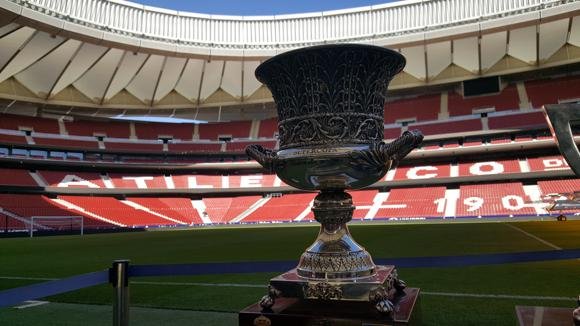
Getting Around
Arriving in town, local transport and timings

Where to Drink
The best pubs and bars for football fans
Where to stay
The best hotels for the stadium and city centre
Teams, tales and tips – a guide to the local game
The port, resort and airport hub of Larnaca on the southern coast of Cyprus is currently host to five teams in the 14-strong top-flight Cyta Championship. Home of 2018 Cypriot Cup winners AEK, Larnaca has also been a haven for two clubs from the nearby port of Famagusta since 1974, when its majority Greek population fled the Turkish invasion. Formed in 1911, revered Anorthosis have won 13 Cypriot titles and never been relegated. Populist Nea Salamis, with their left-leaning fan base, have played in the top flight every season but seven since 1949.Getting Around
Arriving in town, local transport and tips
Where to Drink
The best pubs and bars for football fans
Where to stay
The best hotels for the stadiums and city centre
 A founding investor in MLS, Hunt promised and delivered the league’s first soccer-specific stadium for Columbus, bringing in his son Clark to oversee the development of successful franchises both in Ohio and in Kansas City.
In Columbus, the team selected United States international striker Brian McBride with the first pick in MLS’ inaugural player draft ahead of the 1996 season.
Ohio State University’s 100,000-seat college football stadium served as the team’s inappropriately sized home for its first three years. Columbus moved into the groundbreaking 20,000-seat Columbus Crew Stadium in 1999. Without a major sponsor until 2015 when Madrid-based insurance company Mapfre stepped in, the stadium became known as America’s Azteca after the U.S. national team beat Mexico on a freezing MidWest winter’s night in 2001, the 2-0 scoreline then repeated in iconic fashion in three subsequent World Cup qualifying matches until 2013.
A founding investor in MLS, Hunt promised and delivered the league’s first soccer-specific stadium for Columbus, bringing in his son Clark to oversee the development of successful franchises both in Ohio and in Kansas City.
In Columbus, the team selected United States international striker Brian McBride with the first pick in MLS’ inaugural player draft ahead of the 1996 season.
Ohio State University’s 100,000-seat college football stadium served as the team’s inappropriately sized home for its first three years. Columbus moved into the groundbreaking 20,000-seat Columbus Crew Stadium in 1999. Without a major sponsor until 2015 when Madrid-based insurance company Mapfre stepped in, the stadium became known as America’s Azteca after the U.S. national team beat Mexico on a freezing MidWest winter’s night in 2001, the 2-0 scoreline then repeated in iconic fashion in three subsequent World Cup qualifying matches until 2013.
 Columbus Crew won its first trophy in 2002 by lifting the U.S. Open Cup, named after Lamar Hunt. The team consistently reached the MLS playoffs during its first decade without making any impression in the postseason.
That changed in 2008 when former Boca Juniors and Argentina playmaker Guillermo Barros Schelotto inspired the Black & Gold to its sole MLS championship after finishing the regular season with the league’s best record. Schelotto fittingly picked up the MLS Most Valuable Player award.
In 2013, Precourt Sports Ventures purchased the Columbus franchise from Hunt Sports Group and set about significantly rebranding the club. A new team logo was created and the initials “SC” were added to the official title.
A successful 2015 season saw Crew SC winning the MLS Eastern Conference and earning the right to host the MLS Cup Final. Western Conference winners Portland Timbers shaded the contest by 2-1 to deny Columbus a second MLS crown.
Crew supporters in the converted north stands are looking to playmaker Federico Higuaín, brother of Juve star Gonzalo, to inspire a 2017 revival after a lackluster 2016 campaign.
Columbus Crew won its first trophy in 2002 by lifting the U.S. Open Cup, named after Lamar Hunt. The team consistently reached the MLS playoffs during its first decade without making any impression in the postseason.
That changed in 2008 when former Boca Juniors and Argentina playmaker Guillermo Barros Schelotto inspired the Black & Gold to its sole MLS championship after finishing the regular season with the league’s best record. Schelotto fittingly picked up the MLS Most Valuable Player award.
In 2013, Precourt Sports Ventures purchased the Columbus franchise from Hunt Sports Group and set about significantly rebranding the club. A new team logo was created and the initials “SC” were added to the official title.
A successful 2015 season saw Crew SC winning the MLS Eastern Conference and earning the right to host the MLS Cup Final. Western Conference winners Portland Timbers shaded the contest by 2-1 to deny Columbus a second MLS crown.
Crew supporters in the converted north stands are looking to playmaker Federico Higuaín, brother of Juve star Gonzalo, to inspire a 2017 revival after a lackluster 2016 campaign.
 Stadium
Mapfre Stadium, located on the grounds of the Ohio Expo Center and State Fairgrounds four miles north of Downtown Columbus, enjoys a unique status. The first soccer-specific stadium in MLS soon became a fortress, the drawbridge first pulled up in 2001 when the U.S. men’s national team famously beat Mexico 2-0 here, freezing temperatures and a red-hot atmosphere aiding the hosts. Until then, ‘home advantage’ in the CONCACAF World Cup qualifying region had meant the U.S. treated to hostile welcomes in tropical Central America. Columbus has relatively few Hispanic residents.
The same scoreline was then repeated in subsequent competitive fixtures with America’s arch rivals in 2005 and 2009, by which time the north stands had been transformed into the Nordecke, a communal Crew supporters’ corner named in honor of local German heritage.
After a fourth consecutive 2-0 defeat in 2013, played out to the now familiar chants of ‘Dos a cero’, the Columbus Crew Stadium took its sponsor’s name of Mapfre. A late goal by Mexico’s veteran captain Rafael Márquez on November 11, 2016 – Veterans Day – broke the spell. After 15 years, 11 unbeaten games and only one goal conceded, the U.S. had finally succumbed.
Stadium
Mapfre Stadium, located on the grounds of the Ohio Expo Center and State Fairgrounds four miles north of Downtown Columbus, enjoys a unique status. The first soccer-specific stadium in MLS soon became a fortress, the drawbridge first pulled up in 2001 when the U.S. men’s national team famously beat Mexico 2-0 here, freezing temperatures and a red-hot atmosphere aiding the hosts. Until then, ‘home advantage’ in the CONCACAF World Cup qualifying region had meant the U.S. treated to hostile welcomes in tropical Central America. Columbus has relatively few Hispanic residents.
The same scoreline was then repeated in subsequent competitive fixtures with America’s arch rivals in 2005 and 2009, by which time the north stands had been transformed into the Nordecke, a communal Crew supporters’ corner named in honor of local German heritage.
After a fourth consecutive 2-0 defeat in 2013, played out to the now familiar chants of ‘Dos a cero’, the Columbus Crew Stadium took its sponsor’s name of Mapfre. A late goal by Mexico’s veteran captain Rafael Márquez on November 11, 2016 – Veterans Day – broke the spell. After 15 years, 11 unbeaten games and only one goal conceded, the U.S. had finally succumbed.
 Despite the rebranding of both team and stadium, the Mapfre hasn’t lost its edge. Seating is still standard aluminum and fans stand in the Nordecke.
The permanent stage that now dominates the north end, mainly because, smack centre behind the goal, it is the only part of the stadium that is covered, hosts rock concerts, most notably the three-day Rock on the Range festival every May.
Traveling fans – and Chicago is considered a local derby – are allocated one sector of the south end (#113-119) depending on demand, usually #119.
Prime seats are in the East and West Stands along the sidelines, #125-127 and #105-107 respectively.
Capacity is just below 20,000. Average gates for 2016 were 17,000.
[mapsmarker layer="315"]
Transport
Columbus is the largest metropolitan area in the U.S. without either a local or intercity rail connection. The Central Ohio Transit System (COTA) provides the city’s bus network but the stadium is poorly served.
The #4 bus runs up N. 4th Street parallel to the arena but there’s no way of crossing the rail tracks in between – as the crow flies, 4th St. & Alden Ave. should be close. Instead, you have to alight at the corner of N. 4th Street and E. 17th Avenue, walk back to the junction with E. 17th Avenue, walk under the rail bridge then take the first left, Korbel Avenue, until you reach the stadium – a good 20min away.
Despite the rebranding of both team and stadium, the Mapfre hasn’t lost its edge. Seating is still standard aluminum and fans stand in the Nordecke.
The permanent stage that now dominates the north end, mainly because, smack centre behind the goal, it is the only part of the stadium that is covered, hosts rock concerts, most notably the three-day Rock on the Range festival every May.
Traveling fans – and Chicago is considered a local derby – are allocated one sector of the south end (#113-119) depending on demand, usually #119.
Prime seats are in the East and West Stands along the sidelines, #125-127 and #105-107 respectively.
Capacity is just below 20,000. Average gates for 2016 were 17,000.
[mapsmarker layer="315"]
Transport
Columbus is the largest metropolitan area in the U.S. without either a local or intercity rail connection. The Central Ohio Transit System (COTA) provides the city’s bus network but the stadium is poorly served.
The #4 bus runs up N. 4th Street parallel to the arena but there’s no way of crossing the rail tracks in between – as the crow flies, 4th St. & Alden Ave. should be close. Instead, you have to alight at the corner of N. 4th Street and E. 17th Avenue, walk back to the junction with E. 17th Avenue, walk under the rail bridge then take the first left, Korbel Avenue, until you reach the stadium – a good 20min away.
 The #4 runs every 30min Sat & Sun from the intersection of W. Long St. and N. High St. Downtown, near the Elevator Brewery & Draught Haus. Pay $2 exact change on board.
For all the hassle, you may as well take a taxi – Express Cab of Columbus (614-822-8666) charges around $10 from Downtown.
The stadium (One Black & Gold Blvd, Columbus, OH 43211) is right next to the I-71. Take exit 111 onto 17th Ave., with ample General Parking ($15) as you enter through Gates 14-16. Be prepared for a long wait after the game.
The #4 runs every 30min Sat & Sun from the intersection of W. Long St. and N. High St. Downtown, near the Elevator Brewery & Draught Haus. Pay $2 exact change on board.
For all the hassle, you may as well take a taxi – Express Cab of Columbus (614-822-8666) charges around $10 from Downtown.
The stadium (One Black & Gold Blvd, Columbus, OH 43211) is right next to the I-71. Take exit 111 onto 17th Ave., with ample General Parking ($15) as you enter through Gates 14-16. Be prepared for a long wait after the game.
 Ticketing
The Ticket Office (Mon-Fri 9 a.m. to 5 p.m., from 10 a. m. on match weekends) is at the stadium Administrative Office. Will Call is located at Gate 5, photo ID required, the SouthWest Ticket Office.
There are online sales for individual matches up to two months in advance, both through the club and through the Nordecke supporters’ groups.
Prices start at $27 behind the south goal, $30 for the upper tiers along the sidelines and $32 in sectors 134-135 behind the north goal, in the opposite corner to the Nordecke home supporters’ enclave.
Sideline seats near the north or south goal are $39, rising to $70 near the halfway line in sectors 105-107 and 125.
Ticketing
The Ticket Office (Mon-Fri 9 a.m. to 5 p.m., from 10 a. m. on match weekends) is at the stadium Administrative Office. Will Call is located at Gate 5, photo ID required, the SouthWest Ticket Office.
There are online sales for individual matches up to two months in advance, both through the club and through the Nordecke supporters’ groups.
Prices start at $27 behind the south goal, $30 for the upper tiers along the sidelines and $32 in sectors 134-135 behind the north goal, in the opposite corner to the Nordecke home supporters’ enclave.
Sideline seats near the north or south goal are $39, rising to $70 near the halfway line in sectors 105-107 and 125.
 Merchandise
The Crew SC Shop (Mon-Fri 10 a. m. to 5 p. m., game days) at the southwest corner stocks merchandise from customized long-sleeved jerseys ($179.99) to pins ($7.99), as well as flags, snapback hats, Columbus skyline scarves and USB chargers.
There are all kinds of accoutrements for Tailgating, including can coolers, tumblers, growlers and shot glasses.
Tailgating
With the merging of supporters’ turfs to create the Nordecke, there’s a communal atmosphere in the Megatailgate area behind the South Stand, lot G, intersection of Korbel Ave. and Black & Gold Blvd..
Some 3 hours before kick-off, the tents of the Crew Union, the Hudson Street Hooligans, the Yellow Nation Army and others host lively fan parties, sometimes themed. Grills are set up, beers are varied and plentiful, it’s a case of wandering from one to the other and getting stuck in.
Merchandise
The Crew SC Shop (Mon-Fri 10 a. m. to 5 p. m., game days) at the southwest corner stocks merchandise from customized long-sleeved jerseys ($179.99) to pins ($7.99), as well as flags, snapback hats, Columbus skyline scarves and USB chargers.
There are all kinds of accoutrements for Tailgating, including can coolers, tumblers, growlers and shot glasses.
Tailgating
With the merging of supporters’ turfs to create the Nordecke, there’s a communal atmosphere in the Megatailgate area behind the South Stand, lot G, intersection of Korbel Ave. and Black & Gold Blvd..
Some 3 hours before kick-off, the tents of the Crew Union, the Hudson Street Hooligans, the Yellow Nation Army and others host lively fan parties, sometimes themed. Grills are set up, beers are varied and plentiful, it’s a case of wandering from one to the other and getting stuck in.
 Beers
With its German heritage, a thriving contemporary craft-beer scene and a Brewery District Downtown, Columbus is one of the best destinations in MLS for pre- and postmatch revelry.
The best, most popular and nearest option for Columbus fans is Fourth Street Bar & Grill, one block from the Mapfre Stadium and meeting place of the Crew Union. Beers of every stripe are sunk with abandon against a backdrop of Black & Gold iconography on bare-brick walls.
In the heart of the Brewery District south of Downtown, the Columbus Brewing Company (CBC) uses locally harvested ingredients for its crafted IPA, Pale Ales and other beers costing about $6 for a pint. It also pitches itself as a pregame haunt for hockey fans heading to the nearby Nationwide Arena, with free parking, too.
Beers
With its German heritage, a thriving contemporary craft-beer scene and a Brewery District Downtown, Columbus is one of the best destinations in MLS for pre- and postmatch revelry.
The best, most popular and nearest option for Columbus fans is Fourth Street Bar & Grill, one block from the Mapfre Stadium and meeting place of the Crew Union. Beers of every stripe are sunk with abandon against a backdrop of Black & Gold iconography on bare-brick walls.
In the heart of the Brewery District south of Downtown, the Columbus Brewing Company (CBC) uses locally harvested ingredients for its crafted IPA, Pale Ales and other beers costing about $6 for a pint. It also pitches itself as a pregame haunt for hockey fans heading to the nearby Nationwide Arena, with free parking, too.
 Schmidt’s in the German Village is worth the trip to Columbus alone. The original Schmidt’s meat packing business opened in 1886 before this restaurant opened nearby in 1967 using authentic German recipes. Signature sausage platters featuring bratwursts and Frankfurters cost about $13, washed down with lashings of imported German beer.
For a more Irish pub feel, The Three-Legged Mare in the Arena District contains 15 TVs and two giant projection screens all focused on sport, where darts and pub quizzes are taken equally seriously.
Land-Grant Brewing Company is another excellent craft brewer operating out of a renovated 12,000-square-foot factory building in the East Franklinton neighborhood west of Downtown. Tours of the site are available on Saturday afternoons. Land-Grant brews Glory, an American wheat beer designated as the official brew for Columbus supporters. Glasses and growlers bearing the Crew SC logo are also available.
Schmidt’s in the German Village is worth the trip to Columbus alone. The original Schmidt’s meat packing business opened in 1886 before this restaurant opened nearby in 1967 using authentic German recipes. Signature sausage platters featuring bratwursts and Frankfurters cost about $13, washed down with lashings of imported German beer.
For a more Irish pub feel, The Three-Legged Mare in the Arena District contains 15 TVs and two giant projection screens all focused on sport, where darts and pub quizzes are taken equally seriously.
Land-Grant Brewing Company is another excellent craft brewer operating out of a renovated 12,000-square-foot factory building in the East Franklinton neighborhood west of Downtown. Tours of the site are available on Saturday afternoons. Land-Grant brews Glory, an American wheat beer designated as the official brew for Columbus supporters. Glasses and growlers bearing the Crew SC logo are also available.
 Columbus Timeline
1979 The Columbus Magic joins the American Soccer League, founded in the 1930s and increasingly unstable given the growth of the North American Soccer League. The Magic shares Franklin County Stadium with the Columbus Clippers minor-league baseball team. The Magic wins the ASL’s Eastern Division and reaches the national championship game before losing by a single goal to the Sacramento Gold.
1980 The Magic folds after its second season in the ASL.
1984 Columbus Capitals plays in the newly launched American Indoor Soccer Association with games taking place at Battelle Hall on the current site of the Greater Columbus Convention Center. Yugoslav forward Lesh Shkreli leads the team and the league with 59 goals to pick up the AISA Most Valuable Player award.
1986 The Capitals disbands at the end of its second indoor season.
Columbus Timeline
1979 The Columbus Magic joins the American Soccer League, founded in the 1930s and increasingly unstable given the growth of the North American Soccer League. The Magic shares Franklin County Stadium with the Columbus Clippers minor-league baseball team. The Magic wins the ASL’s Eastern Division and reaches the national championship game before losing by a single goal to the Sacramento Gold.
1980 The Magic folds after its second season in the ASL.
1984 Columbus Capitals plays in the newly launched American Indoor Soccer Association with games taking place at Battelle Hall on the current site of the Greater Columbus Convention Center. Yugoslav forward Lesh Shkreli leads the team and the league with 59 goals to pick up the AISA Most Valuable Player award.
1986 The Capitals disbands at the end of its second indoor season.
 1994 Columbus Xoggz joins a third-tier nationwide league that becomes known as the United States Interregional Soccer League with games held at Dublin Coffman High School.
1996 Columbus Crew begins play in Major League Soccer at the vast Ohio Stadium. The Xoggz changes its name to the Ohio Xoggz before folding at the end of the USISL season.
1997 Ohio indoor franchise the Canton Invaders relocates to the state capital and changes its name to the Columbus Invaders for one single, disastrous season in the National Professional Soccer League. The team is best remembered – perhaps only remembered – for its record 52-18 defeat to local rivals Cleveland Crunch at Battelle Hall."
["post_title"]=>
string(13) "Columbus Crew"
["post_excerpt"]=>
string(0) ""
["post_status"]=>
string(7) "publish"
["comment_status"]=>
string(6) "closed"
["ping_status"]=>
string(4) "open"
["post_password"]=>
string(0) ""
["post_name"]=>
string(13) "columbus-crew"
["to_ping"]=>
string(0) ""
["pinged"]=>
string(0) ""
["post_modified"]=>
string(19) "2020-09-16 02:18:58"
["post_modified_gmt"]=>
string(19) "2020-09-16 02:18:58"
["post_content_filtered"]=>
string(0) ""
["post_parent"]=>
int(0)
["guid"]=>
string(36) "https://old.liberoguide.com/?p=23867"
["menu_order"]=>
int(0)
["post_type"]=>
string(4) "post"
["post_mime_type"]=>
string(0) ""
["comment_count"]=>
string(1) "0"
["filter"]=>
string(3) "raw"
}
[3]=>
object(WP_Post)#4150 (24) {
["ID"]=>
int(18862)
["post_author"]=>
string(1) "3"
["post_date"]=>
string(19) "2016-09-04 09:24:11"
["post_date_gmt"]=>
string(19) "2016-09-04 09:24:11"
["post_content"]=>
string(25550) "
1994 Columbus Xoggz joins a third-tier nationwide league that becomes known as the United States Interregional Soccer League with games held at Dublin Coffman High School.
1996 Columbus Crew begins play in Major League Soccer at the vast Ohio Stadium. The Xoggz changes its name to the Ohio Xoggz before folding at the end of the USISL season.
1997 Ohio indoor franchise the Canton Invaders relocates to the state capital and changes its name to the Columbus Invaders for one single, disastrous season in the National Professional Soccer League. The team is best remembered – perhaps only remembered – for its record 52-18 defeat to local rivals Cleveland Crunch at Battelle Hall."
["post_title"]=>
string(13) "Columbus Crew"
["post_excerpt"]=>
string(0) ""
["post_status"]=>
string(7) "publish"
["comment_status"]=>
string(6) "closed"
["ping_status"]=>
string(4) "open"
["post_password"]=>
string(0) ""
["post_name"]=>
string(13) "columbus-crew"
["to_ping"]=>
string(0) ""
["pinged"]=>
string(0) ""
["post_modified"]=>
string(19) "2020-09-16 02:18:58"
["post_modified_gmt"]=>
string(19) "2020-09-16 02:18:58"
["post_content_filtered"]=>
string(0) ""
["post_parent"]=>
int(0)
["guid"]=>
string(36) "https://old.liberoguide.com/?p=23867"
["menu_order"]=>
int(0)
["post_type"]=>
string(4) "post"
["post_mime_type"]=>
string(0) ""
["comment_count"]=>
string(1) "0"
["filter"]=>
string(3) "raw"
}
[3]=>
object(WP_Post)#4150 (24) {
["ID"]=>
int(18862)
["post_author"]=>
string(1) "3"
["post_date"]=>
string(19) "2016-09-04 09:24:11"
["post_date_gmt"]=>
string(19) "2016-09-04 09:24:11"
["post_content"]=>
string(25550) "Teams, tales and tips – a guide to the local game
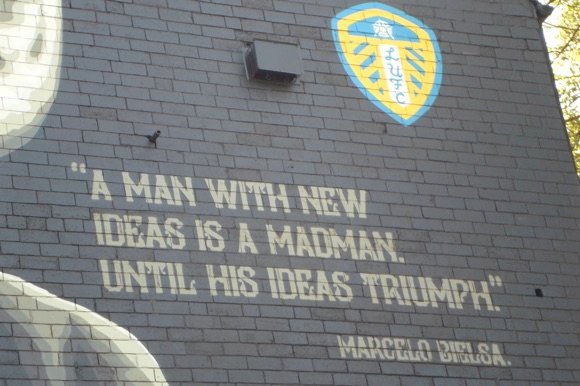
The largest one-club city in the UK, Leeds has been transformed by one man, a passionate Argentine whose style of play has taken once all-conquering Leeds United back to the top and transformed the careers of key players. Before the arrival of Marcelo Bielsa in 2018, the club was a sleeping giant, whose glory days dated back half a century and whose demise overshadowed much of the new millennium. Although a string of injuries and bad results led to his departure in February 2022, a heroic battle against relegation under Jesse Marsch led to wild celebrations, the momentum continuing into 2022-23 despite the sale of key players.


Getting Around
Arriving in town, local transport and tips


Where to Drink
The best pubs and bars for football fans

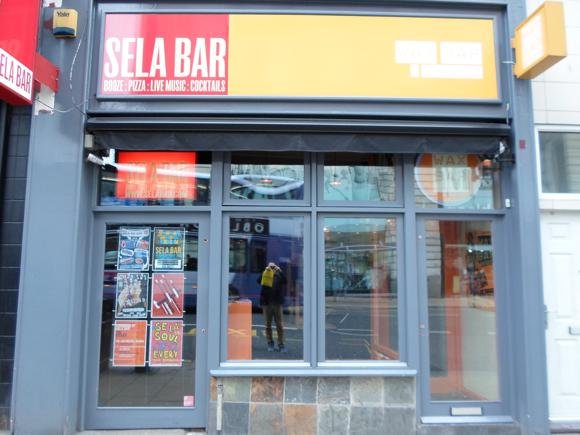
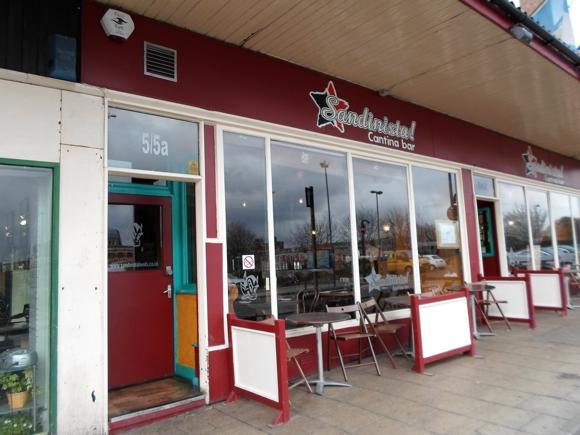
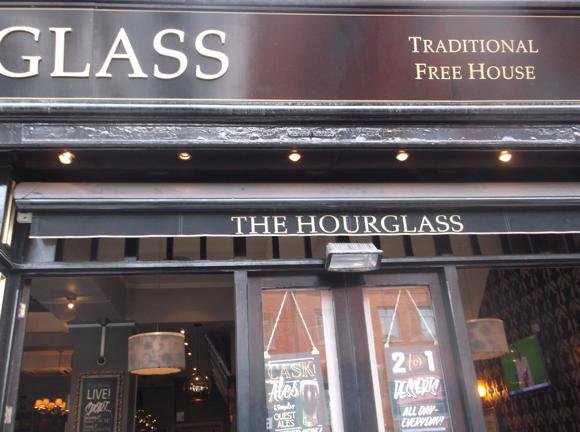


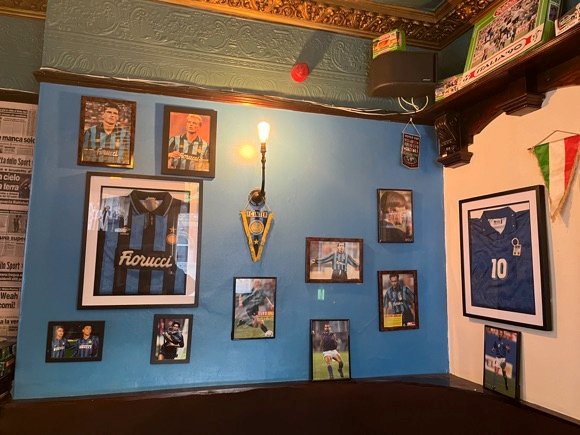




Where to stay
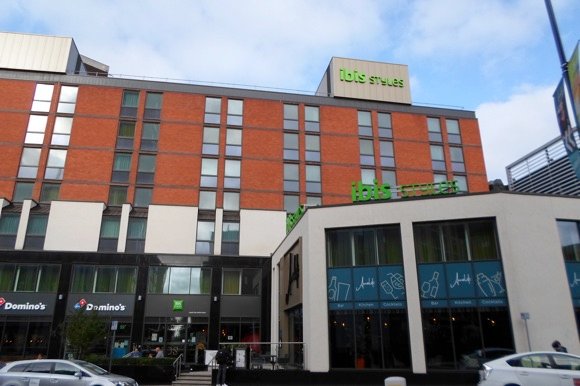
The best hotels for the ground and around town


Teams, tales and tips – a guide to the local game
Dublin is where 50,000 gather to roar on Ireland’s national side in a modern arena originally chosen to co-host Euro 2020. Across town from the Aviva, half-a-dozen clubs, four a century or more old, strive to attract 3,000-plus crowds in a two-division, 20-team domestic league.
Attempts to increase gates are gradually succeeding but not helped by the popularity of England’s Premier League and dominance of Gaelic football. Apart from the Aviva, built on the site of rugby temple Lansdowne Road, Ireland’s largest dozen sports stadiums are all geared to towards the national game, overseen by the Gaelic Athletic Association (GAA).
Ireland’s largest sports association actively discouraged soccer for decades. It wasn’t until 1971 that the GAA dropped its ban on its members even watching soccer – and 1971 that Ireland’s national team started to share Lansdowne Road with its rugby counterparts.
Until then, Dalymount Park had been the home of the round-ball game, hosting its first match in 1901 between Dublin’s most enduring clubs, Bohemians (the Bohs) and Shelbourne (Shels). No longer suitable or safe to handle competitive internationals, particularly after the Charlton-era national side had gained momentum and mass support from the 1980s onwards, the Dalymount was abandoned to its remit of hosting the Bohs.
With no Dalymount, no Lansdowne Road after its demolition in 2007, and the Aviva three years away, Ireland’s soccer team needed a stadium. Other towns have rarely been an option. Though Dundalk, Cork and Waterford broke the Dublin monopoly on the domestic league from the 1930s onwards, the national side has only played four home games outside Dublin since the first in 1924.
Every nation has its sacred sport, every sport its sacred ground. Such is Croke Park. Named after a 19th-century archbishop who stood up for Irish rights, GAA stronghold Croke Park witnessed the Bloody Sunday massacre of 1920, when 13 spectators and a Gaelic footballer were shot dead by British-backed forces during a match between Dublin and Tipperary.

The War of Independence led to the creation of the Irish Free State and, subsequently, the Republic of Ireland. In 1921, eight Dublin teams formed the Free State League, later called the League of Ireland, breaking away from the Belfast-dominated Irish Football League. A separate Free State national team then played at the 1924 Olympics in Paris.
In 2006, Ireland played their last match at Lansdowne Road before its demolition. More than 80 years after Bloody Sunday and more than 40 since the soccer ban, the GAA met to decide whether Ireland’s soccer team, and its rugby counterpart, could play at Croke Park. In a seminal decision, temporary permission was granted. Robbie Keane, Shay Given and Damien Duff duly strode out in what was the second biggest sports stadium in Europe – for a dismal 1-0 win over Wales.
Meanwhile, across town, another stadium saga had long been unfolding in south Dublin. While the Bohs had been formed near the North Circular Road in 1890, Shelbourne and Shamrock Rovers hail from southside Ringsend. This simple north v south dynamic was skewed when former the former Ringsend residents were forced to groundshare northside Tolka Park from the late 1980s onwards. For Rovers, it followed the controversial sale of their revered Glenmalure Park in southside Milltown.

Shels and the Bohs had long had their own battles, played out in the pre-1921 Irish Football League, each winning the equally Belfast-dominated Irish Cup. Theirs is considered the oldest Dublin derby.
Rovers’ fierce north-south rivalry with Bohemians echoed the one they once shared with former Tolka Park residents Drumcondra. The Hoops and the Drums often locked horns for the title from the late 1940s to the mid 1960s.
Ireland’s most popular and most titled club, Rovers were to remain homeless for more than 20 years as development of a new stadium in Tallaght, south-west Dublin, stalled.
Regularly boycotted by Rovers fans, Tolka Park has been home to many clubs, including St James’s Gate, originally from the Guinness brewery and winners of the inaugural League of Ireland in 1922, and Home Farm, who merged with Drumcondra in 1972.

Both Home Farm and St James’s Gate now play in the Leinster Senior League, the third flight split into four levels and a myriad ones below. Formed in the 1890s, the league has always been mainly Dublin-based, major clubs fielding their reserve teams in the early days. Champions in recent seasons, Cherry Orchard and Crumlin United, have nurtured several Irish international players at many age levels.
Some LSL clubs have nursery affiliations with top-flight ones, such as the recent one set up between Crumlin United and St Patrick’s Athletic, another of Dublin’s Big Four. Irish champions in 2013, FAI Cup winners in 2014, never-relegated St Pat’s share southside loyalties with Shamrock Rovers.
Based at Richmond Park, Inchicore, in south-west Dublin, populist St Pat’s bring tifo colour and choreography to Dublin derby games. These same fans were the first to protest when a potential groundshare with Shamrock Rovers at Tallaght was mooted in 1996.

It prefaced more than ten years of financial and legal procrastination while Rovers fans were sent from pillar to post. At last, construction started on Tallaght Stadium in 2008. Opened with a league game against community club Sligo in 2009, set near the terminus of the light rail line from town (and direct from St Pat’s, prompting the term ‘LUAS derby’), the new arena witnessed Cristiano Ronaldo’s debut for Real Madrid in a friendly that July.
A year later, Manchester United, who had played in the first football match at Lansdowne Road against Waterford in 1968, strode out against a League of Ireland XI before a newly opened and packed Aviva.
The main home games in Ireland’s successful qualification campaign for Euro 2016 also saw 50,000 crowds, against a background of an improving domestic league. Summer football, Friday night games, the supporter-focused FanPoweredFootball campaign and promotion by league sponsors Airtricity (‘Real Football, Real Fans’) have all helped to raise gates. There was also the laudable decision of 100-cap Damien Duff to see out his career with Shamrock Rovers – and donate his wages to charity.

Another successful schoolboy product of the Leinster Senior League, Duff was fully aware how much Ireland’s dedicated, grass-roots football community had given to him.
Mention must also be made of Dublin’s lesser lights regularly doing battle in the second-flight First Division: UCD from University College Dublin, who took on Slovan Bratislava in the Europa League of 2015-16; and little Cabinteely, who survived a debut season in the First Division in 2015. ‘Cabo’ ran many teams, boys, girls and ladies, as well as a first XI usually rubbing shoulders with the Athlone Towns and Wexfords of this world.
After announcing ambitious, long-term plans to redevelop their modest Kilbogget Park ground near Cabinteely Village, the club then merged with nearby Bray in November 2021, putting an end to half a century of independent activity.
Seven stops further down the DART line, Bray is strictly in County Wicklow but borders on Dublin an easy hop away. Close to both station and sea, the Carlisle Grounds, home of former FAI Cup winners Bray Wanderers, has been a sports venue since 1862.
[mapsmarker map="34"]Getting Around
Arriving in town, local transport and timings

Dublin Airport is 10km (six miles) north of the city. Dublin Bus Airlink 747 leaves every 10-15mins for Heuston rail station (off-peak journey time 50mins) via the main bus station, BusÁras (off-peak journey time 30mins) near Connolly rail station. Allow more journey time in rush hour, especially when coming from town.
Tickets are €6 single/€10 return. The multi-transport Leap Card (€5 plus €5 credit) is valid but offers no savings on the airport bus. It does offer reductions on all other Dublin buses, the LUAS light-rail line and the DART & Commuter rail lines. On the bus, tell the driver your destination for him to deduct fare once you touch into his ticket machine. Journeys over 13 stages are a flat €2.60. On the LUAS and Dublin short-hop DART & Commuter rail zone (including Blackrock and Bray), touch in and touch off as you board and alight.
Other buses into the city from the airport are the 16 and 41 via Drumcondra, and the 24hr aircoach to the centre (€7 single, €12 return, €6/€11 online, every 15mins, 30min journey time).
Airport Taxi (+353 1 290 9090) quotes €24 for the city centre. For a taxi in town, call NRC on +353 1 677 2222.
Where to Drink
The best pubs and bars for football fans
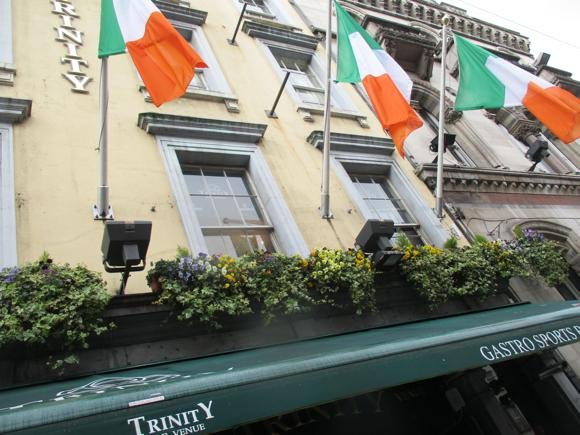


Pubs are why people come to Dublin – which is why the Temple Bar area on the south bank of the Liffey is mobbed every night. For TV football, the party-centric Trinity Bar & Venue has a huge screen while O’Neill’s in nearby Suffolk Street is a more traditional bet.
Nearby Doyles is also sport-focused and lively with it while nearer the Liffey, Mulligan’s can number legendary sports writer Con Houlihan among its many former regulars – he used to have his monthly pay cheques lodged behind the bar.
In the heart of Temple Bar, the Auld Dubliner always gets mobbed on big-match weekends while the Bad Ass Temple Bar is now more pub-like than when Sinéad O’Connor worked here back in the day.
Just over the Liffey, with its own ‘bad ass’ TV for sport, Frank Ryans is an age-old institution of a pub, with regular live music. Off O’Connell Street, the Oval Bar, established in 1820, contains wide-screen TVs for sporting action amid the historic surroundings.
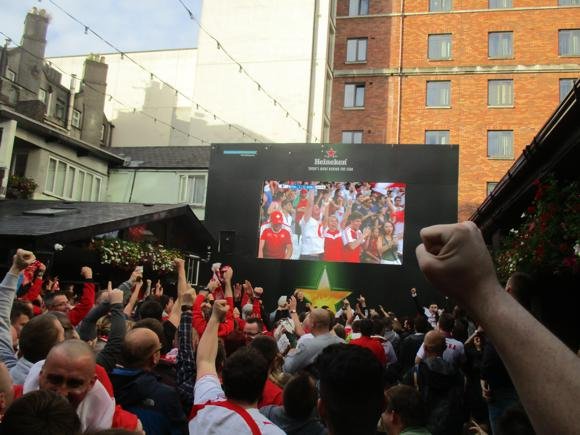
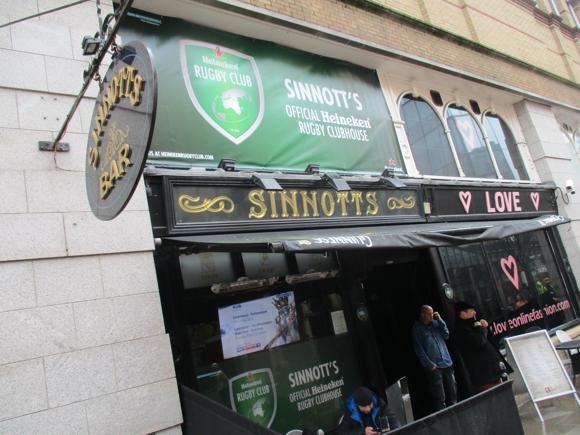


Back on the south side, further down towards St Stephen’s Green, Sinnotts is mobbed on big-match nights, with 14 large screens. Between Pearse station and Merrion Square, The Square Ball on Hogan Place is a relative newbie, a trendy spot that goes big on rarer beers while showing TV sports and providing shelfloads of board games.
On the LUAS line, on Harcourt Street, Dtwo is known as a nightclub but its sports bar contains 20 screens, one of them half the size of Canada. The nearby Bleeding Horse posts an encyclopaedic schedule of TV sports events for a landmark pub that dates back four centurie.
North of the river, you’ll find a more international style of sports bar, such as the antipodean Woolshed Baa & Grill, with three vast screens and 15 smaller plasma ones, and The Living Room, which shows almost every league known to man and whose outdoor screen is claimed to be Europe’s largest. With its equally busy side bar, this is soccer-watching on an industrial scale. Alongside, Murray’s attracts sports fans with its three HD screens.
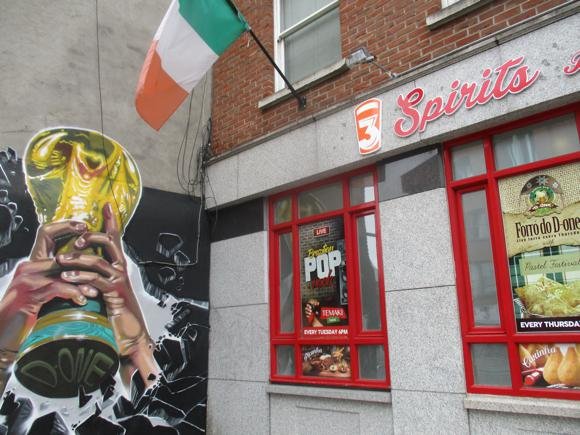


The 3 Spirits, Dublin’s first Brazilian bar, is lined with screens for soccer watching – the food can be hit and miss, but that’s not why you’re there.
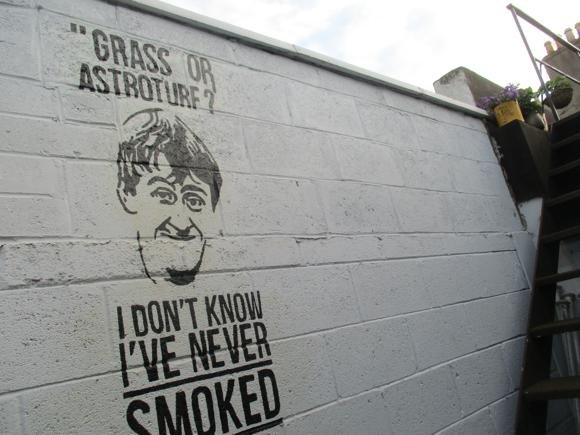
A later addition to the sport pub scene, up in Phibsborough, The Back Page comprises a chatty front bar, a larger back one featuring a wall-length mural dedicated to Italia ’90, an alcove casually scattered with stacks of cult soccer publications (Austrian Ballesterer, anyone?) and an astroturf-decked garden and picnic area. Screens abound. The affordable, quality food is also themed – the Andrea Pirlo salad comes with tuna – while Beck’s on draught is another plus.
Associated more with Gaelic football than soccer, on the other side of The Mater Hospital, the long-established Big Tree packs out for major Ireland matches.
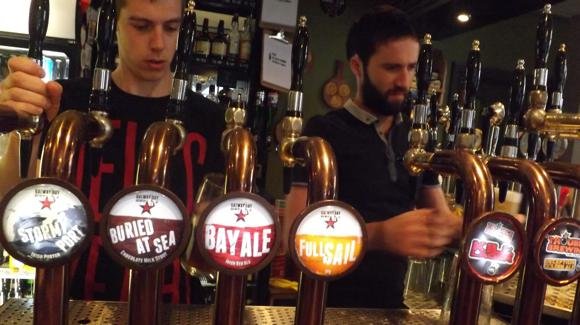
Finally, for a few sessions of table football and craft beers, the Black Sheep is a popular post-work spot run by the independent Galway Bay Brewery.
Where to stay
The best hotels for the grounds and city centre


Visit Dublin has a database of hotels.
Note that rooms are booked early around the Aviva Stadium and the city centre for rugby weekends in February and March.
For the rest of the year, there is plenty of choice among the various hotels, guesthouses and apartments within walking distance of the national arena and its DART station an easy hop to and from the city centre. Although the Clyde Court has closed for development, the adjoining 400-room, mid-range Ballsbridge Hotel is staying open until 2018. Lansdowne Road lodgings such as Ariel House and Butlers Town House offer old-school hospitality in lovely historic properties.
In the new Docklands development, still walking distance from the Aviva, The Marker is the suitably upscale, contemporary hotel, with spa and cool bar, where FC Barcelona stayed before the pre-season game with Celtic in July 2016. Round the corner, the Clayton is far from shabby, with its own pool and gym.



Also convenient for international games, between the RDS Arena and the Aviva, are the five-star InterContinental, with full spa facilities and, opposite, the Clayton Hotel Ballsbridge, the former Bewley set in pleasant grounds. Nearby is the high-end, high-tech Premier Suites Dublin Ballsbridge, comprised of various suites from studio to family. A little further along, and nearer the Aviva, the Herbert Park Hotel is a business-friendly four-star.
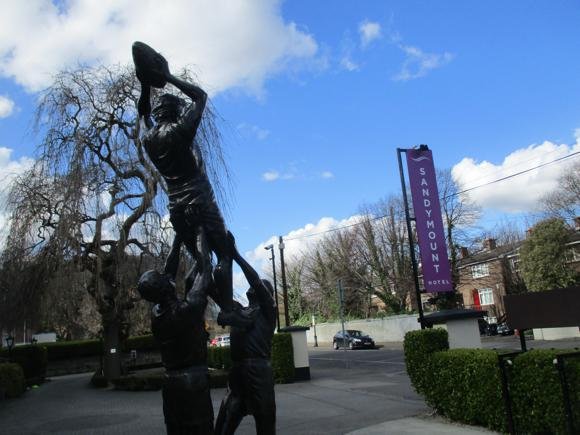
Just over the river Dodder from the stadium, the family-run Sandymount is another reliable and convenient choice.
Nearer to town but still only a stroll from the Aviva, the Lansdowne Hotel garners loyal repeat custom thanks to the Quinn family welcome. Its Den Bar tends towards the oval ball – note the largest collection of rugby ties in the world.


Beside the aircoach bus stop south of town, a 15-minute walk from Lansdowne Road, the landmark, 502-room Clayton Hotel Burlington Road was completely refurbished in 2014.
In the same family as the Ballsbridge Hotel, the maldron group runs a number of mid- and upper-range hotels at key locations in downtown Dublin, as well as five minutes’ walk from Tallaght Stadium, where you’ll also find the Glashaus, all sleek and contemporary but affordable.
Conveniently set near the bus and Connolly stations, the North Star is also handy for the airport bus and a stroll from the pubs of Temple Bar. For an authentic Dublin pub experience combined with an affordable, comfortable room, O’Donoghue’s is perfect. The greatest names in Irish music have all played in the illustrious bar below.


On the other side of the street is the most famous hotel in town, The Shelbourne, where the Free State constitution was drafted in 1922. Here you can book a genealogist, a therapeutic spa or table at The Saddle Room restaurant. Its Horseshoe Bar is equally renowned. You’ll have to do the whole thing on expenses, though – breakfast alone is €29.
Also in the upper bracket, the Gresham right on O’Connell Street exudes historic luxury while the five-star Fitzwilliam is handy for the LUAS line to Shamrock Rovers.
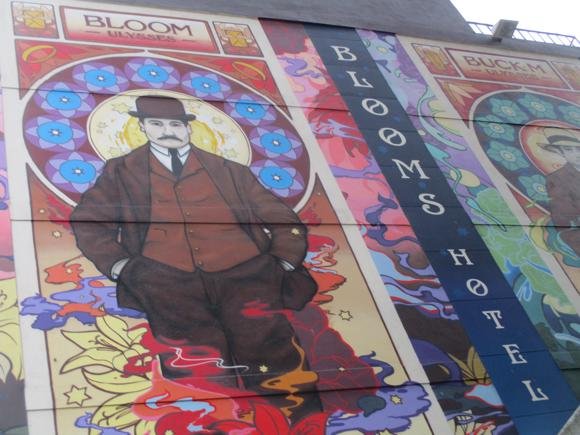
If you’d rather stay an easy stagger from the many pubs of Temple Bar, then the Blooms Hotel is a handy mid-range choice while the Temple Bar Hotel itself combines contemporary comfort with live music in its bar every night of the week. Nearby, the refurbished Fleet Street Hotel is also handy for a bar-hop.
Dublin is also full of hostels – the Globetrotters near the bus station is better than most, with 24hr reception and a private garden.
" ["post_title"]=> string(6) "Dublin" ["post_excerpt"]=> string(0) "" ["post_status"]=> string(7) "publish" ["comment_status"]=> string(6) "closed" ["ping_status"]=> string(4) "open" ["post_password"]=> string(0) "" ["post_name"]=> string(6) "dublin" ["to_ping"]=> string(0) "" ["pinged"]=> string(0) "" ["post_modified"]=> string(19) "2022-09-25 17:03:55" ["post_modified_gmt"]=> string(19) "2022-09-25 17:03:55" ["post_content_filtered"]=> string(0) "" ["post_parent"]=> int(0) ["guid"]=> string(36) "https://old.liberoguide.com/?p=16449" ["menu_order"]=> int(0) ["post_type"]=> string(4) "post" ["post_mime_type"]=> string(0) "" ["comment_count"]=> string(1) "0" ["filter"]=> string(3) "raw" } [5]=> object(WP_Post)#4008 (24) { ["ID"]=> int(289) ["post_author"]=> string(1) "2" ["post_date"]=> string(19) "2013-10-16 18:36:06" ["post_date_gmt"]=> string(19) "2013-10-16 18:36:06" ["post_content"]=> string(46348) "Teams, tales and tips – a guide to the local game
Few other names in football evoke as much passion as Liverpool, a vibrant, idiosyncratic port city with a legendary status in the game. Recent league champions Liverpool FC were England’s most dominant until Sir Alex Ferguson’s Manchester United overtook them in the early 1990s.
A simply unique fan loyalty, grounded in the great Shankly/Beatles era of the 1960s, when The Kop was the definitive home end, has hardly wavered. As the touchstone sign in the players’ tunnel says, ‘This Is Anfield’.
And, as the song, adapted here before being adopted at almost every football ground in the world, says: You’ll Never Walk Alone. A two-decade long campaign was waged over the treatment of fans by the authorities at and after the 1989 Hillsborough disaster that caused 97 deaths. Now that at least parts of the truth have been scandalously revealed, another Liverpool touchstone rubric springs to mind: All Together Now.


Meanwhile, on the other side of Stanley Park, there have been major changes at city rivals Everton, with a new major shareholder in British-Iranian businessman Farhad Moshiri and a plan given the green light for a new stadium. Venerable Goodison Park, a World Cup 1966 venue that staged memorable games involving Brazil, Hungary and Portugal, will be consigned to history by 2022-23.
The redevelopment of Anfield began in the summer of 2015, with an expanded main stand unveiled in 2016-17. Capacity is now 54,000, with big European nights even livelier now than they were in the Shankly era. Liverpool's dramatic semi-final win over Messi's Barcelona in 2019, reversing a 0-3 first-leg defeat, will probably go down as the most memorable since the Reds made their debut in Europe's premier club tournament back in 1964.
Like Manchester and Old Trafford, Liverpool attracts thousands of football tourists from around the globe, drawn as much by the legend of Anfield as by the Cavern Club and Penny Lane.


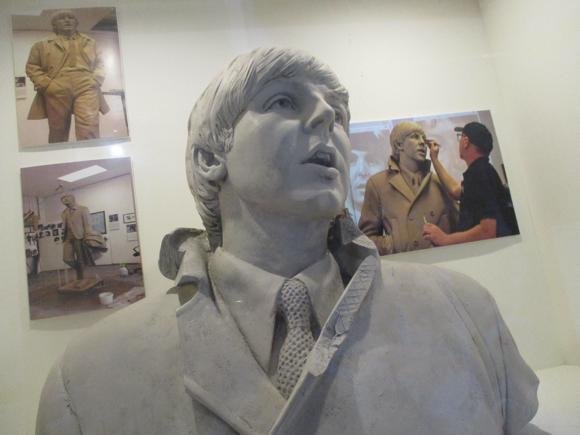
The ground came before the club. When Everton vacated Anfield in 1892, its owner, John Houlding, decided to form a club to play there: Liverpool FC. Everton moved across Stanley Park to what what would become Goodison Park. There was more to the parting of ways than a mere dispute over rent. While later Liverpool mayor Houlding was a high-ranking Freemason and Conservative politician, Everton founder and chairman George Mahon, who took the decision to move, was a Liberal with family roots in Dublin.
The divide was more political than religious, the later perception of Liverpool being the Protestant club and Everton Catholic far milder and more nuanced than in, say, Glasgow. If any religious creed is influential in these early days, it's Methodism – and football.
Stanley Park itself, all 45 elegant hectares of it north-east of town, had only been unveiled in 1870. It was named after Frederick Stanley, Earl of Derby, a former Governor General of Canada and a early enthusiast of ice hockey, whose major trophy also takes his name. In 1879, Everton played their first game in the south-east corner of the park, roughly where Anfield stands today.


The club had been founded the year before as St Domingo's, tied to the Methodist church on Breckfield Road North, whose cricket team needed a sport to play in winter. Everton, named after the district on the city side of Stanley Park, duly attracted a following and the attention of local businessmen, most notably John Houlding who lived by Stanley Park.
The wealthy brewer arranged for the burgeoning club to set up on Anfield Road. Players even changed in the nearby hotel he owned, the Sandon. Also a Masonic lodge, this was where John Houlding formed Liverpool FC in 1892 and where the club's most committed followers founded the Spirit of Shankly in 2008 to challenge LFC's unpopular American owners.
Founder members of the Football League, Everton drew the biggest crowd of 10,000 to Anfield on the opening day of the inaugural 1888-89 season. Later that same campaign, Anfield staged its first full international, England beating Ireland 6-1. Two years later, Everton won the league, breaking Preston's monopoly.


Within 20 years, Everton had been surpassed when Liverpool won their first title. The Merseyside derby between them had begun with LFC winning the Liverpool District Cup at their first attempt in 1893, although holders Everton signalled their contempt by fielding a reserve side, arranging for the seniors to face Scottish club Renton in a meaningless friendly. The 1-0 scoreline was nonetheless significant.
The venue was Hawthorne Road, which had hosted a number of Merseyside derbies before, none involving recently formed Liverpool, of course. Everton's opponents were Bootle, and this ground, between Stanley Park and the docks, was their home. Formed in 1879, Bootle first played Everton at Stanley Park a year later.
Games between them, particularly in the Liverpool District Cup, attracted crowds of 3,000-plus, sometimes five figures. After winning the inaugural trophy in 1883, Bootle hired professionals from Scotland, and also applied to join the first Football League in 1888.

Rejection stung, and although Bootle became founder members of the Football Alliance, then the Second Division, Everton drew the bigger gates. Bootle continued to hire top players, most notably Andrew Watson, football's first black international, who captained an all-conquering Scotland side. Paying for these stars was another matter. Generously, whenever Bootle and Everton now met, their more illustrious neighbours would offer up all the gate receipts, but the dockside club folded soon after Liverpool FC arrived on the scene.
A Bootle Athletic competed briefly at Hawthorne Road between 1948 and 1953, superseded by Bootle FC. Now based at the Berry Street Garage Stadium on Vesty Road, close to Aintree Station, in 2021 BFC were promoted to the Northern Premier League Division 1 West, the highest level in England's seventh tier.
Despite initial hostility, a shared sense of destiny would soon underscore the more familiar Merseyside rivalry we know today. When LFC founder John Houlding passed away at a well-to-do retreat near Nice in 1902, players from both sides helped carry his coffin. From 1904 until 1935, the two clubs shared a single match programme, and for much of the post-war period, the rivals would not buy players from each other – crossing the Park is a fairly recent phenomenon.
A display at the Museum of Liverpool on the riverfront illustrates the relationship between them.


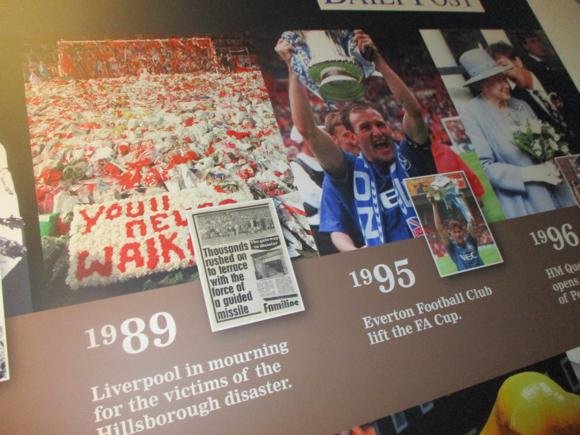
The 1984 League Cup Final at Wembley set the tone for later showdowns, fans of both clubs mixing and singing, repeated at the FA Cup final two years later. Another FA Cup final between them in 1989, a 3-2 extra-time win for Liverpool, was played out in the shadow of the recent Hillsborough disaster. The twice replayed FA Cup tie of 1991 proved too much for Kenny Dalglish, who resigned as Liverpool manager after the end-to-end 4-4 draw in the second game.
The FA Cup also allowed Liverpool's third club, Tranmere Rovers, the rare opportunity to face both local rivals in swift succession. In early 2001, the side from across the Mersey in Birkenhead paid a visit to Goodison, causing a 15-minute delay to kick-off because of crowd congestion. Managed by Liverpool legend John Aldridge, Tranmere thumped Everton 3-0 and gave the Reds a scare in the quarter-final, a 4-2 victory for the eventual trophy winners.


Tranmere have something of a cult status on Merseyside. Their ground, Prenton Park, became known for its floodlit games on a Friday night to allow locals to watch either Liverpool or Everton the following day. Inspiring the song Friday Night and the Gates are Low by their most famous fans, indie iconoclasts Half Man Half Biscuit, Tranmere hit the heights in the early 1990s when they reached three consecutive play-offs for a place in the Premier League.
In 2015, Rovers lost Football League status for the first time in 94 years, bouncing back to the Football League in 2018, and then to League One at the first attempt in 2019. In 2021, having fallen back down to League Two, Tranmere lost the play-off semi-final to Morecambe by the odd goal in five.
Liverpool's fourth club, and the nation's favourites in the darkest days of the pandemic shutdown, are Marine. Now in the same division as up-and-coming Bootle, this venerable institution date back to 1894. Named after a hotel that stood in this riverside district of Waterloo – itself named after a hotel, opened the year after the battle – Marine moved into their present home on Jubilee Road in 1903. Rossett Park, grandly renamed Marine Travel Arena due to sponsorship, first witnessed games in the wonderfully named I Zingari ('The Gypsies') league for local amateur sides, then the Liverpool Combination.

Making the FA Amateur Cup final in 1932, Marine continued to bob along in the Lancashire Combination, Cheshire County and Northern Premier leagues, football romantics and groundhoppers joining the faithful fan base most Saturdays.
An FA Cup run in 2020-21 led to a Third Round tie with Tottenham, a bumper pay day negated by an empty ground restricted by the pandemic. Selling virtual tickets, Marine more than recouped their losses, Spurs put out a full team and the TV images of frosty-breathed residents gawping at the magic of the Cup, live before their eyes, from bathroom windows and the roofs of garden sheds, remain among the most heart-warming of this terrible era.
To visit Marine, take the train from Liverpool Central to Blundellsands & Crosby (£5, every 20mins, journey time 20mins), then walk up Blundellsands Road East, right down Kenilworth Road, left at the end onto Mersey Road, right at the roundabout onto College Road. Allow 15mins. Admission is £10, £6 discounted, online and on the day.
A social club and club shop operate on match days. A semi-detached away from the ground, The Edinburgh is a classic pub from the Victorian era, its interior recarved and refitted around 1900 when nearby resident Captain Smith of Titanic fame may have been an occasional customer. Today, 'The Bug' is everything a local pub should be, with a vast digital jukebox to boot.


Getting Around
Arriving in town, local transport and tips


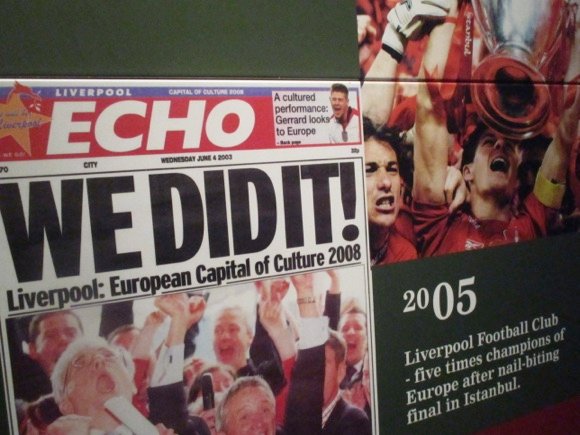
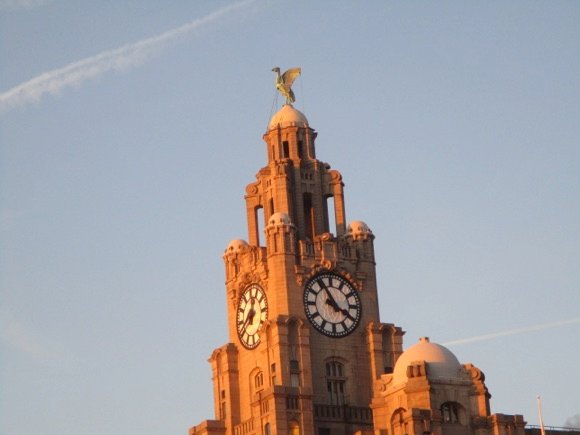
Liverpool’s John Lennon Airport is 12km (7.5 miles) south-east of town, connected to the central bus hub of Liverpool ONE (30-35min journey time) via Liverpool South Parkway train station (10min journey time) by Airlink bus 500 (every 30mins until 6.30pm, £2.20).
A taxi should cost around £20 and take 20mins. Going from town to the airport, a decent cabbie will offer to drop you near the terminal building – thus avoiding the £2 barrier charge to go right up to the door.
Bus 80/80A and 86/86A also serve Liverpool South Parkway and Liverpool ONE, stopping at more places and taking longer – but running later. Liverpool South is handy for train links to Liverpool Central and Lime Street, plus Birmingham New Street and major cities in the north. Lime Street is the main rail terminus for hourly direct trains from London Euston (2hr 15min, £22 online). You can also change at Crewe.
Public transport consists of buses, local rail and the Mersey ferry. A Merseytravel Saveaway day pass (after 9.30am Mon-Fri, all day Sat, Sun) covering all forms starts at £3.90, available from the two main offices of Liverpool ONE and Queen Square. A pre-paid MetroCard (available at PayPoint retailers, Merseytravel centres, bus and train stations, fee £1) is replacing the Walrus smartcard, for use across all transport.
For a taxi, ComCab (0151 298 2222) are long-established.
Where to Drink
The best pubs and bars for football fans


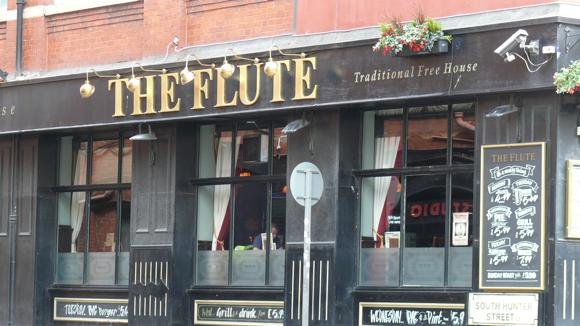
Few cities contain as many football-focused pubs, bars and nightspots as Liverpool.
A good place to start would be the Bierkeller, a three-bar complex at the Liverpool ONE retail and leisure complex, more promising inside than out, with three games shown on huge screens in the Bierkeller itself. On bar-lined Concert Square McCooley's is a lively choice for sports action, original cocktails and decent Irish pub grub.
Here in the party quarter, karaoke-focused Woodys on Wood Street is a pre-club stomper, with live sport too, while Slaters Bar on Slater Street is the domain of squiffy students, with TV football too. The Flute on Hardman Street has late weekend opening and plenty of TV sport.


The other side of Liverpool Central on Ranelagh Street, Lanigans offers an LCD video wall of match action, live music and late-spinning DJs. Pretty much the first you see when coming out of LIme Street Station, the Crown Hotel on Lime Street has long been providing sport action in an honest pub atmosphere.
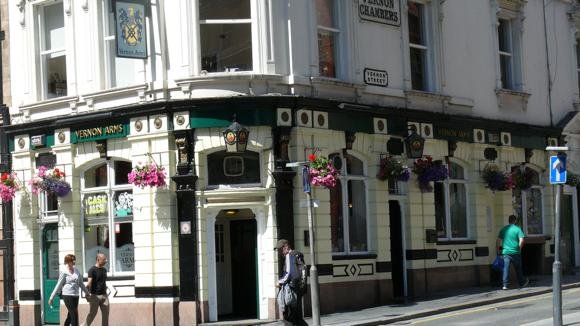
Heading from the top of main Dale Street, the Ship & Mitre has scores of hand-pulled ales with an adjoining outlet to take a bottle or two home. A bowl of scouse or a hand-made burger may complement your choice of brew. The Excelsior combines American craft beers with big-screen broadcasts while the Vernon Arms is an excellent choice for match watching, live music and real ales.


Further down Dale Street, tucked away on Hackins Hay, trusty Ye Hole In Ye Wall dates back to 1726, and the nearby Lady Of Mann well deserves its loyal clientele – with a great little beer garden. Alongside, Thomas Rigby's is known for its huge range of cask ales and global brews.
Over on Tithebarn Street, The Railway is another traditional match-watching option, a few houses down from buzzy Shenanigans, where you should stake your place early at before any big match – and stick around for the live music at weekends.
Into the tourist quarter around Mathew Street and Beatles paraphernalia, The Grapes was one of the band's favoured haunts, its wonderful vinyl jukebox providing funds for a homeless charity. Three-floor, football-friendly Flanagan's Apple is another age-old Irish favourite and the William Gladstone by the Cavern Club packs for big games. Legends is a pure sports bar, right on Mathew Street.


Heading towards the riverfront on James Street, The Liverpool Pub feels authentically familial with some nice touches to the décor, and live match action. With food more the focus, The Old Bank also shows games in somewhat grand surroundings. Opposite, The Captain Alexander is a barn-sized Wetherspoons.
In the same vicinity on Fenwick Street, The Slaughter House entertains regulars and tourists with live games, comedy and music. Where Brunswick Street meets The Strand, almost within sight of the Mersey, Jürgen's Bierhaus is a must, themed after Klopp and LFC, tastefully decked out in wall-to-wall memorabilia, with videos showing and, of course, live matches.
Where to stay
The best hotels for the grounds and around town






Visit Liverpool has a hotel database. Note that rates often rise for the weekend of the Grand National in April.
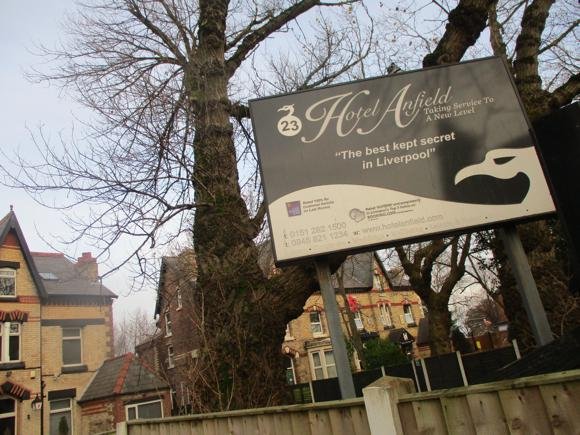
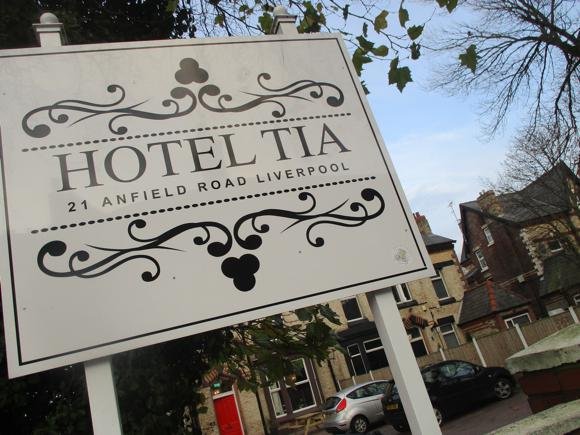
Convenient for Anfield a few hundred yards away are six guesthouses along Anfield Road. The Soccer Suite, Hotel Anfield, Epstein Guest House, The Anfield B&B, the Stanley Park Hotel and Hotel Tia offer varying degrees of comfort, convenience and affiliation to football and/or the Fab Four. While the six-room Soccer Suite has a smart, post-match bar with a wide-screen TV, the Hotel Anfield has boutique touches in its eight rooms, all with flat-screen TVs, plus there's tasteful football iconography in the dining room. The Tia has match hospitality packages plus a bar and garden. There are also rooms at the nearby King Harry Bar, which has six extremely cheap rooms with bunk beds above a pre-/post-match pub.
On the other side of the ground on Oakfield Road, the Sandon Hotel where LFC were founded has guestrooms along with an always popular pre-match bar. Facing it, across Houlding Street, the Klopp Guest Rooms (07469 927086) is a capsule hotel currently undergoing a few changes – hopefully not to the wonderful mural.


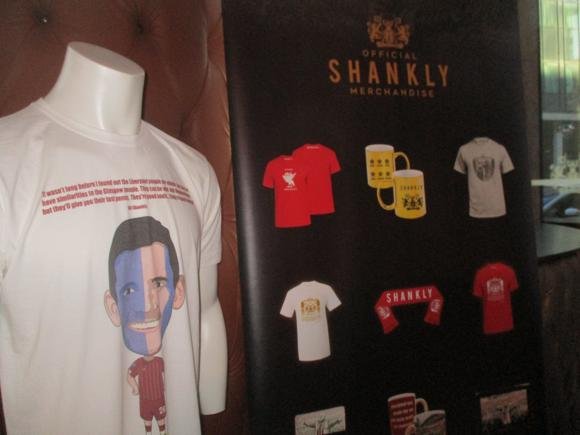
In town, The Shankly Hotel on Victoria Street carries its legendary theme in its Bastion Bar & Restaurant, decorated with rare memorabilia relating to the great man. Similarly upscale, expansive rooms and studios appeal to the discerning, moneyed visitor, while the hotel can link up with Shankly-themed tours of the city. Opposite, the boutiquey Dixie Dean Hotel is themed after another local football legend, obviously an Evertonian one, including the No.9 Bar & Restaurant. Blue is the signature colour throughout.
If you're going to open a Beatles hotel, you may as well do it round the corner from the Cavern Club. The Hard Days Night Hotel comprises 110 guestrooms in a classic Victorian building and offers packages of weekend stays for two and passes to various Beatles attractions around town. You'll also find McCartney's Bar and its seven HD screens for sport at the more affordable Hanover Hotel on Hanover Street.


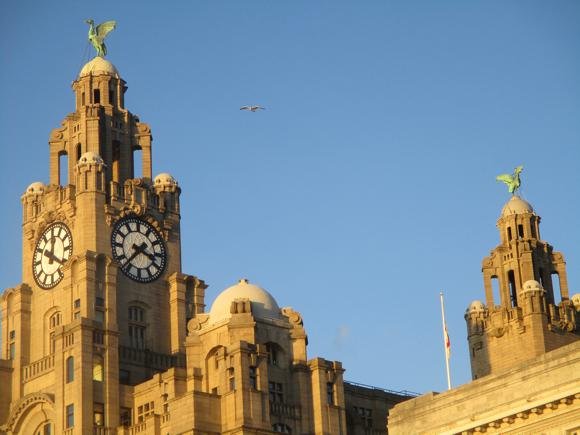
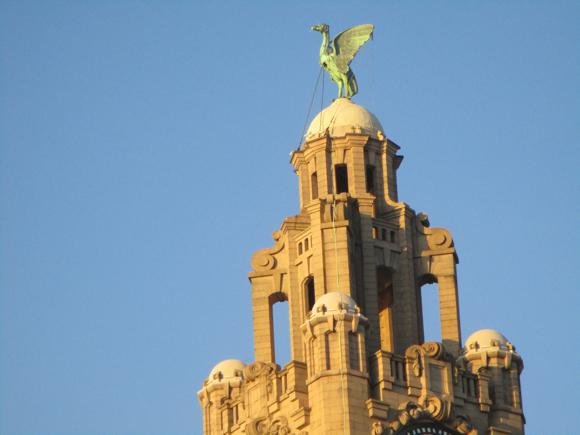
Within the iconic Royal Liver Insurance Building itself, Aloft Liverpool offers great views from many of its 116 rooms. Close to Liverpool Central Station, the funky Printworks Hotel consists of 33 contemporary rooms of varying configurations, all with power showers and flat-screen TVs. It has separate apartments, too. It sits near the the famous Adelphi, a fin-de-siècle beauty near Lime Street station which has seen better days – but it's worth a look in. Online rates are a steal, if contemporary comforts aren't a priority. The other side of the station, the mid-range Liner Hotel echoes Liverpool's maritime past.
For a real luxury apart-hotel stay, the Richmond on Hatton Garden goes that extra yard to keep high-spending guests happy – its brasserie is a top dining destination in its own right. The four-star boutique Hotel Indigo contains the Steakhouse Bar & Grill Liverpool, overseen by Michelin-starred chef Marco Pierre White.


If you're just after a simple room with few frills and enjoy a decent breakfast, then the Aachen on Mount Pleasant is ideal. Also budget and close to the Beatles Quarter, easyHotel Liverpool City Centre on Castle Street has location in its favour.
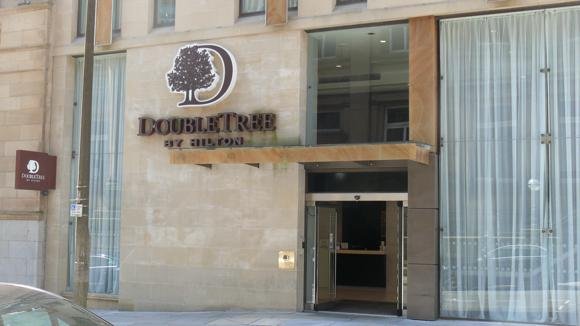
Chains abound. Close to each other by the waterfront, with memorable views of the Mersey, the Crowne Plaza has a spa and brasserie while the sumptuous Malmaison is the first purpose-built example of this sought-after nationwide chain. Close to Albert Dock, the Hilton Liverpool City Centre is suitably business-like, as is the Marriott, nearer Lime Street. Just off Dale Street, the DoubleTree By Hilton has the best spa in town, all set in an elegant 19th-century building.
" ["post_title"]=> string(9) "Liverpool" ["post_excerpt"]=> string(0) "" ["post_status"]=> string(7) "publish" ["comment_status"]=> string(6) "closed" ["ping_status"]=> string(6) "closed" ["post_password"]=> string(0) "" ["post_name"]=> string(9) "liverpool" ["to_ping"]=> string(0) "" ["pinged"]=> string(0) "" ["post_modified"]=> string(19) "2022-09-05 12:38:03" ["post_modified_gmt"]=> string(19) "2022-09-05 12:38:03" ["post_content_filtered"]=> string(0) "" ["post_parent"]=> int(0) ["guid"]=> string(34) "https://old.liberoguide.com/?p=289" ["menu_order"]=> int(0) ["post_type"]=> string(4) "post" ["post_mime_type"]=> string(0) "" ["comment_count"]=> string(1) "0" ["filter"]=> string(3) "raw" } } ["post_count"]=> int(6) ["current_post"]=> int(-1) ["before_loop"]=> bool(true) ["in_the_loop"]=> bool(false) ["post"]=> object(WP_Post)#4286 (24) { ["ID"]=> int(24448) ["post_author"]=> string(1) "3" ["post_date"]=> string(19) "2017-08-18 21:05:03" ["post_date_gmt"]=> string(19) "2017-08-18 21:05:03" ["post_content"]=> string(16742) "Teams, tales and tips – a guide to the local game
As a capital city and a namesake football club, Nur-Sultan, until recently Astana, is a strikingly new concept. A planned governmental hub like Brasilia, the administrative centre for the vast nation of Kazakhstan, Nur-Sulta was laid out by Kisho Kurokawa, partly responsible for the radical look of post-war Japan. Its futuristic architecture includes the Astana Arena, home of FC Astana, both created in 2009. Also the national stadium for the world’s ninth largest country, the Astana Arena has witnessed the recent triumphs of its host club, champions of Kazakhstan for six consecutive years from 2014.Getting Around
Arriving in town, local transport and timings
Where to Drink
The best pubs and bars for football fans
Where to stay
The best hotels for the stadium and city centre


Short standfirst, smaller and finer print than the opening lines and covers roughly two lines. With a first-ever promotion to…


Two fallen giants of Italian football clash tomorrow in a battle for a spot in Serie A. For visitors Palermo, promotion…

Major League Soccer kicks off this weekend with one expansion franchise: Los Angeles FC. Bringing the MLS complement to 23,…


Aberdeen-based Cove Rangers travel to Formartine this month for a Scottish Cup fixture that will see one of the Highland…