
NEW

object(WP_Term)#4924 (16) { ["term_id"]=> int(185) ["name"]=> string(3) "NEW" ["slug"]=> string(3) "new" ["term_group"]=> int(0) ["term_taxonomy_id"]=> int(282) ["taxonomy"]=> string(8) "category" ["description"]=> string(0) "" ["parent"]=> int(0) ["count"]=> int(186) ["filter"]=> string(3) "raw" ["cat_ID"]=> int(185) ["category_count"]=> int(186) ["category_description"]=> string(0) "" ["cat_name"]=> string(3) "NEW" ["category_nicename"]=> string(3) "new" ["category_parent"]=> int(0) } object(WP_Query)#4150 (54) { ["query"]=> array(1) { ["category__and"]=> array(2) { [0]=> int(185) [1]=> int(3) } } ["query_vars"]=> array(65) { ["category__and"]=> array(2) { [0]=> int(3) [1]=> int(185) } ["error"]=> string(0) "" ["m"]=> string(0) "" ["p"]=> int(0) ["post_parent"]=> string(0) "" ["subpost"]=> string(0) "" ["subpost_id"]=> string(0) "" ["attachment"]=> string(0) "" ["attachment_id"]=> int(0) ["name"]=> string(0) "" ["pagename"]=> string(0) "" ["page_id"]=> int(0) ["second"]=> string(0) "" ["minute"]=> string(0) "" ["hour"]=> string(0) "" ["day"]=> int(0) ["monthnum"]=> int(0) ["year"]=> int(0) ["w"]=> int(0) ["category_name"]=> string(4) "city" ["tag"]=> string(0) "" ["cat"]=> int(3) ["tag_id"]=> string(0) "" ["author"]=> string(0) "" ["author_name"]=> string(0) "" ["feed"]=> string(0) "" ["tb"]=> string(0) "" ["paged"]=> int(0) ["meta_key"]=> string(0) "" ["meta_value"]=> string(0) "" ["preview"]=> string(0) "" ["s"]=> string(0) "" ["sentence"]=> string(0) "" ["title"]=> string(0) "" ["fields"]=> string(3) "all" ["menu_order"]=> string(0) "" ["embed"]=> string(0) "" ["category__in"]=> array(0) { } ["category__not_in"]=> array(0) { } ["post__in"]=> array(0) { } ["post__not_in"]=> array(0) { } ["post_name__in"]=> array(0) { } ["tag__in"]=> array(0) { } ["tag__not_in"]=> array(0) { } ["tag__and"]=> array(0) { } ["tag_slug__in"]=> array(0) { } ["tag_slug__and"]=> array(0) { } ["post_parent__in"]=> array(0) { } ["post_parent__not_in"]=> array(0) { } ["author__in"]=> array(0) { } ["author__not_in"]=> array(0) { } ["search_columns"]=> array(0) { } ["ignore_sticky_posts"]=> bool(false) ["suppress_filters"]=> bool(false) ["cache_results"]=> bool(true) ["update_post_term_cache"]=> bool(true) ["update_menu_item_cache"]=> bool(false) ["lazy_load_term_meta"]=> bool(true) ["update_post_meta_cache"]=> bool(true) ["post_type"]=> string(0) "" ["posts_per_page"]=> int(10) ["nopaging"]=> bool(false) ["comments_per_page"]=> string(2) "50" ["no_found_rows"]=> bool(false) ["order"]=> string(4) "DESC" } ["tax_query"]=> object(WP_Tax_Query)#4289 (6) { ["queries"]=> array(1) { [0]=> array(5) { ["taxonomy"]=> string(8) "category" ["terms"]=> array(2) { [0]=> int(3) [1]=> int(185) } ["field"]=> string(7) "term_id" ["operator"]=> string(3) "AND" ["include_children"]=> bool(false) } } ["relation"]=> string(3) "AND" ["table_aliases":protected]=> array(0) { } ["queried_terms"]=> array(1) { ["category"]=> array(2) { ["terms"]=> array(2) { [0]=> int(3) [1]=> int(185) } ["field"]=> string(7) "term_id" } } ["primary_table"]=> string(8) "wp_posts" ["primary_id_column"]=> string(2) "ID" } ["meta_query"]=> object(WP_Meta_Query)#4149 (9) { ["queries"]=> array(0) { } ["relation"]=> NULL ["meta_table"]=> NULL ["meta_id_column"]=> NULL ["primary_table"]=> NULL ["primary_id_column"]=> NULL ["table_aliases":protected]=> array(0) { } ["clauses":protected]=> array(0) { } ["has_or_relation":protected]=> bool(false) } ["date_query"]=> bool(false) ["request"]=> string(379) "SELECT SQL_CALC_FOUND_ROWS wp_posts.ID FROM wp_posts WHERE 1=1 AND ( ( SELECT COUNT(1) FROM wp_term_relationships WHERE term_taxonomy_id IN (3,282) AND object_id = wp_posts.ID ) = 2 ) AND ((wp_posts.post_type = 'post' AND (wp_posts.post_status = 'publish'))) GROUP BY wp_posts.ID ORDER BY wp_posts.post_date DESC LIMIT 0, 10" ["posts"]=> array(10) { [0]=> object(WP_Post)#4281 (24) { ["ID"]=> int(31923) ["post_author"]=> string(1) "3" ["post_date"]=> string(19) "2020-04-08 20:22:19" ["post_date_gmt"]=> string(19) "2020-04-08 20:22:19" ["post_content"]=> string(22292) "

Teams, tales and tips – a guide to the local game

The unveiling of the new Dinamo Stadium in the heart of Minsk epitomised the game in the capital of Belarus, a proud former Soviet republic. Surrounded by the Stalin-era colonnades still lining the arena’s refashioned grand façade, authoritarian national president Alexander Lukashenko and Alexander Hleb, the country’s one global football star, strode out together onto the turf. The date was June 21, 2018. The following day would be yet another anniversary of the start of World War II in the USSR, three years before the Minsk Offensive that culminated in the city’s liberation in June 1944, its population reduced sixfold within three years. A decade beforehand, in June 1934, the original stadium had been opened to host the flagship club of the same name, Dinamo Minsk.
Atlético Madrid tour/Ruth Jarvis
Exactly one year after this 2018 curtain-raiser, the new Dinamo Stadium staged the opening ceremony of the 2019 European Games. The event was the most prestigious sporting event to take place here since the Olympic football tournament of 1980. Barcelona stalwart Victor and Bordeaux’s famed Vujović twins played for Spain and Yugoslavia when this was an arena of classic Soviet appearance. In the decade between Dinamo Minsk leaving the old stadium in 2008, and Lukashenko and Hleb striding out into the new one, the powerbase of Belarus football had shifted. A former works team, BATE Borisov, had just embarked on a run that would stretch to 13 straight titles and nine lucrative group-stage European campaigns. During this unprecedented purple patch, the sleek new-build Borisov Arena became the de facto national arena. In 2018, Belarus played their first game in the new Dinamo Stadium – by 2019, the year that BATE loosened their grip on the domestic game, Minsk staged half the home matches of the national team, the White Wings.
Atlético Madrid tour/Ruth Jarvis
Dinamo Minsk, league runners-up seven times between 2005 and 2017, were not the last team to call the old Dinamo Stadium home. That strange honour belonged to the city’s second club, FC Minsk, now housed at their own stadium, the former Kamvolschik, rebuilt and reopened in 2015. Set in a complex of football pitches, the FC Minsk Stadium stands on ulica Mayakavskovo in Lenin District (Dynamo’s lies next to Dzerzhinsky Garden, named after the founder of the KGB born near Minsk). To see the former Belarus Cup winners, head for the Kamvolny Combinat stop south of town, taking trolleybus 5 or 6 from Minsk main station (Vokzal), or trolleybus 5/bus 2s from the Economic University. Tickets cost between 2 and 5BYN (€0.70-€1.80), the cheapest spots in sectors 5-7 (6 and 7 are for away fans), the dearest in sector 2. As for Dinamo, while homeless they were consigned to the Traktor (formerly the ‘Red Flag’) Stadium and the modest Dinamo-Yuni in the far west of town. Perversely, almost, with the new Dinamo Stadium now barely even a quarter full for home games, the club’s notoriously right-wing following yearn for the days of crowding round the pitch with a few hundred others at the Yuni. But the former Darida Stadium, too, is under long-term reconstruction while Dinamo figure out whether they want a football complex for their youth sides or a 5,000-capacity ground for the first team – and how to fund it.
Atlético Madrid tour/Ruth Jarvis
Dinamo are the only Minsk club with any real football pedigree. When the game was slowly developing across this region, Belarus was still a backwater of Tsarist Russia. A young banker from Kiev, one AL Liebman, introduced the game in Gomel in the south-east of the country close to what is now the border with Ukraine. In May 1913, a story in the Minskaya Gazeta referred to the setting up of a ‘football pitch’ on Kosharskaya ploshchad, site of what would later be a popular pre-war hippodrome, where the upscale Beijing Hotel stands today. Here, on June 29, ‘Olymp’ beat ‘Maccabi’ 3-0. The defeated side represented Minsk’s substantial Jewish community, at that time the majority of the city’s 90,000 population. After World War I, partly fought on Minsk’s doorstep, came the Soviets. Just as Felix Dzerzhinsky had founded Dynamo Moscow in 1923, so similarly named and structured clubs sprang up around the newly formed USSR, including one in Minsk in 1927. In the early 1930s, the authorities started construction on a stadium of the same name in the centre of town where a Jewish cemetery once lay. Expanded in 1939, the year before Dinamo Minsk became the first and only Belarus club to reach the top division in the Soviet Union, the stadium went the way of nearly all of downtown Minsk soon afterwards. The city of monumental avenues and architecture you see today arose from the post-war rubble at the same as a rebuilt Dynamo Stadium. Along with Dynamo, regular challengers for the Soviet title and champions in 1982, clubs of classic Communist character – Traktor Minsk, Torpedo Minsk – also emerged, both created in 1947. As MTZ-RIPO Minsk and Torpedo-MAZ respectively, they would have bit parts to play when an independent Belarus league was created after the break-up of the USSR in 1991. Cup finalists in 2000, Torpedo were disbanded in 2005, reformed, promoted through three divisions, then collapsed again halfway through the 2019 campaign. The Torpedo Stadium still exists – it was one of three grounds in Minsk, along with the Traktor and Darida (the later Yuni), to host matches for the 2009 Women’s Under-19 European Championships. England, with Toni Duggan scoring at the Darida against Sweden, would lift the trophy – in Borisov. MTZ-RIPO, meanwhile, became part of Vladimir Romanov’s mini football empire in 2004, along with Hearts and FBK Kaunas. Cup winners in 2005 and 2008, they beat Ferencváros when making their European debut in 2005, the first of three international campaigns played solely against ex-Eastern bloc opposition. Renamed on a whim as Partizan in 2011, they folded in 2014 soon after Romanov’s creative accounting failed him. Apart from Isloch Minsk, based at the FC Minsk Stadium, and who persuaded a 38-year-old Alexander Hleb to play a dozen or so matches in 2019, two more local teams merit a mention. FC Krumkachy, The Crows, were formed in 2011 by journalists from the Belarus forum PressBall. Persuading ex-Gomel midfielder Oleg Dulub to take over as coach, the club gained a legendary 2-0 win over Dnepr Mogilev in 2015 to reach the top flight. Also based at the FC Minsk Stadium, having had to vacate the humble SOK Olimpiyskiy north-east of town, Krumkachy bumbled along for two seasons in the lower half of the Premier before the novelty wore off and the money ran out. Even by Belarus standards, crowds had been low, and demotion then condemned The Crows to the third tier. Taking flight once more as NFK Minsk, the club gained promotion in 2018 and, reverting back to Krumkachy, maintained second-tier status for the 2020 campaign, the sole representatives of the Belarus capital in the First Division. One rung above, the Belarus Premier received an inordinate amount of attention when it continued playing in March 2020 while the entire European game had shut down during the coronavirus epidemic. Even more bizarrely, one club in particular, Energetik-BGU Minsk, the former Zvezda (‘Star’), was granted particular focus by beating the many-titled BATE Borisov in the first game of the controversial 2020 season. They then won two more on the bounce, including victory at home to FC Minsk, to sit top of the league after three games. With far more punters betting on them around the world than the 250 spectators who watched the derby in Minsk, Energetik-BGU earned a niche global following. To see what the fuss was all about at some point in the future, the unpromisingly named RTsOP-BGU Stadium is at ulitsa Semashko 13, a short walk from Petrovshchina metro station south-west of central Minsk. This is the student quarter – BGU is an acronym for Belarus State University. Admission to enter the one stand, the Tribuna, costs between 3 and 5BYN (€1.10-€1.80), the pricier spots in sectors 3-5 over the halfway line. The anomaly of the virus-defying football season divided opinions – not least between national president Lukashenko and football icon Hleb, whose views on the matter ranged from strange theories about tractors to downright disbelief on the part of the former Arsenal and Barcelona star. [mapsmarker map="34"]

Getting Around

Arriving in town, local transport and tips
FC Barcelona transport/Peterjon Cresswell
FC Barcelona tickets/Peterjon Cresswell
Expo Hotel Barcelona/Peterjon Cresswell
Previous Next UK, EU, US and citizens of some 74 countries require no visa to enter Belarus for stays of up to 30 days. The local currency is the Belarus rouble (BYN), traded at around 2.80BYN/€1 – the standard admission to a league fixture in Minsk, give or take. Minsk Airport is 42km (28 miles) east of the city. Shuttle buses Nos.1400-K, 1430-K and bus No.300E run every 30min-1hr from stands 5-6 outside Arrivals to Tsentralny station in town, journey time around 70min. Tickets (4BYN/€1.40) are sold at kiosks in the airport terminal or are purchased from the driver using coins or small notes. A 135 taxi (+375 29 22 22 001/WhatsApp +375 44 55 55 135) to town should cost around 35BYN/€12.50. For all other cabs, agree a price first. Tsentralny bus terminal is near the main train station of Passazhirskiy, south-west of the city centre, a 10min walk from the Dynamo Stadium. The nearest metro station, Ploshcha Lenina is one stop from the central crossing point of Kupulauskaya/Kastrupitskaya on the two-line network. Plastic tokens (жетоны/zhetoni) for a single journey are 0.70BYN/€0.25, 0.65BYN/€0.35 for the tram, bus or trolleybus. It may be far easier to buy a three-day pass (3 суток/tri sootok) for the metro, trams and buses (10.18BYN/€3.65), among a myriad multi-journey/day combinations. Tokens are sold at machines and ticket windows, where smartcards are also available. Top up at the same windows or, with a Russian speaker by your side, at machines. Find all routes, timetables and an informative English-language journey-planner atEway24, which also shows schedules for the communal minibuses, marshrutki. These have specified stops and cost 1BYN/€0.35 a ride, passed to the driver.

Where to Drink

The best pubs and bars for football fans
FC Barcelona transport/Peterjon Cresswell
FC Barcelona tickets/Peterjon Cresswell
Expo Hotel Barcelona/Peterjon Cresswell
Previous Next There’s plenty of drinking to be had in Minsk, and plenty of decent beers, too, Czech, Slovak, German, the lot. The main hub is, in fact, at the Crowne Plaza end of main ulitsa Karla Marksa, and so close to the Dynamo Stadium and featured in the section on Dinamo Minsk. Further along ulitsa Karla Marksa in the opposite direction, Kuhmistr at No.40 is more restaurant (quality rustic cuisine nudged up towards gourmet level) than pub but has a bar menu featuring horseradish-flavoured vodka. Major games shown inside, view of the Soviet tank monument from the terrace. The other side of Gorky Park from Kuhmistr, Kamyanitsa also errs on the side of traditional. There’s a sturdy bar to prop up if you don’t fancy being waited on by staff straight out of the 17th century. A specifically football-oriented bar can be found in another pub hub between Holy Spirit Cathedral and the river, near Niamiha metro station. Malt & Hops on ulitsa Zybitskaya, a more English-style hostelry serving London Pride and other Fuller’s/Greene King beers at UK prices – cheaper domestic brews come by the bottle. Match action is beamed on big screens dotted around a modern interior. One excellent find, just the other side of ulitsa Niamiha on Vitebskaya, is the Rakayski Brovar, an atmospheric microbrewery and beerhall-cum-restaurant, originally built as a synagogue in 1882. Choose from five delicious house brews to accompany your hulking platter of meat. There’s a small TV in the corner if you’re desperate. Just over the river, the street of Starovilenskaya, lends its name to the Starovilenskaya Korchma, the old-school bar/eatery of the same name, whose waterfront terrace overlooks the Island of Tears. From there, on the other side of the Opera House, Gurman on Kamunistichkaya has a lovely bar area anchoring a decent restaurant, with quality beers on draught.

Where to stay

The best hotels for the stadiums and city centre
FC Barcelona transport/Peterjon Cresswell
FC Barcelona tickets/Peterjon Cresswell
Expo Hotel Barcelona/Peterjon Cresswell
Previous Next Unlike many ex-Soviet cities, Minsk has a tourist information office with an English-language hotel database. The nearest hotel to the stadium is one of the city’s best: the Crowne Plaza Minsk, a four-star on a prominent corner of Kirova surrounded by bars and restaurants, with a pool, gym and its own decent eatery. Also very close and even more luxurious, at the Kupulauskaya/Kastrupitskaya metro end of Kirova, Minsk’s most showy hotel is the huge five-star President, with a spa second-to-none and 25-metre pool. Behind the Crowne Plaza on prospekt Nezalezhnastsi, the Hotel Minsk dates back to 1959 but reconfigured its Soviet past with a huge overhaul in 2002, adding a sauna centre and gym. Four-star, going on five. The city’s other upper/mid-range hotels are near the city’s main sights and landmarks, at most a ten-minute walk from the Dynamo Stadium. The classiest hotel in Minsk, the exquisite Europe is a stylish masterpiece, with two bars, a spa and restaurant. Further along Internatsiyanal’naya, the Garni merits more than its three-star status, a contemporary remake of a 19th-century landmark lodging. Halfway between the Garni and the Minsk on Myasnikova, the Buta Boutique Hotel charges a pretty penny for its chintzy rooms, sauna, gym and pool with water chutes – with extra charges for admission daytime and after 8pm. Another cluster of hotels surrounds a leafy meander of the River Svislach north of town. Here, right on main prospekt Pobyediteley, the affordable Yubileiny provides that essential accoutrement, a bowling alley, near a complex with a cinema and main sports hall. It has its own stop on the No.1 bus route, terminating at the main train station. The nearby Planeta may be the ultimate Soviet throwback with its rattling lifts but its range of rooms from $45 a single, $55 a double can’t be beat and breakfast for a few dollars more features hefty meat and potatoes. English-speaking staff on reception. Again, the No.1 bus connects with the station, close to the Dynamo Stadium." ["post_title"]=> string(5) "Minsk" ["post_excerpt"]=> string(0) "" ["post_status"]=> string(7) "publish" ["comment_status"]=> string(6) "closed" ["ping_status"]=> string(4) "open" ["post_password"]=> string(0) "" ["post_name"]=> string(5) "minsk" ["to_ping"]=> string(0) "" ["pinged"]=> string(0) "" ["post_modified"]=> string(19) "2021-12-24 15:08:23" ["post_modified_gmt"]=> string(19) "2021-12-24 15:08:23" ["post_content_filtered"]=> string(0) "" ["post_parent"]=> int(0) ["guid"]=> string(36) "https://old.liberoguide.com/?p=31923" ["menu_order"]=> int(0) ["post_type"]=> string(4) "post" ["post_mime_type"]=> string(0) "" ["comment_count"]=> string(1) "0" ["filter"]=> string(3) "raw" } [1]=> object(WP_Post)#4038 (24) { ["ID"]=> int(31833) ["post_author"]=> string(1) "3" ["post_date"]=> string(19) "2020-03-14 11:23:11" ["post_date_gmt"]=> string(19) "2020-03-14 11:23:11" ["post_content"]=> string(23985) "

Teams, tales and tips – a guide to the local game

Capital of Upper Austria, Linz is where the national title first went after staying in Vienna for more than half a century. Pioneering champions in 1965, LASK nearly disappeared in 2013 before being rescued by fans and investors to bounce back and take runners-up spot in the Austrian Bundesliga in 2019. Competing in Europe’s premier competition for the first time since 1965, LASK subsequently made it through to the knock-out stages of the Europa League. Linz is, in fact, a two-club city. These two clubs have almost gone under and, at one point, even merged. What has remained constant is the ground they both often use, the Linzer Stadion. In 1974, Linz hosted another title celebration when SK VÖEST lifted the league crown. Five times during the 1970s, in fact, the two Linz clubs finished top six in Austria. Although neither made any progress in Europe, in 1974 Barcelona’s Dutch stars Johan Cruyff and Johan Neeskens came away from the Linzer Stadion with only a goalless draw against VÖEST. This multi-purpose municipal stadium is nicknamed Auf der Gugl due to its location on the hillside of the same name, up from the city’s main train station.
Atlético Madrid tour/Ruth Jarvis
Since 2016-17, LASK have also been based at the Raiffeisen Arena out by the airport but European games are still played at the Linzer Stadion – where the club plans to return by 2022-23. In March 2020, Auf der Gugl staged what should have been a money-spinning reward for all the LASK fans who stood by the club through so many hard times – the visit of Manchester United in the Europa League. Instead, coronavirus fears forced the tie to be played behind closed doors. The Linzer Stadion also hosts second-flight Blau-Weiß Linz, considered the natural successors to VÖEST and their various incarnations. Just as VÖEST had sprung from steelworks team SV Eisen und Stahl Linz formed after World War II, so the Linzer Stadion rose out of the rubble. Like Berlin and Vienna, in 1945, Linz was a divided city, the Soviet sector set in Urfahr on the north bank of the Danube. Here, the Red and Blacks of SV Urfahr, formed by a travelling Dutchman in 1912, had already won three regional titles and three cups before the war.
Atlético Madrid tour/Ruth Jarvis
Across the river, the city centre was in ruins, including the former brickwork factory where the Linzer Stadion now stands. When proposed by mayor Dr Ernst Koref, the idea of building a sports ground there was first met with incredulity. Slowly, though, the stadium took on the symbolic role of a return to normality. A schools and communal sport festival was organised for the grand opening in June 1952. A U-shaped bowl, the Linzer Stadion would pack with 30,000 spectators for games between LASK and the big Viennese clubs. Football had come to Linz in the early 1900s from Vienna. Albert Siems, head of the local Postbus transport line, brought the new fad from the capital, where he had played with the venerable Vienna Cricket and Football-Club, formed in 1894. Other pioneers included English dye-maker Percy Lowe and footballer Otto Zwicker, one of several Viennese sportsmen who did their military service near Linz. Also attracting players from nearby Bohemia, football caught on quickly in Upper Austria. Siems founded Linzer Sport-Klub, who played a couple of friendlies in 1908, then won the first unofficial regional championship in 1912. Their first pitch was close to the Children’s Hospital south-east of the city centre.
Atlético Madrid tour/Ruth Jarvis
Historically linked to LSK, Linzer Athletik-Sport-Klub were created after World War I and shared a three-way hold on the Upper Austria championship with nearest rivals Vorwärts Steyr and SV Urfahr. This lasted until 1938, when Austria was swallowed up in Greater Germany. LASK moved from Krankenhausstraße to LASK-Platz on Paul-Hahn-Straße. As now, prestigious fixtures were switched to the Linzer Stadion. Similarly, VÖEST played lesser fixtures at their Werkssportplatz, before disappearing altogether in 1990. After a brief period as FC Stahl, they became FC Linz, whose last throw of the dice in 1995 was to hire one-time Real Madrid star Hugo Sánchez for his last European club campaign.
Atlético Madrid tour/Ruth Jarvis
Across town, LASK were equally cash-strapped. In 1997, the two former rivals merged to form LASK Linz, but even then, errant ownership saw the city’s flagship club nearly go under. A fire sale of key players then led to six years of lower-tier football. Perhaps worse, in 2002, Blau-Weiß Linz, created from the fall-out of the 1997 merger, beat LASK Linz 3-1 in the first city derby since the poignant and controversial last one between LASK and FC Linz on the eve of the amalgamation. Also hosted at the Linzer Stadion in front of a five-figure crowd – for a fixture between sides in the second and fourth flights – the cup tie created the kind of football buzz the city hadn’t experienced since the 1970s. Despite missing out on co-hosting Euro 2008, Linz could at least celebrate the return of LASK to the Bundesliga in 2007. The joy soon turned sour, however, with more financial despair, enforced relegation and near bankruptcy. With Blau-Weiß losing second-flight status in 2013, the city had no representative in the top two leagues for the first time since being introduced in 1974.
Atlético Madrid tour/Ruth Jarvis
A consortium of supporters, Friends of LASK, saved the day in December 2013 and a five-figure crowd again gathered at the Linzer Stadion to witness promotion from the third tier. Blau-Weiß, meanwhile, moved up to the second-tier in 2016, crossing paths with LASK on their way up to the Bundesliga that season. LASK had been forced to turn their back on the Linzer Stadion and move out to the rebuilt, eco-friendly Waldstadion, renamed the TGW-Arena, today the Raiffeisen Arena, out in Pasching towards Linz Airport. The stadium may be equipped with energy-saving solutions but it proved incapable of staging a long-awaited city derby in August 2016, poor segregation leading to violent scenes between rival fans. Visitors Blau-Weiß had already moved their home games to the Linzer Stadion when rising through the lower divisions, playing to scant gates at the Donauparkstadion. Overlooking the Danube between the former tobacco factory and VÖEST Bridge, this 2,000-capacity stadium remains a training ground for the Blue-and-Whites. And it’s here, once expanded to around 5,000 capacity, that Blau-Weiß will return once LASK return to the Linzer Stadion in 2022. By then, LASK may well have a Bundesliga title under their belts – a first since 1965.
Atlético Madrid tour/Ruth Jarvis
SV Urfahr still exist, despite twice losing their ground to flooding and briefly amalgamating with LASK amateurs. The first team currently play in the lowest level of Upper Austrian football, the 2. Klasse Mitte. In the same league are Stahl Linz, the direct successors to VÖEST, playing at the Sportpark Auwiesen, way south of town near the Auwiesen stop on tramline 1. Urfahr are up by the Peuerbachstraße stop on the same line. [mapsmarker map="34"]

Getting Around

Arriving in town, local transport and timings
FC Barcelona transport/Peterjon Cresswell
FC Barcelona tickets/Peterjon Cresswell
Expo Hotel Barcelona/Peterjon Cresswell
Previous Next Linz Airport 8km (five miles) south-west of town has limited services, mainly from Frankfurt and Dusseldorf. From the terminal, bus 601 runs hourly to Linz/Donau station (€3.20, journey time 20mina), the main train station on the southern edge of the city centre. Alternatively, an airport shuttle, free for air passengers, runs every hour to nearby Hörsching station, linking with trains to Linz Hbf (€2.40 or €3.60, 10min journey time). A taxi 6969 (+43 732 6969) to town should cost €30. The nearest main airport to Linz is Salzburg, 138km (86 miles) away. Bus 2 runs to the main station (20min journey time, €2.50 on board) every 10-20mins. From there, a train to Linz/Donau main station takes just over an hour – average tickets €30, online specials €9. Vienna Airport is 208km (129 miles) from Linz. A regular direct train to Linz/Donau (€25-€45) takes 1hr 45mins. Some services require a change at Vienna main station. Linz city transport consists of trams and buses. The Linzer Stadion is pretty much walkable from the station, though it’s a steep climb served by buses. Single tickets(€2.40, up to 4 stops €1.30) and day passes (€4.80) are sold from machines by stops.

Where to Drink

The best pubs and bars for football fans
FC Barcelona transport/Peterjon Cresswell
FC Barcelona tickets/Peterjon Cresswell
Expo Hotel Barcelona/Peterjon Cresswell
Previous Next Drinking spots dot the streets of the historic centre between the main square and the river. A great starting point, the pub-like Granit Bierstube on Pfarrgasse, run by the convivial Petra and her husband, prioritises the beers of Upper Austria, Eggenberg in particular, as well as TV football. Alongside, older regulars gather at the cosy Gösser Keller, beneath images of the Rolling Stones and Bob Marley. Outside, the terrace catches the late afternoon sun as it falls over the main square. Across it and a down a passageway behind the Holy Trinity column, the Old Dubliner dispenses pints of the black stuff, Kilkenny and Gösser from 5pm until the early hours. Tucked down Domgasse, Kieran and his team run one of the top football pubs in town, the Chelsea, where a comprehensive schedule of live matches occasionally shares the spotlight with English stand-up. For live music, nearby Rox Musicbar & Grill on Graben also combines TV games with entertainment.
FC Barcelona transport/Peterjon Cresswell
FC Barcelona tickets/Peterjon Cresswell
Expo Hotel Barcelona/Peterjon Cresswell
Previous Next In a more local vein, Keintzel on Rathausgasse shows sport on a flat-screen TV by the bar, though you might wish to sip your Linzer Bier, Zipfer or Schladminger in the courtyard garden in summer. Its walls covered in melted vinyl, bug’s is the lively, late-night option around the main square. Further into town away from the river, Stiegl-Klosterhof on Landstraße comes into its own from spring when the signature Stiegls are served on the pretty terrace. On the same street, the Café Central is more daytime eatery but attracts a drinking crowd after dark. Also on Landstraße, Josef Linz  specialises in wines from nearby Wachau, served with quality gastronomy.

Where to stay

The best hotels for the stadium and city centre
FC Barcelona transport/Peterjon Cresswell
FC Barcelona tickets/Peterjon Cresswell
Expo Hotel Barcelona/Peterjon Cresswell
Previous Next Linz Tourismus has a comprehensive hotel database with direct booking. Hotels close to Linz main station are convenient, almost walking distance, from the Linzer Stadion where LASK play European games. Opposite the station, the ibis Linz City comprises 146 rooms and a restaurant. Just behind on Weingartshofstraße, homely Zur Lokomotive operated by the Klinglmüller family first opened in 1906 and was recently modernised. Just across from Bahnhofstraße from Goethestraße, the Wilder Man Hotel Garni offers simple but comfortable two-star lodgings, three floors of standard rooms accessed by stairs. On the stadium side of town, the Hotel am Domplatz on, in fact, Stifterstraße, is all boutique design, with a modest sauna. No under-16s allowed. Nearby on Gesellenhausstraße and Rainerstraße stand reliable three-star Hotel Kolping and the slightly more stylish Schillerpark, also housing the upscale Tafelspitz restaurant.
FC Barcelona transport/Peterjon Cresswell
FC Barcelona tickets/Peterjon Cresswell
Expo Hotel Barcelona/Peterjon Cresswell
Previous Next Also close, the Dom-Hotel on Baumbachstraße comprises 40 four-star rooms and eight in the so-called House in the Garden. On Hessenplatz right in the heart of town, the Park Inn by Radisson Linz is more affordable than its 175 business-friendly rooms, seasonal restaurant and 24-hour gym would suggest. Towards the river on Herrenstraße, the Hotel Schwarzer Bär includes 14 singles among its 54 modern guestrooms, all beneath a rooftop bar open from 5pm, even in winter. Right on Hauptplatz, the Wolfinger dates back to the 1500s, its rooms looking out onto the town’s historic main square or a pretty inner courtyard. To stay in style, the ARCOTEL Nike towers over the Danube from Untere Donaulände, with a spa, sauna, gym and contemporary rooms." ["post_title"]=> string(4) "Linz" ["post_excerpt"]=> string(0) "" ["post_status"]=> string(7) "publish" ["comment_status"]=> string(6) "closed" ["ping_status"]=> string(4) "open" ["post_password"]=> string(0) "" ["post_name"]=> string(4) "linz" ["to_ping"]=> string(0) "" ["pinged"]=> string(0) "" ["post_modified"]=> string(19) "2022-09-23 20:06:29" ["post_modified_gmt"]=> string(19) "2022-09-23 20:06:29" ["post_content_filtered"]=> string(0) "" ["post_parent"]=> int(0) ["guid"]=> string(36) "https://old.liberoguide.com/?p=31833" ["menu_order"]=> int(0) ["post_type"]=> string(4) "post" ["post_mime_type"]=> string(0) "" ["comment_count"]=> string(1) "0" ["filter"]=> string(3) "raw" } [2]=> object(WP_Post)#4153 (24) { ["ID"]=> int(29849) ["post_author"]=> string(1) "3" ["post_date"]=> string(19) "2019-07-21 09:09:44" ["post_date_gmt"]=> string(19) "2019-07-21 09:09:44" ["post_content"]=> string(12783) "

Teams, tales and tips – a guide to the local game

Home of Cointreau, Angers is enjoying a football revival, flagship club Angers SCO taking Paris Saint-Germain to within a whisker of extra-time in the French Cup final of 2017. Les Scolistes then celebrated their centenary year of 2019 by finishing in a solid mid-table position in Ligue 1 in May, before starting a fifth consecutive season in the top tier. The last time SCO showed this kind of consistency was back in the early 1970s, when they even made a fleeting European appearance.
Welcome to Angers/Jean-Christophe Hémez
In between, this pretty medieval town near the Loire, at the entrance to north-west France, had to be content to let nearest main rivals Nantes take the limelight. The O of SCO stands for ‘Ouest’. Shortly after World War I, the local Fortin brothers who ran the Banque du Crédit de l’Ouest formed the club as SCCO Angers, the SC of Sporting Club remaining when the acronym was shortened. But SCO Angers also link back to influential industrialist and textile baron Julien Bessonneau, involved in the earliest days of flight, who formed a sporting club for his workers in 1912.
Welcome to Angers/Jean-Christophe Hémez
Bessonneau also built a stadium on rue St-Léonard, in the district of the same name south-east of town, where today’s Stade Raymond Kopa still stands a century later. The conflict, and Bessonneau’s accidental suicide in 1916, ceased operations at the Club sportif Julien Bessonneau. With workers coming back from the front after 1918, the Fortin brothers duly stepped in to revive local sports activity. By doing so, the Fortins inadvertently put an end to the other main team in town, Angers Université Club, AUC, who folded in 1919. The Stade Raymond Kopa, of course, is named after the most famous player to have graced the then Stade Bessonneau. It was at Angers in 1949 that Raymond Kopaszweski became Raymond Kopa, starting out on his career before starring for Real Madrid and France.
Welcome to Angers/Jean-Christophe Hémez
Angers SCO also played at another ground in the early 1920s, the Stade Fortin on rue Saint-Lazare, north of the river Maine, but it was only after ‘Les Banquiers’ assimilated key players from the Club sportif Julien Bessonneau, and turned professional in 1945, that things started to happen. Soon after the war, five-figure crowds flocked to see Kopa and top pre-war international Fred Aston. Angers would go on to have other periods of success, in the late 1950s and early 1970s, though the current revival was a long time coming. Ironically, it coincided with the death of Raymond Kopa, who had married an SCO basketball player back in 1953 and returned to Angers after retiring. It was in Angers that he led his long-term campaign to find a cure for cancer – the couple had lost their son at an early age – and more than 1,000 filled medieval Angers Cathedral for Kopa’s funeral in March 2017. The stadium took his name a few days later.

Getting Around

Arriving in town, local transport and timings
Angers SCO transport/Jean-Christophe Hémez
Angers-Loire Airport 20km (11 miles) north-east of town is only occasionally used for commercial flights. The nearest main international airport is Nantes Atlantique homepage 100km (62 miles away). A shuttle bus runs to Nantes train station every 20mins (every 30mins Sun), tickets €9 from the driver or the machine alongside, journey time 20mins. Taxis Nantes (+33 2 40 69 22 22) should charge around €30, or €35+ after 7pm. Frequent trains to Angers Saint-Laud station take 40mins and cost around €10 online. From Paris-Montparnasse, the journey takes 1hr 45mins, advance single ticket €14 online. Saint-Laud is south of the city centre a 10-15min walk away. The one-line tram runs via the station and town but for the stadium you’ll need to use local buses, also run by irigo on the same ticket system of €1.40 from a machine, €1.50 on board, valid 60mins. A 24hr pass is €4. Âllo Angers Taxis (+33 2 41 87 65 00) is a reliable local service offering airport transfers, even with Paris.

Where to Drink

The best pubs and bars for football fans
Le Pub du Ralliement/Jean-Christophe Hémez
Le James Joyce/Jean-Christophe Hémez
Le Welsh/Jean-Christophe Hémez
Previous Next Pubs and bars are dotted around the city’s historic centre. A vortex of drinking spots where rue Bressigny meets boulevard du Maréchal Foch is also handy pre- and post-match as the bus runs nearby. On boulevard Carnot at the northern end of the city centre, Le James Joyce offers match-watching, a decent menu in a pub-like interior and a wide terrace. On pretty place Louis Imbach nearby, board games and live music await at Le Welsh. For a pleasant beer on the terrace in the heart of town, Le Pub du Ralliement stands on the square of the same name, with a screen inside. There’s TV sport on three ultra HD screens at Le Joker’s Pub on rue Saint-Laud, also the town’s main venue for live music. Le Dublin’s on rue Saint-Georges provides fine dining rather than frantic drinking.

Where to stay

The best hotels for the stadium and city centre
ibis Angers Centre Château/Jean-Christophe Hémez
Hôtel du Mail/Jean-Christophe Hémez
Maison Bossoreil/Jean-Christophe Hémez
Hôtel des Lices/Jean-Christophe Hémez
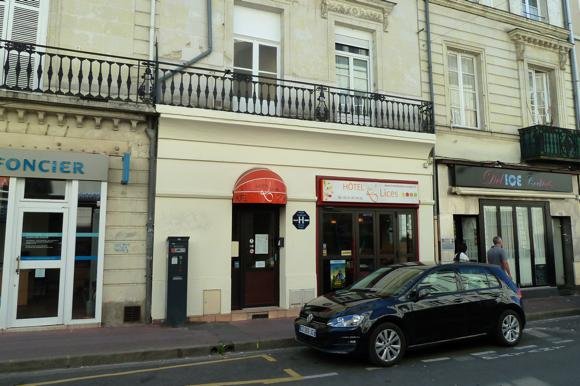
Previous Next Destination Angers has an accommodation database and booking service. Although there are no lodgings near the stadium, the contemporary three-star Hôtel de l’Europe is by the bus route and close to the only bar that passes for a pre-match haunt, Matt Murphy’s. Slightly closer to town, the Hôtel des Lices is more modest but has an LCD TV in each of its rooms, a bar and a sushi restaurant. Don’t be put off by the name – it’s on rue des Lices. Doubles go for around €50. Near the park of the same name, the Hôtel du Mail offers a boutique stay in a historic property, not as expensive as you’d think – it’s only a three-star. Alongside on rue David, the equally venerable Maison Bossoreil pre-dates the French Revolution, its five rooms in the €100 range. To be close to the historic sights, the castle and the cathedral, the ibis Centre Château provides sufficient comfort and convenience." ["post_title"]=> string(6) "Angers" ["post_excerpt"]=> string(0) "" ["post_status"]=> string(7) "publish" ["comment_status"]=> string(6) "closed" ["ping_status"]=> string(4) "open" ["post_password"]=> string(0) "" ["post_name"]=> string(6) "angers" ["to_ping"]=> string(0) "" ["pinged"]=> string(0) "" ["post_modified"]=> string(19) "2022-06-03 17:49:22" ["post_modified_gmt"]=> string(19) "2022-06-03 17:49:22" ["post_content_filtered"]=> string(0) "" ["post_parent"]=> int(0) ["guid"]=> string(36) "https://old.liberoguide.com/?p=29849" ["menu_order"]=> int(0) ["post_type"]=> string(4) "post" ["post_mime_type"]=> string(0) "" ["comment_count"]=> string(1) "0" ["filter"]=> string(3) "raw" } [3]=> object(WP_Post)#4257 (24) { ["ID"]=> int(29810) ["post_author"]=> string(1) "3" ["post_date"]=> string(19) "2019-07-14 11:46:43" ["post_date_gmt"]=> string(19) "2019-07-14 11:46:43" ["post_content"]=> string(21454) "

Teams, tales and tips – a guide to the local game

Hub of fashion, diamonds and art masterpieces, Antwerp isn’t always associated with football. But Belgium’s second city is home to the country’s oldest club and most venerable local derby. In 2019, for the first time since 2003-04, Antwerp almost had two clubs in the top division. One, Royal Antwerp, not only have a regal name but, of all Belgium’s several thousand clubs granted a matricule registration number, are officially No.1. Populist Beerschot are based at the former Olympisch Stadion where the 1920 Games were held. Even by Belgian standards, their history is so convoluted even Hercule Poirot would struggle to untangle its mysteries. In a further twist, in 2019, Beerschot almost gained promotion through the back door until Mechelen’s enforced relegation due to previous match fixing was rescinded.
Welcome to Antwerp/Peterjon Cresswell
Both clubs date back to the late 1800s. Royal Antwerp, ‘The Great Old’, were formed as Antwerp Athletic Club by English students, as far back as 1880. A football section was created in 1887 and later named Antwerp Football Club. Members would meet at the Taverne Alsacienne in the shadow of the cathedral on Groenplaats. Along with similar pioneering clubs in Brussels, Liège and Bruges, Antwerp FC took part in the inaugural Belgian championship of 1895-96, though would have to wait another 30 years to win it. The lack of success in these early days had its roots in the schism of 1900, when several Antwerp players, most notably English ones, left for a newly formed club across town: Beerschot.
Welcome to Antwerp/Peterjon Cresswell
While Antwerp had been involved in the Belgian League, a certain Ernest Grisar had bought a hippodrome in the far south of town, an area known as Kiel. His son Alfred had studied at Brighton College and was familiar with football – in fact, he had already played in goal for Antwerp FC. He duly persuaded his father to form a football club, naming it after a nearby park. This was just as well he did as, a few months after founding Beerschot in September 1899, Grisar senior died in Paris. Deciding on colours of mauve and white, Alfred Grisar convinced several of his old teammates at Antwerp to jump ship. So many players left, in fact, that Antwerp felt unable to continue the following season and Beerschot took their place. A few days before becoming official members of the Belgian League, Beerschot had played their first game: a friendly against Antwerp reserves.
Welcome to Antwerp/Peterjon Cresswell
Long, bitter city rivalries have been built on less. Until financial circumstances forced them to fold in 1999, three months short of their centenary, Beerschot would always take pleasure in beating Antwerp. Today the records show that the Kielmen won seven national titles, three more than the men in red. By 1903, Antwerp FC were also based in Kiel, after playing early games on the sands by the North Dock and at the Vélodrome in Zurenborg near Berchem. After three years on Kruisstraat, the club moved to Broodstraat, a ground used for the 1920 Olympic football tournament. It was here that Italy overcame Norway, a game that kicked off at 10am and lasted 140 minutes. Built for the Games, the Olympic Stadium was also in Kiel. Here the main matches took place, including the final. Belgium were awarded gold after Czechoslovakia, 2-0 down towards half-time, walked off in protest at refereeing decisions.
Welcome to Antwerp/Peterjon Cresswell
With the local public now in thrall to football, Royal Antwerp had outgrown Broodstraat and bought land in the far east of town, in Deurne. In 1923, England and Belgium played a curtain-raising friendly to open the Bosuilstadion, a 2-2 draw, the first time that the visitors had ever dropped points to European opposition. The Bosuilstadion also staged the European Cup-Winners’ Cup final replay of 1964, a 1-0 win for Sporting Lisbon over MTK Budapest, and many Belgian internationals. For the semi-final of Euro 72, Gerd Müller scored in each half to take eventual winners West Germany past the hosts. Back in Kiel, the running track upon which Paavo Nuurmi had won 10,000 metres gold was soon stripped away and the Olympic Stadium became the Kielstadion, home to Beerschot.
Welcome to Antwerp/Peterjon Cresswell
It still is, although the club and its loyal and significant fan base have had to jump through many logistical hoops before arriving back at the simple name of Beerschot in 2019. Not least being offered promotion the same year – then seeing it taken away again. The last Belgian club to play a European final, a defeat to Parma at Wembley in 1993, Antwerp spent 13 years in the second tier before gaining their own promotion in 2017. ‘The Great Old’ hold the record, remarkable considering the merger-mad nature of Belgian football, of playing 114 of the 115 campaigns staged in the domestic game. 1900-01, of course, is still the season that sticks out. [mapsmarker map="34"]

Getting Around

Arriving in town, local transport and timings
Welcome to Antwerp/Peterjon Cresswell
No major budget or national carrier currently uses Antwerp International Airport, 5.5km (three miles) south-east of the city. Brussels Airport is 42km (26 miles) away. A direct train runs every 30mins from platform 1 at the airport rail terminal to Antwerpen-Centraal (single €12), journey time 30mins. Tickets for Eurostar passengers from London St Pancras are sold as direct to Antwerp, even though the journey requires a change at Brussels-Midi. Average journey time is 3hrs, advance singles from around €70. From the Eurostar terminal at Brussels-Midi, a direct train runs every 30mins to Antwerpen-Centraal, 45min journey time. A regular single ticket is €7.50. Antwerpen-Centraal is by the Diamond Quarter, east of the city centre a 15min walk away. Public transport of buses, trams and the Premetro is run by De Lijn. A single ticket from the machine by the stop or the driver is €3, valid for 1hr. A day pass is €7, €9 on board, 3-day pass €14. Validate your ticket for each journey in the yellow machine. Both stadiums are far from the centre and require public transport or a taxi. A Stadtaxi can be contacted on +32 3 233 37 37 – rates are set and controlled by the City.

Where to Drink

The best pubs and bars for football fans
Den Engel/Peterjon Cresswell
The Irish Times Pub/Peterjon Cresswell
Paters Vaetje/Peterjon Cresswell
De Elfde Gebod/Peterjon Cresswell
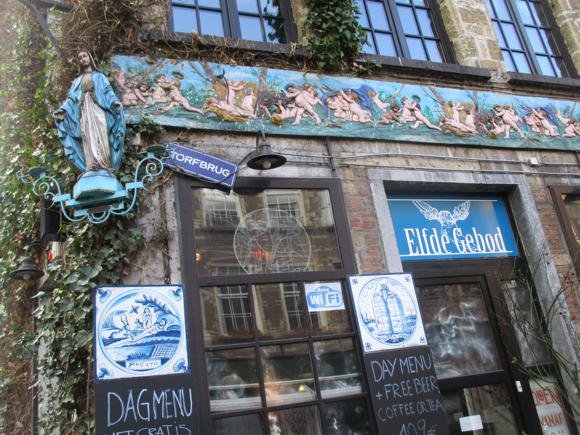
Previous Next Amber De Koninck is Antwerp’s signature beer, served in a bowl-shaped glass known as a bolleke, which is what you should ask for. All bars will stock several other Belgian brews as well, of course. Right on Grote Markt, Den Engel has been serving Antwerp’s finest bolleke to generations of locals for over a century. On the other side of the square, the Irish Times Pub is the Antwerp branch of a Belgian mini-chain, with TV sport and live music the focus. Close by on Blauwmoezelstraat, Paters Vaetje stocks scores of Belgian beers, Trappist, light and dark. One street over, in a building dating back to 1425, De Elfde Gebod is another beer sanctuary, although more restaurant than pub.
De Pelikaan/Peterjon Cresswell
Café Pardaf/Peterjon Cresswell
Café Beveren/Peterjon Cresswell
An Sibhin/Peterjon Cresswell
Kelly's Irish Pub/Peterjon Cresswell
Old Trafford/Peterjon Cresswell
Previous Next One street over on Melkmaart, De Pelikaan is steeped in beer tradition, its terrace tables overlooking the cathedral. Between the main square and the waterfront, you’ll find 350 beers to choose from at the Café Pardaf on Suikerrui while round the corner overlooking the river, the Café Beveren is an evergreen classic with a vintage jukebox. On Nationalestraat in the Fashion Quarter, An Sibhin offers big-screen sport and all-day breakfasts, plus an expansive terrace. Near the station, Kelly’s Irish Pub is of similar ilk. Last but not least, on Leopoldplats south of the city centre, Old Trafford is run by a former Antwerp youth player and filled with MU memorabilia.

Where to stay

The best hotels for the stadiums and city centre
Radisson Blu Astrid Hotel Antwerp/Peterjon Cresswell
Park Inn by Radisson Antwerp/Peterjon Cresswell
Leonardo Hotel Antwerpen/Peterjon Cresswell
De Keyser Hotel/Peterjon Cresswell
De Hylitt/Peterjon Cresswell
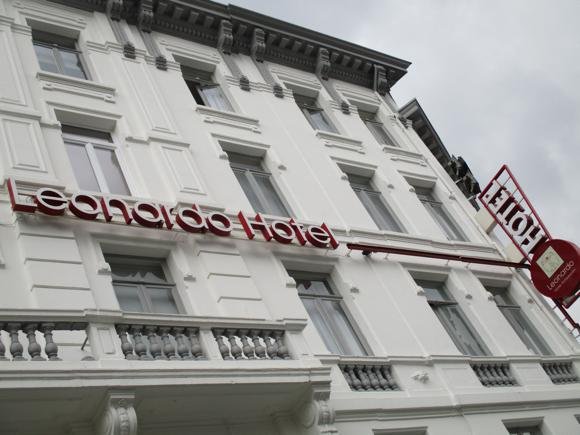
Previous Next Visit Antwerp has a hotel database and booking function. There are no hotels near either main stadium. For easy access, a location near either tramline – the 2 or 5 – is the best bet. The Astrid Premetro station serves both lines and is close to Antwerpen-Centraal. Here you’ll find the four-star Radisson Blu Astrid Hotel Antwerp, with charging station for electric cars, gym, pool and Made In Antwerp restaurant, and, across Carnotstraat, the more affordable yet comfortable Park Inn by Radisson Antwerp. Closer to the train station, the smart but price-conscious Leonardo is literally opposite the main entrance, as is business-friendly De Keyser, with its late-opening Emerald Bar. Also nearby on De Keyserlei, four-star De Hylitt provides shoppers at the surrounding diamond stores with a rooftop restaurant, pool and lounge bar.
TRYP by Wyndham Antwerp/Peterjon Cresswell
Billard Palace/Peterjon Cresswell
TRYP by Wyndham Antwerp/Peterjon Cresswell
Hilton Antwerp Old Town/Peterjon Cresswell
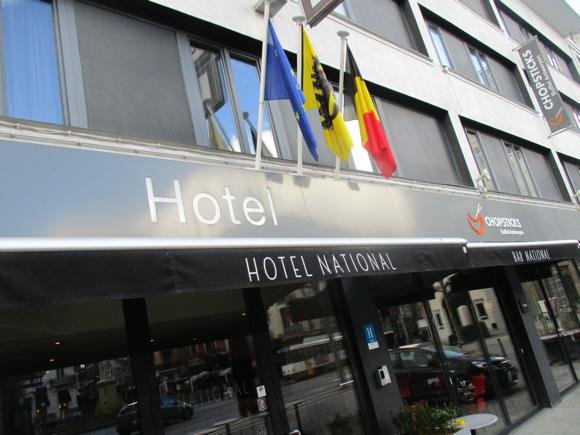
Hotel National/Peterjon Cresswell
Plaza Hotel/Peterjon Cresswell
Previous Next There are budget choices, too: the Billard Palace on Koningen Astridplein is that unusual combination of hotel and snooker hall, although its three-star rating may be pushing it. Halfway between Centraal and the other main station of Berchem and by tram 11 that serves both, TRYP by Wyndham Antwerp strikes a nice balance between fashionable and affordable. For a central spot on tram 5, say Groenplaats, high-end options include the Hilton Antwerp Old Town, with its gym and sundeck roof terrace, and mid-range, old-school Hotel National on Nationalestraat. On the tram 2 route, near the Lange Leemstraat stop, the four-star Plaza Hotel offers bike rental and rooftop rooms." ["post_title"]=> string(7) "Antwerp" ["post_excerpt"]=> string(0) "" ["post_status"]=> string(7) "publish" ["comment_status"]=> string(6) "closed" ["ping_status"]=> string(4) "open" ["post_password"]=> string(0) "" ["post_name"]=> string(7) "antwerp" ["to_ping"]=> string(0) "" ["pinged"]=> string(0) "" ["post_modified"]=> string(19) "2022-09-24 18:57:13" ["post_modified_gmt"]=> string(19) "2022-09-24 18:57:13" ["post_content_filtered"]=> string(0) "" ["post_parent"]=> int(0) ["guid"]=> string(36) "https://old.liberoguide.com/?p=29810" ["menu_order"]=> int(0) ["post_type"]=> string(4) "post" ["post_mime_type"]=> string(0) "" ["comment_count"]=> string(1) "0" ["filter"]=> string(3) "raw" } [4]=> object(WP_Post)#4037 (24) { ["ID"]=> int(29780) ["post_author"]=> string(1) "3" ["post_date"]=> string(19) "2019-07-13 14:58:43" ["post_date_gmt"]=> string(19) "2019-07-13 14:58:43" ["post_content"]=> string(19948) "

Teams, tales and tips – a guide to the local game

Deep in the fiery south, between the Med, the Camargue and the rugged Cévennes, Nîmes has all the ingredients to be a crazy hotbed of football. Flagship club Nîmes Olympique were Eric Cantona’s last employers in France before he threw the ball at the referee and called each member of the FA disciplinary committee, individually, an idiot. It was Nîmes who later sold Cantona to Leeds for under £1 million. Home of French bullfighting, held in the best-preserved Roman amphitheatre in France, Nîmes picked up on football long before the city’s later local rivals, Montpellier. And yet affluent, dynamic Montpellier surpassed Nîmes long ago, co-hosting the World Cup of 1998 and winning the French League in 2012.
Welcome to Nîmes/Ruth Jarvis
Previous Next During all these years, for 25 long seasons, in fact, Nîmes Olympique, les Crocodiles, were in the second tier and quite often lower. Promotion eventually came in 2018 but crowds at the Stade des Costières, the somewhat functional, municipal stadium opened on the southern outskirts of town in 1989, only occasionally tested its 18,500 capacity the following reasonably successful season. It was a local student, Henri Monnier, who brought football to Nîmes, after he had spent two years in Liverpool in the late 1800s. He and his mates formed Football Club de Nîmes, and recruited players from the protestant Christian Union. Seeking to expand the club’s horizons, he then merged FC Nîmes with the regional youth sports association, Jeunesse Sportive du Gard, based in Nîmes, and created Sporting Club nîmois in 1901.
Welcome to Nîmes/Ruth Jarvis
Previous Next Colours of red and white were immediately adopted – like the crocodile logo, it had links to the city’s medieval heraldry rather than Monnier’s affection for Liverpool FC, who only had played in blue until 1896. Monnier played as club captain then president until 1929. SC Nîmois used any pitch they could find, before settling on the Stade de la Galère on route d’Arles. Back then, the main rivals were L’Olympique de Cette, later called FC Sète, one of the great sides between the wars. A regional Languedoc championship was set up in 1906-07, won by Cette every year up to 1914 except for a solitary Nîmois victory in 1907-08. Many players would duly fall in the Great War. Nîmois regrouped in 1919 and moved into the Parc des Sports on rue du Jeu de Mail, now rue Jean-Bouin, north-east of town. The club also joined the Ligue du Sud-est, dominated by Marseille.
Welcome to Nîmes/Tom Popper
Previous Next Turning professional in 1932, shortly after the transformation of the Parc des Sports into the Stade Jean-Bouin, allowed Nîmes to join the inaugural French national championship. Of its 20 clubs in two divisions, nearly half were clustered in this south-east corner of France, including Nîmes, Sète, Alès and Montpellier. With salaries and a sunshine lifestyle on offer, Nîmes attracted ageing foreign stars such as Czech international Josef Silny, former Chelsea forward Andy Wilson as player-coach. The money soon ran out, Nîmes were relegated then dropped out of the second division without even playing a match in 1935-36. After winning the Gard district amateur league in 1936-37, SC Nîmois were no longer. Sète-born sports journalist and later French FA president Emmanuel Gambardella was the one of the prime movers behind the rapid creation of a new professional club, Nîmes Olympique. Along with Pierre Chabert, who brought in English player-manager Harry Ward from Ramsgate FC, a core of founding members revived the Crocodiles, in their classic red-and-white strip, and moved the new club into the Stade Jean-Bouin.
Hôtel de l'Amphithéâtre/Ruth Jarvis
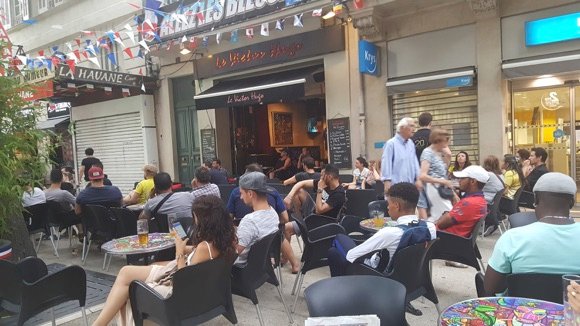
Bar Le Victor Hugo/Ruth Jarvis
Bar Joe/Ruth Jarvis
Bar Joe/Ruth Jarvis
Previous Next Gambardella died in 1953, the leading youth cup in France taking his name. His other posthumous honour was the rise of the club he helped found – Olympique’s glory days came in the late 1950s and early 1960s under former Nîmes midfielder Kader Firoud, who led the Crocodiles to three consecutive runners-up spots in the top flight and two appearances in the French Cup final. Firoud returned for further title challenges in the early 1970s. Only a few supporters who queued around the block for the crucial game with Gazélec Ajaccio in May 2018 will remember the Firoud years – the club now plays in a new stadium, and had just spent 25 years out of the limelight. Meanwhile, in a bizarre twist, back at the Stade Jean-Bouin, local enthusiasts revived the Sporting Club nîmois in December 2011. Under pressure from its followers in the late 1930s, the club had kept its legality in the district records. Some 75 years later, they now play in the top départemental division of the Gard-Lozère region, level eight of the French football league pyramid. In August 2017, still in the same red-and-white strip of yesteryear, SC Nîmois were also one of around 8,000 clubs to take part in the First Round of the Coupe de France.

Getting Around

Arriving in town, local transport and timings
Nîmes Olympique transport/Ruth Jarvis
Underused Nîmes-Alès-Camargue-Cévennes airport is 11km (seven miles) south of town. A shuttle bus (€6.80, credit cards accepted) leaves the airport after each arrival and takes 25mins to reach Nîmes bus station/platform 1 of the train station. It sets off for the airport from the same spot around 2hrs before each flight – check the timetable here. The stadium is on the way into town. Taxi Grès (+33 6 16 400 902) has a fixed fee of €22 from the airport to town, and would charge around €17 from airport to stadium. The nearest main international airport is Montpellier, 53km (33 miles) away. Shuttle bus 620 runs every 30mins to Montpellier Sud station (25min journey time, €1.60, pay on board), up to 8pm/8.30pm. Tramway 1 (€2.60 combined ticket from the airport) then runs to St-Roch, Montpellier’s other station.
Stade des Costières/Ruth Jarvis
The main train station of Nîmes-Centre is a short walk south of the city centre. As of December 2019, most TGV and OUIGO trains from Paris Gare de Lyon and Montpellier Sud use the new Nîmes Pont du Gard station 14km (six miles) east of town. Local trains run to Nîmes-Centre (8min journey time) in town. For the foreseeable future, there will be also be trains between Montpellier St-Roch and Nîmes. Nîmes is served by Tango! buses that run from the walkable historic centre to the outskirts, including the stadium. Rechargeable tickets are sold from machines at stops and drivers (not the T1). The first costs €1.60, then it’s €1.30 per journey in any direction, valid for 1hr.

Where to Drink

The best pubs and bars for football fans
Bar Joe/Ruth Jarvis
Bar Joe/Ruth Jarvis
Bar Le Victor Hugo/Ruth Jarvis
Big Ben Bar/Ruth Jarvis
Bar Le Victor Hugo/Ruth Jarvis
Bar Joe/Ruth Jarvis
Bar Joe/Ruth Jarvis
London Tavern/Ruth Jarvis
O’Flaherty’s/Ruth Jarvis
Previous Next The broad pavements of boulevard Victor Hugo provide ample space for screens and drinkers at the string of bars between rue Corneille and rue Gergonne. Top picks are Bar Le Victor Hugo, which appeals to a smarter clientele, and Bar Joe, which is the unofficial headquarters of the Nîmes supporters’ club, an official ticket sales outlet and a cracking bar in its own right. Round the corner from the Victor Hugo, the Big Ben Bar, tucked down narrow rue Maubet, fills with supporters for important games, when TVs are set outside. Not much in the way of seating but plenty of atmosphere. About ten minutes east of there, around place Gabriel Péri, another cluster of bars includes O’Flaherty’s, atmospheric and capacious inside and out, and the slightly down-at-heel but football-loving London Tavern. Live music and party nights also fill its agenda.

Where to stay

The best hotels for the stadium and city centre
Apart’City Confort/Ruth Jarvis
Nîmes Tourisme has a database of accommodation options. There are no hotels in the immediate vicinity of the stadium, only a couple of chains on the main road, neither that close to the ground nor convenient for town. Your best bet might be central Apart’City Confort at boulevard de Bruxelles 1, near the T2 stop for transport to the stadium, four-star lodgings with a 24-hour reception. Its sister operation, Apart’City Nîmes is the closest accommodation to the Stade des Costières at allée de l’Amérique Latine 364.
Novotel Atria Nîmes Centre/Ruth Jarvis
Hôtel des Tuileries/Ruth Jarvis
Central Hôtel/Ruth Jarvis
Hôtel de l'Amphithéâtre/Ruth Jarvis
Hôtel Abalone/Ruth Jarvis
ibis Styles Nîmes Gare Centre/Ruth Jarvis
ibis Budget Nîmes Centre Gare/Ruth Jarvis
ibis Styles Nîmes Gare Centre/Ruth Jarvis
Previous Next Convenient for the Arena and the bar zone, the Novotel Atria comprises 119 rooms and a restaurant on boulevard de Prague, while the pretty, independent Hôtel des Tuileries at 22 rue Roussy provides local craft beer and wine in its bar, and a large double bed in each of its 11 rooms. At the other end of rue Roussy on place du Château, the Central Hôtel offers contemporary comfort at affordable prices. On the other side of the Arena, the 11-room Hôtel de l’Amphithéâtre has been from two hotels dating back some 300 years. Exiting the train station, the renovated two-star Abalone is pretty much the first thing you see as you head towards town. Doubles here start at €60. On the other side of the station from town, the ibis Styles Nîmes Gare Centre and ibis Budget Nîmes Centre Gare are one star and 15 metres apart, both next to stop for the airport bus." ["post_title"]=> string(6) "Nîmes" ["post_excerpt"]=> string(0) "" ["post_status"]=> string(7) "publish" ["comment_status"]=> string(6) "closed" ["ping_status"]=> string(4) "open" ["post_password"]=> string(0) "" ["post_name"]=> string(5) "nimes" ["to_ping"]=> string(0) "" ["pinged"]=> string(0) "" ["post_modified"]=> string(19) "2022-06-12 21:54:23" ["post_modified_gmt"]=> string(19) "2022-06-12 21:54:23" ["post_content_filtered"]=> string(0) "" ["post_parent"]=> int(0) ["guid"]=> string(36) "https://old.liberoguide.com/?p=29780" ["menu_order"]=> int(0) ["post_type"]=> string(4) "post" ["post_mime_type"]=> string(0) "" ["comment_count"]=> string(1) "0" ["filter"]=> string(3) "raw" } [5]=> object(WP_Post)#4036 (24) { ["ID"]=> int(29756) ["post_author"]=> string(1) "3" ["post_date"]=> string(19) "2019-07-13 07:07:02" ["post_date_gmt"]=> string(19) "2019-07-13 07:07:02" ["post_content"]=> string(13645) "

Teams, tales and tips – a guide to the local game

Despite almost overwhelming difficulties, football has survived, in fact thrived, in Derry, second city of Northern Ireland. After more than a decade out of the senior game, Derry City have been competing with teams from south of the border in the League of Ireland since 1985. The club’s home, the revamped Brandywell Stadium, stands just past the Free Derry Corner and the Bloody Sunday Monument, major landmarks relating to The Troubles. Civil strife saw Derry City forced to play home games in Coleraine from 1971, before being reduced to Saturday-morning football. Success post-1985 was swift. With Derry regular qualifiers for Europe since winning a memorable domestic treble in 1989, the Brandywell has hosted the likes of Benfica, Gothenburg and Paris Saint-Germain. A £7 million stadium redevelopment in 2017 reflects the positive effects of an almost unbroken run in the top flight for over 30 years.
Welcome to Derry/Mick O'Hanlon
Football has been played at the Brandywell since 1900. Alongside stands Celtic Park, home of Derry’s GAA team, and where soccer team St Colomb’s Court played from 1894. Founded in 1886, St Colomb’s competed in the County Derry Cup, twice winning it in the early 1890s. From 1894, a St Colomb’s Hall, later known as St Colomb’s Hall Celtic and then Derry Celtic, monopolised the tournament, renamed the North West Cup. These were all the same club, under different guises, although the relationship with St Colomb’s Court isn’t clear. A Derry Hibernians also lifted the regional trophy three times. The Irish League and Cup were dominated by teams from Belfast, although a Derry Olympic were admitted in 1892 and Derry Celtic in 1900, the same year that they moved into the Brandywell. For reasons also not entirely clear, Derry Celtic were voted out of the Irish League in 1913 after finishing in the relegation zone.
The Derby/Mick O'Hanlon
Even Institute FC, formed in 1905 as the Presbyterian Working Men’s Institute, where the later influential Derry City manager Billy Gillespie started out as a teenager, seem to disappear from the record books after 1912. For 15 years either side of the Partition of Ireland, Derry had no senior soccer team. Formed in 1928, Derry City received senior status a year later, joining the Irish League, which had separated from the south in 1921. From the start, the club was based at the council-owned Brandywell, later failing to buy Celtic Park, which became the local home of Gaelic football. Adopting red-and-white stripes in honour of manager Billy Gillespie, who had enjoyed a 20-year career with Sheffield United after leaving Institute, Derry proved themselves cup specialists. A decade later, Derry made their European debut but The Troubles soon put paid to any kind of senior football until 1985.
Welcome to Derry/Mick O'Hanlon
After years of delicate negotiation, Derry managed to join the football set-up in the south, crowds flocking to the Brandywell to see the Candystripes take part in the inaugural First Division, City winning the second tier a season later. In scenes that would have hardly seemed possible in the 1970s, Benfica, Gothenburg and Paris Saint-Germain all came to the Brandywell as Derry embarked on more than a dozen European campaigns. Institute, meanwhile, adopted senior football in 1999 and began to develop their ground at Drumahoe, a village a couple of miles south-east of Derry. With major funding from Sport Northern Ireland, a new main stand was built as ’Stute gained promotion three times to the top flight, to take on the top clubs from Belfast. The North West Senior Cup, the same trophy won by St Columb’s Court a century ago, also found its way to Drumahoe several times. Unfortunately, the aptly named Riverside Stadium suffered severe flooding in 2017 and the ground remains out of commission to this day. Playing most home games at the Brandywell, ’Stute achieved another promotion to the Irish Premiership that same season and but lost top-flight status in 2020. Any return to the Riverside is now impossible, given the deconstruction order approved in June 2022. [mapsmarker map="34"]

Getting Around

Arriving in town, local transport and timings
Derry City transport/Michael O'Hanlon
Derry has its own airport 11km (7 miles) north-east of town. Currently Loganair and Ryanair provide links with London Stansted, Liverpool, Manchester and Scotland. A City Cabs taxi (+44 28 7126 4466) costs £11 into town. Goldline Express bus 234 runs every 2hrs to the Buscentre in town, journey time 30mins. Other bus journeys require a 10min walk to Longfield, Eglinton, where you can pick up the Nos.143 or 152, run by Ulsterbus. The waterfront Buscentre is in town by the Peace Bridge, the same side of the river as the stadium. The train station is across the Foyle. The hourly service from Belfast (£12.50) takes 2hrs. Belfast International Airport is 92km (57 miles) away. Take Ulsterbus 300a to the Europa Buscentre Belfast then Translink Goldline 212 to the Buscentre in Derry, overall journey time around 3hrs. Translink Goldline Bus X3/X4 runs from Dublin Busáras to Derry (£11) seven times a day via Dublin Airport, journey time 4hrs.

Where to Drink

The best pubs and bars for football fans
The Bentley/Mick O'Hanlon
River Inn/Mick O'Hanlon
The Derby/Mick O'Hanlon
The Glen Bar/Mick O'Hanlon
Diamond Hotel – now Granny Annies/Mick O'Hanlon
Lyric Bar/Mick O'Hanlon
Previous Next Pubs surround the Richmond Centre mall. Football is screened in one of the three bars that comprise the historic River Inn, revamped in 2016. Nearby, The Metro Bar is more contemporary and clubby, with DJs, drinks offers – and football screened when it matters. On the other side of the mall, the Bentley is a six-bar complex, one showing matches. Formerly the Diamond Hotel, where Institute FC were formed in 1905, then a Wetherspoons pub no longer with us, Granny Annies has revived this prominent space with live music, TV sport and communal banter. For an old-school community pub, The Derby on Great James Street is a revered spot with TV football. Halfway between the stadium and the river, the Oakgrove Bar (88 Bishop Street), a quality spot with TV sport, live music, pool and snooker. It also sells tickets for Derry games. Across the Foyle, near the train station, the Glen Bar (28 Dungiven Road) has become a real football haunt with two big screens and a full schedule.

Where to stay

The best hotels for the ground and city centre
Maldon Hotel Derry/Mick O'Hanlon
B&B Townhouse No.8/Mick O'Hanlon
City Hotel Derry/Mick O'Hanlon
Saddler’s House/Mick O'Hanlon
Merchant's House/Mick O'Hanlon
Bishop's Gate Hotel/Mick O'Hanlon
Da Vinci's – formerly Ramada Hotel/Mick O'Hanlon
Premier Inn Derry-Londonderry/Mick O'Hanlon
Previous Next Visit Derry has a hotel database with reservations via booking.com. The four-star Maldron is close to the bus station, with 90 rooms, a gym and sauna. Its Lyric bar shows TV football. Also nearby is superior B&B Townhouse No.8. Waterfront four-star City Hotel Derry, with a pool and gym, offers attractive weekend breaks. Saddler’s House on Great James Street is convenient, comfortable and affordable. Breakfast is a feast. Its sister operation, Merchant’s House on Queen Street, dates back even earlier. For something equally historic, the Bishop’s Gate Hotel on Bishop Street is a 31-room five-star with a champagne bar, cocktail bar and ballroom. Originally this was a social club for veterans of the Crimean War. Just outside the centre Da Vinci’s on Culmore Road, the former Ramada, offers the largest bedrooms in town, a top-notch restaurant and live music in the traditional bar. Even further out, handy if you’re with the car, the local Premier Inn is close to the main roads into town and offers free parking." ["post_title"]=> string(5) "Derry" ["post_excerpt"]=> string(0) "" ["post_status"]=> string(7) "publish" ["comment_status"]=> string(6) "closed" ["ping_status"]=> string(4) "open" ["post_password"]=> string(0) "" ["post_name"]=> string(7) "derry-2" ["to_ping"]=> string(0) "" ["pinged"]=> string(0) "" ["post_modified"]=> string(19) "2022-09-26 20:57:09" ["post_modified_gmt"]=> string(19) "2022-09-26 20:57:09" ["post_content_filtered"]=> string(0) "" ["post_parent"]=> int(0) ["guid"]=> string(36) "https://old.liberoguide.com/?p=29756" ["menu_order"]=> int(0) ["post_type"]=> string(4) "post" ["post_mime_type"]=> string(0) "" ["comment_count"]=> string(1) "0" ["filter"]=> string(3) "raw" } [6]=> object(WP_Post)#4035 (24) { ["ID"]=> int(29591) ["post_author"]=> string(1) "3" ["post_date"]=> string(19) "2019-07-06 12:51:26" ["post_date_gmt"]=> string(19) "2019-07-06 12:51:26" ["post_content"]=> string(23862) "

Teams, tales and tips – a guide to the local game

The city known for the shot and the siege linked with major conflicts at either end of the 20th century, Sarajevo cannot fail to move anyone who visits it. Although gleaming towers and growing tourism now characterise the modern-day capital of Bosnia-Herzegovina, scars remain of the four-year bombardment of the city by Serbian forces in the 1990s.

Sarajevo had memorably staged the Winter Olympics only a few years before. The opening ceremony took place at Koševo City Stadium, also referred to as the Asim Ferhatović-Hase Stadium after the revered striker who played for host club FK Sarajevo. After nearly two decades for the Bordo-bijeli, the Maroon and Whites, ‘Hase’ led his club to their first Yugoslav title in his retirement season of 1966-67.

Narrow runners-up Dinamo Zagreb won a European trophy that same campaign, while third-placed Partizan Belgrade had not long beaten Bobby Charlton’s Manchester United to set up a closely fought European Cup final with Real Madrid. This was a very strong Yugoslav League – and won by a team from Sarajevo.

Welcome to Sarajevo/Petra Berende

Eternal city rivals Željezničar also won the Yugoslav title, in 1972, and the two Sarajevo giants later claimed ten Bosnian championship between them, the most recent FK’s in 2019.

While Koševo is considered the national stadium, Bilino Polje in Zenica was long the preferred option for Edin Džeko’s Dragons. The 2018 renovation of Željezničar’s Grbavica has seen it used for international games since, however – such as for Bosnia’s 2-0 win over Northern Ireland that same year in the Nations League.

Football came to Sarajevo with the Habsburgs, as they industrialised the city in the late 1800s, bringing trains and trams. Hotels were built, including the Evropa, with its Viennese-style café, a meeting place for the sports societies that were also springing up. In 1908, local students, including the son of the hotel owner, brought a football back from Zagreb.

Welcome to Sarajevo/Sabina Sirćo

The boys played on fields in Cengić Vila, just over the narrow Miljacka river from Grbavica. As elsewhere in the region, Slavia Prague were used as the shining example of a football club independent from Vienna – although the Đački sportski klub (ĐSK) persuaded a young Rapid Vienna defender, Karl Harmer, to come and coach them.

Playing in the red and white of Slavia, ĐSK beat a Viennese military XI in their first match in 1911. Most team members were of Serbian origin.

Shortly afterwards, local Croats formed Hrvatski ŠK, renamed Sarajevo amaterski športski klub or SAŠK after World War I. ĐSK became the Srpski sportski klub (SSK) and set up a modest ground in the area of Koševo. It was destroyed as anti-Serb feeling swept Sarajevo following the assassination of Archduke Ferdinand in 1914.

Sarajevo/Petra Berende

When Sarajevo became part of Yugoslavia after 1919, peace broke out. SSK became Slavija and built another ground in the district of Marijan Dvor on Franca Lehara, a street by today’s Alta shopping centre. Renamed Šesti april after the liberation of 1945, this was the main football ground in town until it was knocked down when Grbavica was built with its stands and benches.

Between 1945 and 1950, Željezničar also played at Šesti april, as did SD Torpedo, forerunner of FK Sarajevo.

Željezničar, ‘Željo’, had been founded as a railway workers’ team in 1921. Working-class and ethnically mixed, they would suffer early defeats to the Croats of SAŠK and the Serbians of Slavija, who formed the main city rivalry between the wars. Both competed in the top Yugoslav League, dominated by teams from Belgrade, Zagreb and Split, and each achieved a runners-up spot.

During World War II, Slavija played in a separate Serbian league, SAŠK a Croat one, linked to the Nazi puppet state. The incoming Communist authorities soon closed down SAŠK, who were reformed in 1999 as SAŠK Napredak. Today they compete in the Bosnia-Herzegovina’s Second League, the third tier, playing at the modest Doglodi ground in the suburb of the same name just north of the airport.

Welcome to Sarajevo/Petra Berende

In similar fashion, the successful Slavija team was also disbanded in 1945 and reformed in the 1990s. Winning the First League of the Republika Srpska, the Serbian entity of Bosnia-Herzegovina, in 2004, Slavija spent several seasons in the Bosnian top flight. Runners-up in 2009, the Falcons competed in the Europa League that same year. Slavija are currently back in the RS First League, playing at the Gradski Stadion in the Serbian Istočno part of town towards the airport. You’ll find it at the corner of Đenerala Draže Mihailovića and Vojvode Radomira Putnika.

With SAŠK and Slavija out of the picture in 1946, FK Sarajevo was formed as SD Torpedo, in honour of their Muscovite counterparts, from local clubs Udarnik and Sloboda. Soon renamed SDM Sarajevo, then FK, the new club attracted the best players in the city.

While popular at grass-roots level, Željezničar never reached the level of SAŠK or Slavija, and gaining promotion from the Bosnian League to the Yugoslav one in 1946.

But Željo were soon overshadowed by FK, losing 6-1 in the first league city derby in 1954. And while Tito’s Yugoslavia was officially classless, well-situated Bosniaks supported FK, working-class locals on Sarajevo’s south side, Željo.

Welcome to Sarajevo/Sabina Sirćo

After each club enjoyed success with national league titles in the 1960s, 1970s and 1980s, the ultra fan movement took root, the Horde Zla behind FK and the Manijaci behind Željo. Derby day became a riot of colour.

With Grbavica on the front line, the stadium and the residential blocks around it suffered significant damage during the Siege. Koševo City Stadium, meanwhile, is surrounded by cemeteries.

Somehow both clubs managed to compete in the 1994-95 First League of Bosnia-Herzegovina, playing out a 1-1 draw in Zenica, before the first derby at Koševo in November 1995. Six months later, 20,000 gathered for derby day at a rebuilt Grbavica.

With separate divisions played along ethnic lines, a Bosnian league involving key Croatian teams from Herzegovina wasn’t played until 2000-01, won by Željo. Two years later, clubs from Republika Srpska also joined.

Welcome to Sarajevo/Petra Berende

Since then, Croatian clubs from Herzegovina – particularly Zrinjski Mostar – have been as successful as the Sarajevo rivals. Players of the quality of Edin Džeko, nurtured by Željo, soon go abroad. Salaries and revenue remain modest, despite the promises of FK Sarajevo co-owner Vincent Tan to establish a full academy exchange with his own Cardiff City. No-one has made the group stages of either main European competition.

Each of the Sarajevo clubs stand atop the all-time league table since 2002-03. The only other team from the capital to appear is Olimpik, formed during the conflict in 1993, their name taken from the 1984 Games, their nickname The Wolves after the event mascot Vučko. Built and opened during the Siege, the Otoka Stadium stands just over the Miljacka from the Bosnian FA offices, near the Alipašin most tram stop.

Bosnian Cup winners in 2015, Olimpik competed once in Europe. In 2018 and 2019, The Wolves twice came close to promotion back to the Bosnian Premijer.

[mapsmarker map="34"]

Getting Around

Arriving in town, local transport and timings
Welcome to Sarajevo/Petra Berende

Bosnia-Herzegovina is outside the EU but allows all EU citizens to enter visa-free for up to 90 days. The currency is the convertible mark (KM), with a fixed exchange rate of €1/2KM.

Sarajevo Airport 6km (four miles) south-west of the city has direct links with the major cities of the region, Munich, Vienna, Budapest, Zagreb, Ljubljana and Belgrade.

bus (5KM/€2.50 single, 8KM/€4 return, pay on board) runs to Baščaršija in the city centre every hour to 90mins every day. A taxi (+386 61) from Terminal B should cost about 25KM/€12.50.

There’s a limited train service from Zagreb – the rail station is just north-west of the centre, a 6KM/€3 taxi journey away and a more frequent bus service from Zagreb and Split, journey times around 8hrs and 6hrs respectively. Sarajevo bus station is on put Života near the train terminal.


FK Sarajevo transport/Alex Crevar
Welcome to Sarajevo/Petra Berende
Previous Next

The bus from Belgrade (7hrs) arrives at Istočno Sarajevo, in the Serbian part of town near the airport, a 20KM/€10 taxi journey from the centre.

City transport run by Gras consists of trams, buses and trolleybuses. Tickets (1.60KM/€0.80 or 3KM/€1.50 for 2 journeys, day pass/dnevna 5.30KM/€2.65) are available from newsstands or pay 2KM/€1 for 1 journey on board.

The historic centre is walkable but you’ll need public transport or a taxi for either main stadium, Koševo way north of the city centre up steep Alipašina, Grbavica on the south bank just over the river.

If you’re after a few football souvenirs, old-school tracksuit tops bearing the logos of either club, then the head for the stalls near Baščaršija Mosque in the old quarter.

Where to Drink

The best pubs and bars for football fans
Sarajevska pivara/Petra Berende
City Pub/Sabina Sirćo
Tesla Pub/Sabina Sirćo
Previous Next

Sarajevo beer, Sarajevsko pivo, saved Sarajevo during the Siege. Founded as far back as 1864, this became the largest brewery in the Austro-Hungarian Empire, no idle boast. Today you can visit its museum and sample the goods in the tavern, a ten-minute walk from the Latin Bridge on the south side of the river.

The main bar hub is on the north bank. Here, the City Pub has long been a major meeting place, with all kinds of live music, TV football, outdoor seating and lashings of Sarajevsko pivo. Almost next door, the Tesla Pub is named and themed after the great inventor – he’s the guy outside waiting for his next light-bulb moment. Football also shown.

Celtic Pub/Alex Crevar
Ćevabdžinica Željo/Alex Crevar
Guinness Pub/Sabina Sirćo
Previous Next

There’s also live music at the friendly Celtic Pub on Ferhadija, as well as match screenings and all kinds of whiskies. Nearby, the Guinness Pub suffers by comparison but its terrace offers welcome respite from the summer sun. Also close, the Sarajevsko Pub on Koturova is a great little spot for combining the city’s namesake beer with a burger and some match-watching. The terrace overlooks the Sacred Heart Cathedral.

If you’re strolling around the old market of Baščaršija, look out for the Ćevabdžinica Željo on Kundurdžiluk – in fact, for two of them a few Balkan houses apart. Named after the city’s populist football club – note the blue badge – these places are purveyors of Sarajevo’s finest ćevapi, meat rissoles served with blankets of flat bread, perfect hangover food. Beer also comes into the equation.

Where to stay

The best hotels for the stadiums and city centre
President Hotel/Sabina Sirćo
Hotel Central/Sabina Sirćo
President Hotel/Sabina Sirćo
Hotel Astra/Sabina Sirćo
Opal Home/Sabina Sirćo
Hotel Europe/Sabina Sirćo
Novotel Hotel Bristol Sarajevo/Alex Crevar
Previous Next

Visit Sarajevo has a database of accommodation.

There are no hotels in the immediate vicinity of either stadium although the sleek Novotel Hotel Bristol Sarajevo is near the bridge that leads to Grbavica. A pool, gym, café and restaurant all feature.

Sarajevo’s historic centre is filled with lodging options at both ends of the scale.

The most venerable hotel in the city is the Europe, previously the Evropa, built in 1882 and still containing a Viennese coffeehouse – as well as a pool, spa and restaurant. The young footballers who gathered at the café in the early 1900s would never have known such luxury. Under the same umbrella and close by on Zelenih beretki, the Hotel Astra offers upper mid-range comfort, with a decent restaurant, too. Guests may use the pool and spa at the Europe.

Another classy choice in the same vicinity, the Hotel Central features a 25-metre pool, day spa and top-notch gym. The restaurant is also excellent.

Closer to the river on Despića, the Opal Home is a contemporary four-star of 12 rooms and a modest sauna. Also overlooking the Miljacka but the other side the Latin Bridge, the gleaming new business-oriented President Hotel comprises 72 air-conditioned rooms.

" ["post_title"]=> string(8) "Sarajevo" ["post_excerpt"]=> string(0) "" ["post_status"]=> string(7) "publish" ["comment_status"]=> string(6) "closed" ["ping_status"]=> string(4) "open" ["post_password"]=> string(0) "" ["post_name"]=> string(8) "sarajevo" ["to_ping"]=> string(0) "" ["pinged"]=> string(0) "" ["post_modified"]=> string(19) "2022-12-25 12:19:58" ["post_modified_gmt"]=> string(19) "2022-12-25 12:19:58" ["post_content_filtered"]=> string(0) "" ["post_parent"]=> int(0) ["guid"]=> string(36) "https://old.liberoguide.com/?p=29591" ["menu_order"]=> int(0) ["post_type"]=> string(4) "post" ["post_mime_type"]=> string(0) "" ["comment_count"]=> string(1) "0" ["filter"]=> string(3) "raw" } [7]=> object(WP_Post)#4033 (24) { ["ID"]=> int(29461) ["post_author"]=> string(1) "3" ["post_date"]=> string(19) "2019-04-25 22:01:34" ["post_date_gmt"]=> string(19) "2019-04-25 22:01:34" ["post_content"]=> string(19185) "

Teams, tales and tips – a guide to the local game

An hour or so south-east of Rome, Frosinone attracts few casual visitors – except when the local football club surprises the rest of Italy by gaining promotion to Serie A, as has happened twice in recent seasons. As a rare club in Italy who own their own stadium, Frosinone Calcio may not stay long in the top tier but their potential is far greater than similar fly-by-nights who quickly sink back down to Serie B. And for most of the last century, Frosinone could barely dream of Serie B.
Welcome to Frosinone/Peterjon Cresswell
The successors of Unione Sportiva Frusinate formed in 1912, only knew regionalised football until the accession of Frosinone Calcio to the second flight in 2006. Known as I Ciociari, after this part of Lazio, Ciociaria, Frosinone have gone through six configurations in all, collectively spending an entire history pre-2006 in the lower reaches of the Italian game. After US Frusinate spent a decade playing occasional friendly matches, the first real football team in town was Bellator Frusino. Playing in red and blue, Bellator made the third tier in the mid-1930s but failed to survive in the political climate of the time, the Fascio Giovanile di Combattimento Frosinone taking their place. Also in place, though, was a communal stadium in the classic mould of the Mussolini era. Known by all after 1945 as the Stadio Matusa, this would be the home of football in Frosinone, post-war residential blocks springing up around it.
Welcome to Frosinone/Peterjon Cresswell
Here, Unione Sportiva Frosinone, Associazione Sportiva FrosinoneSporting Club Frosinone and, from 1990, today’s Frosinone Calcio played post-war in Serie C and D or equivalents. Expanded to nearly 10,000 capacity when Frosinone Calcio gained promotion to Serie B in 2006, the Stadio Matusa soon hosted an Under-21 international, back then a rare honour sadly not reflected in the excitement generated when the Czech Republic held Italy to a 0-0 draw. It sits on via Marittima, the main street that leads up from the train station way south of town, to the centre. Rising steeply above the narrow river Cosa is the historic centre of Frosinone, a warren of winding streets and pretty churches. Negotiating town is hard work – local buses are few and far between.
Welcome to Frosinone/Peterjon Cresswell
The modern stadium built to replace the Matusa, the Stadio Benito Stirpe, is at least reasonably close to the train station – handy if you’re only there for the day. In the pipeline since the 1980s, the construction of the Benito Stirpe was given impetus by Frosinone’s rise to Serie A in 2015 – although it was only unveiled in 2017. Named after a club president from the 1960s, the stadium was overseen by his son and successor, Maurizio, also a football league administrator. Almost immediately, it began to host Italy Under-21 internationals, the facilities, proximity to Rome and Stirpe’s boardroom influence bringing first Russia, then Croatia here. As for domestic fixtures, the 16,000 capacity filled with an average gate of 12,000-plus in 2018-19. Half-financed by the municipality, overall the Benito Stirpe bodes well for football’s future in Frosinone.

Getting Around

Arriving in town, local transport and timings
Frosinone transport/Peterjon Cresswell
Previous Next Rome Ciampino is the nearest airport, 79km (49 miles) north-west of Frosinone. Some 12km (7.5 miles) south-east of Rome, it’s served by several bus companies – the stops are immediately outside the small terminal as you exit. SIT Bus Shuttle and Terravision run roughly every 30mins-1hr and take 45mins to reach Roma Termini station, charging €5-€6 single, €9 return. A taxi to the station has a fixed price of €30. Alternatively, a new Ciampino Airlink operated by Trenitalia involves a bus (every 30mins-1hr) from the airport to Ciampino town station, then a train to Termini, overall journey time 40mins, price €2.70. From Termini, a train (€5) runs every 30mins to 1hr or so to Frosinone and takes 1hr or 1hr 30mins. Sundays, it’s every 1-2hrs. Frosinone station is south of town, walking distance to the stadium but a fair stretch from the city centre. Local buses are run by GEAF, tickets €1 from tobacconists in bars – but services are infrequent and unreliable. Be prepared for long walks. Based at the train station, Taxi Frosinone Marco Carlacci (+39 334 228 0597) offers airport transfers.

Where to Drink

The best pubs and bars for football fans
Shake/Peterjon Cresswell
Il Bucchetto/Peterjon Cresswell
Caffè Moro/Peterjon Cresswell
Birracolo/Peterjon Cresswell
Caffè Grande/Peterjon Cresswell
Elleti/Peterjon Cresswell
Bar Code/Peterjon Cresswell
Previous Next Saturday night in Frosinone sees teenagers swarm around the bar hub at the top of via Aldo Moro, close to the junction of piazzale de Matheis. A few can actually afford a drink, so join the grown-ups watching the game at unpretentious Il Bucchetto (No.353) or, more likely, Shake, aiming for upscale status, another calcio-gawping option. Opposite, the Caffè Moro at No.182 has a huge screen. Further down towards the stadium, the Caffè Grande (via Marittima 262) is a handy spot if you’re staying at the B&Bs nearby. While these are convenient, the only real bar worth making a beeline for is the evening-only Birracolo, a revered haven of sought-after beers and TV calcio, with a savvy clientele. You’ll find it at via Firenze 30, just past the southern tip of the Old Town. Close by, the Bar Code is a trendy spot by day and popular Elleti shows games and stages occasional live music.
Bar Tucci/Peterjon Cresswell
Antico Bar Ambrosetti/Peterjon Cresswell
Penelope/Peterjon Cresswell
Galloway/Peterjon Cresswell
Bar B&J/Peterjon Cresswell
La Locanda dei Sapori/Peterjon Cresswell
Previous Next Further north around the Old Town, the Bar Tucci is a local landmark that recently celebrated 60 years of serving fine local wines – it also sells Frosinone tickets. The nearby Antico Bar Ambrosetti also provides a taste of old-school Italy. The nearest thing to a pub is probably Penelope, set back from via Tiburtina, close to the Astor Hotel. TV football can be accompanied by German beers on draught and quality pizza. The other option is Galloway on via Berna, just off main via dei Monti Lepini, open from 7pm, with plenty of screens, plus beer and food choices. For a quick drink near the station, the Bar B&J at via Don Minzoni 53 fills on calcio Sundays while round the corner, La Locanda dei Sapori dresses up on match days, serving regulars fine local cuisine.

Where to stay

The best hotels for the stadium and city centre
Luisa B&B/Peterjon Cresswell
Il Rio/Peterjon Cresswell
S1mone/Peterjon Cresswell
Astor Hotel/Peterjon Cresswell
Previous Next There is no information resource, digital or over-the-counter, for visitors to Frosinone. As there is no lodging in the immediate vicinity of the stadium, and the city centre is a fair trek, the best place to base yourself maybe on the main road between the two, via Marittima. Here, next to each other, are two simple and affordable B&Bs, Il Rio and Luisa, above S1mone, a bar/pizzeria with football on TV. If Frosinone still played at the old ground, these would be perfect. Instead, it’s a 15-20min walk to the Stadio Benito Stirpe, 10min to town, up the main road later lined with bars and restaurants. Note that you have to phone to re-confirm at Il Rio – it only has four rooms, two singles, two doubles and they go awfully fast. Of the precious few hotels, the Astor is at a junction of two main roads, close to the town centre but a taxi journey from the stadium. It’s a solid three-star with a 24hr reception – the restaurant allows it to offer half-board deals.
Hotel Testani/Peterjon Cresswell
B&B Lady G/Peterjon Cresswell
Hotel Garibaldi/Peterjon Cresswell
B&B Macalitte/Peterjon Cresswell
B&B Il Roseto/Peterjon Cresswell
Previous Next On the other side of the stadium from town, a 15min walk south of the station, the Hotel Testani is a sleek, contemporary three-star with a popular trattoria. Ideal if you’re travelling to/from Rome on the nearby A1 motorway, with plenty of parking space, it’s a fair way from the centre of town. Behind it, B&B Lady G is equally neat, mini-apartments offered for €60 including breakfast. In the Old Town, the old-school Garibaldi dates back to 1886 when it was the first in Frosinone. Though the rooms are similarly old-school, the restaurant has wonderful views of the surrounding countryside from this elevated vantage point. Close to the historic centre, right by St Elizabeth Church, B&B Macalitte (via Vincenzo Ferrarelli 4) offers affordable, comfortable lodgings overseen by the friendly Germano (+39 380 374 5040). Off the winding street leading from the Old Town to the modern-day centre B&B Il Roseto offers chintzy rooms at knockdown prices." ["post_title"]=> string(9) "Frosinone" ["post_excerpt"]=> string(0) "" ["post_status"]=> string(7) "publish" ["comment_status"]=> string(6) "closed" ["ping_status"]=> string(4) "open" ["post_password"]=> string(0) "" ["post_name"]=> string(9) "frosinone" ["to_ping"]=> string(0) "" ["pinged"]=> string(0) "" ["post_modified"]=> string(19) "2022-04-17 13:52:28" ["post_modified_gmt"]=> string(19) "2022-04-17 13:52:28" ["post_content_filtered"]=> string(0) "" ["post_parent"]=> int(0) ["guid"]=> string(36) "https://old.liberoguide.com/?p=29461" ["menu_order"]=> int(0) ["post_type"]=> string(4) "post" ["post_mime_type"]=> string(0) "" ["comment_count"]=> string(1) "0" ["filter"]=> string(3) "raw" } [8]=> object(WP_Post)#3932 (24) { ["ID"]=> int(29405) ["post_author"]=> string(1) "3" ["post_date"]=> string(19) "2019-04-17 22:41:59" ["post_date_gmt"]=> string(19) "2019-04-17 22:41:59" ["post_content"]=> string(17093) "

Teams, tales and tips – a guide to the local game

A pretty historic town by the lake of the same name, Neuchâtel is the home of two-time Swiss champions Neuchâtel Xamax. Forced out of existence in 2012, Xamax took six years to climb back up the Swiss league pyramid and regain top-tier status in 2018.

Their return coincides with the resurrection of football in this French-speaking part of Switzerland, last successful in the late 1980s and early 1990s. Back then, both Xamax and their Romand rivals Servette Geneva won the league. Both would later become insolvent. Currently Servette are also on the up and may soon follow Xamax back into the Super League.

Whereas Servette had a long, illustrious history dating back to 1890, Neuchâtel Xamax are a post-war construct. Created from a merger of FC Cantonal and FC Xamax in 1970, the new club was overseen by, of all people, Sepp Blatter, also president in the early years.

Welcome to Neuchâtel/Caroline Bishop

Factored into Neuchâtel’s post-2012 revival has been another merger, with lesser local club Serrières. The acronym FCS was officially added to the Xamax name – although the original idea of wearing red and black at home and the green and white of Serrières has long been dropped.

Home since 1924 has been Stade de la Maladière, overlooking the lake and close to Neuchâtel station. The location has a more tragic historical aspect too – away from the town centre, ‘Maladière’ was where the local leper colony was sited in the Middle Ages. The current stadium was completely rebuilt and reopened in 2007, a complex of 54 shops, six sports halls and a fire station.

It was Cantonal who built the original ground, eight years after becoming the first club from Neuchâtel to be crowned Swiss champions, winning two national play-off games in 1916. That same year, another club was officially founded in Neuchâtel, FC Xamax, after its instigator, Max ‘Xam’ Abegglen.

Hôtel du Marché/Caroline Bishop

The middle of the three Neuchâtel-born Abegglen brothers, all later Swiss caps, all who played for Cantonal in the 1920s, the then ten-year-old (!) Max had actually set up FC Xamax with his pals in 1912. Their first official game was in 1916.

Cantonal had been formed ten years before, by a merger of FC Vignoble and FC Neuchâtel. Though little is known of Vignoble, a district in the far west of town close to Serrières, FC Neuchâtel were probably the first local football team, founded in 1895. In 1897-98, they took part in the inaugural Swiss championship and even made the national play-offs in 1903.

After the merger of 1906, Cantonal spent much of their history in the top flight. The youngest of the Abegglens, André ‘Trello’, hero of Switzerland’s shock 4-2 win over Nazi Germany/Austria at the 1938 World Cup, had two stints at Stade de la Maladière.

Welcome to Neuchâtel/Caroline Bishop

After relegation from the second tier in 1966, Cantonal never recovered. In 1969, they became Neuchâtel-Sports – in 1970, they merged with FC Xamax to become today’s Neuchâtel Xamax.

Since 1916, Xamax had mainly played in the lower divisions, ironically changing places with Cantonal in 1966 for a few creditable seasons in Ligue nationale B before the two clubs came together.

After the golden era of the late 1980s, Neuchâtel Xamax FCS last played European football shortly before the stadium overhaul completed in 2007. Having staged four full internationals, including three competitive ones, when the club was in its heyday, the revamped Maladière has only been called up for national duty once, a 1-0 friendly win over Belarus attracting a five-figure crowd in 2017.

However long the club lasts in the Super League, and autumn form in 2018 suggests a short stay, Neuchâtel as a city is back on the football map.

[mapsmarker map="34"]

Getting Around

Arriving in town, local transport and timings
Welcome to Neuchâtel/Caroline Bishop
Neuchâtel Xamax transport/Caroline Bishop
Welcome to Neuchâtel/Caroline Bishop
Previous Next

The closest airport to Neuchâtel is Berne 66km (41 miles) away but after the collapse of SkyWork airlines in 2018, it serves little traffic. From Geneva Airport 126km (78 miles) away, a direct hourly train takes 1hr 20mins to reach Neuchâtel (SF24).

Neuchâtel station is equidistant from the town centre and the lake-facing Stade de la Maladière, both walking distance away. A funicular also connects the station to the university below. 

Trolleybuses and funiculars are run by the regional Transport Publics Neuchâtelois. Payment is by the Fairtiq app. Once downloaded, just swipe Start as you board and Stop when you arrive. You can also buy regular tickets (SF2.30/30min journey) from machines at stops.

Taxi-Kam (+41 32 725 22 22) are a reliable local firm with a downloadable app and a SF10 minimum fee per ride.

Where to Drink

The best pubs and bars for football fans
Café du Cerf/Caroline Bishop
Le Charlot/Caroline Bishop
Prestige Club/Caroline Bishop
Great Glen Scottish Tavern/Caroline Bishop
Prestige Club/Caroline Bishop
Previous Next

Pubs and bars dot the historic centre, many with terraces overlooking the picturesque surroundings.

Among them, the main Irish-style place for live sport and live music is the Café du Cerf, open until 2am at weekends, with Premier League action. On nearby places des Halles, popular destination Le Charlot offers 30 beers and a prominent terrace. Across the square, the upscale Prestige Club specialises more in wine.

At the eastern edge of the historic centre, on rue des Fausses-Brayes, the Great Glen Scottish Tavern shows major games and has a plentiful beer selection, along with pool, table football and pinball. 

Les Brasseurs/Caroline Bishop
Le Bistrot du Concert/Caroline Bishop
Previous Next

Nearby Les Brasseurs started out as artisanal brewers in Geneva in 1997, and set up here in Neuchâtel ten years later. House brews are served in quarter- and half-litre glasses, and by the 1.5-litre pitcher. Across the road, Le Bistrot du Concert, attached to the theatre of the same name, provides a classic zinc-bar, terrace-café experience.

In the shadow of the château, the Café de la Collegiale on the steep, cobbled street of the same name may have gastro pretentions but can offer all kinds of beers and a stunning panoramic view at the same time.

Where to stay

The best hotels for the stadium and city centre
Best Western Premier Hotel Beaulac/Caroline Bishop
Hôtel Alpes et Lac/Caroline Bishop
Hôtel des Arts/Caroline Bishop
Hôtel Alpes et Lac/Caroline Bishop
Best Western Premier Hotel Beaulac/Caroline Bishop
Previous Next

Neuchâtel Tourisme has an accommodation database that links to a booking site.

The nearest lodging to the stadium is the comfortable, contemporary Hôtel des Arts one tram stop away at Université, with jacuzzi suites. In the same family, the Hôtel Alpes et Lac harks back to the days when it was the Grand Hôtel Terminus. Still serving the train station over the road, this former railway hotel was overhauled a century later and now contains swish rooms, many with views of the lake also visible from the restaurant terrace.

Overlooking the lake, a short stroll from the stadium, the pricier Best Western Premier Hotel Beaulac makes best use of its waterside location, gym users and diners also enjoying the view – at a price.

Hotel Touring au Lac/Caroline Bishop
Hotel de L’Ecluse/Caroline Bishop
Auberg’Inn/Caroline Bishop
Aubier/Caroline Bishop
Hôtel du Marché/Caroline Bishop
Previous Next

Further along the waterfront and close to the town centre, Hotel Touring au Lac is an old-school three-star. In the historic centre itself, the Auberg’Inn offers a mix of rooms in a building dating back 500 years. Alongside, the Aubier is run by the café downstairs – guests should arrive by 7pm if possible, 6pm on Saturdays. Of the nine modest guestrooms on four floors (expect a climb), three are en-suite.

In the same vicinity, the Hôtel du Marché is more restaurant/terrace café than hotel, its ten basic rooms equipped with a bed and washbasin.

Further up by the castle and funicular station, neat, 22-room Hotel de L’Ecluse suits the modern urban traveller.

" ["post_title"]=> string(10) "Neuchâtel" ["post_excerpt"]=> string(0) "" ["post_status"]=> string(7) "publish" ["comment_status"]=> string(6) "closed" ["ping_status"]=> string(4) "open" ["post_password"]=> string(0) "" ["post_name"]=> string(9) "neuchatel" ["to_ping"]=> string(0) "" ["pinged"]=> string(0) "" ["post_modified"]=> string(19) "2022-10-01 16:08:28" ["post_modified_gmt"]=> string(19) "2022-10-01 16:08:28" ["post_content_filtered"]=> string(0) "" ["post_parent"]=> int(0) ["guid"]=> string(36) "https://old.liberoguide.com/?p=29405" ["menu_order"]=> int(0) ["post_type"]=> string(4) "post" ["post_mime_type"]=> string(0) "" ["comment_count"]=> string(1) "0" ["filter"]=> string(3) "raw" } [9]=> object(WP_Post)#3929 (24) { ["ID"]=> int(29332) ["post_author"]=> string(1) "3" ["post_date"]=> string(19) "2019-04-17 21:48:40" ["post_date_gmt"]=> string(19) "2019-04-17 21:48:40" ["post_content"]=> string(19552) "

Teams, tales and tips – a guide to the local game

The former soccer stronghold of Waterford was looking forward to the return of European football in 2019 after an absence of more than 30 years. Promoted to the Premier Division in 2017 after a decade in the doldrums, flagship club Waterford FC claimed a fourth-place slot in 2018 to join nearly 100 cup winners and high achievers in the Europa League. For ex-Ireland U-21 international Lee Power, this major turnaround confirmed the faith he showed when taking over the moribund club in late 2016. Restoring the original name of Waterford FC, Power understood the pride felt by many older fans in the club that won six League of Ireland titles in eight seasons, between 1966 and 1973. During that time, the Blues also gave creditable performances against George Best’s Manchester United, Celtic and Galatasaray, all in Europe’s premier competition.
Welcome to Waterford/Peterjon Cresswell
That first league win of 1966 was achieved under Paddy Coad, the greatest footballer Waterford ever produced, whose skills were only seen in Ireland or in an international shirt. Head of a soccer dynasty that carries on to this day – grandson Conor made several appearances for the Blues in 2014 – Coad links back to the early era of first-class football in the city. Revered by the greats of Irish football, Paddy Coad is honoured with a blue plaque at the house where he lived on Doyle Street, near Lower Yellow Road where his first junior club, Corinthians, were based. Born in 1920, Coad would not have remembered the fighting that raged in Waterford 1922 during the Irish Civil War. Until then, local football had been dominated by British Army sides. Royal Engineers of FA Cup fame, the 3rd Dragoon Guards and the Rifle Brigade all won the Munster Senior Cup, instigated by the Munster FA in its foundation year of 1901. From 1922 onwards, the winners’ roster featured only teams from Cork – until Waterford’s first triumph 1935.
Welcome to Waterford/Peterjon Cresswell
Coad, who first ran out for Waterford two years later, would have learned his football when there were several junior sides in town, including his own Corinthians. One, called Young Favourites, were based at Ballynaneasagh, south-west from the city, past the current home of Waterford FC, the Regional Sports Centre. Today the Crystal Sports Centre stands opposite this early ground, since swallowed by the cemetery at St Otterans Church. Another was Waterford Celtic, based at Ozier Park, the spiritual home of soccer in the city, redeveloped and unveiled in 2009. On Poleberry Terrace, just over narrow John’s River from the RSC, Ozier Park hosted its first game in 1924. With the League of Ireland opening up beyond once dominant Dublin, and teams from Cork monopolising the game in Munster, by 1930 the need for a senior club to represent Waterford became pressing. Equally, this club required a stadium of better standard than the pitch at Ozier Park. A site was duly found at Kilcohan Park, less than 1km from today’s RSC.
Welcome to Waterford/Peterjon Cresswell
Shortly before the 1930-31 season began, it was announced that a ‘Waterford Celtic’ would be part of the expansion of the burgeoning League of Ireland to 12 clubs. For reasons unclear, the club name switched to Waterford AFC – it’s also not known how many players came from the Young Favourites, and how many from Celtic. Meanwhile, the league debutants played their first home games at Ballynaneasagh while Kilcohan Park was being built. But built it was, a proper sports ground with grandstands, in November 1930. Also used for greyhound racing, its current purpose, Kilcohan Park would serve Waterford through the golden era and beyond.
Welcome to Waterford/Peterjon Cresswell
The Regional Sports Centre, opened in 1993 and host of a number of Ireland Under-21 games, is surrounded by pitches where junior sides play – Waterford Bohs at Poleberry Park, Villa FC at Connors Park on Ozier Terrace, Ozier Park itself – but Waterford FC remain the main game in town. In the end, of course, in 2019, the swiftness of WFC's recent transformation counted against them and they were refused entry to the Europa League. UEFA, bizarrely, aren't keen on fly-by-nights. In 2021, with relegation looming, Lee Power sold the club on. Which meant, thanks to the long-term lowly status of nearby Wexford FC, the local clash with Waterford was revived, along with the Munster Derby with Cork City, wallowing in Ireland's second tier. [mapsmarker map="34"]

Getting Around

Arriving in town, local transport and timings
Waterford FC transport/Peterjon Cresswell
Although it witnessed Ryanair’s first scheduled international flight, Waterford Airport currently has no commercial services. The nearest main airport is Cork, 127km (79 miles) away but there’s no direct public transport link with Waterford – you’ll have to take Bus Éireann services 226 and 226A (every 30mins, journey time 30mins) for the 6.5km (four miles) to Parnell Place station in town (€5 online), and go on from there. A Cork Taxi (+353 21 4 27 22 22) into town should cost around €20. An hourly Bus Éireann Expressway coach then takes 2hrs 15mins to Waterford bus station (€10). Alternatively, a Dublin Coach runs every 2hrs from Cork/St Patricks Quay just over the water to Merchants Quay in Waterford (€10, 2hr journey time) alongside the bus station.
Waterford FC transport/Peterjon Cresswell
Dublin Airport is 175km (109 miles) away. From Zone 11 Stop 2, a direct Bus Éireann Expressway coach takes 3hrs to Waterford bus station (every 2hrs, €20). The quicker service (2hrs 45mins) is less frequent. The regular train from Dublin Heuston to Waterford Plunkett takes 2hrs, online tickets €16. Once arrived, walk over the bridge to town. Waterford bus station is conveniently by the city centre but a long walk to the stadium – use public transport or a taxi. Local buses in Waterford run on the Ireland-wide Leap Card system (€10 including €5 travel credit), €1.68 deducted per journey, touch in when you board – or pay the driver around €2 cash. Based halfway between town and the stadium, Waterford Taxis +353 51 33 10 33 have their own app and online booking, including airport transfers.

Where to Drink

The best pubs and bars for football fans
Tullys/Peterjon Cresswell
Thomas Maher/Peterjon Cresswell
The Hub/Peterjon Cresswell
Kazbar/Peterjon Cresswell
Market Bar/Peterjon Cresswell
Previous Next Waterford has scores of drinking destinations and two main drinking hubs. By the waterfront and behind it on O’Connell Street, quality pubs attract a sensible but hard-drinking fraternity. There, the tremendous Tullys offers a buzzy contrast to the indelibly old-school Thomas Maher opposite. Expect live sounds, rare beers and a squeeze around the narrow bar area in one, older bonhomie in the other. Then there’s The Hub, both the name of an Irish drinkerie with TV football, and the Bermuda Triangle of bars nearby, where John and Parnell Streets cross, mobbed by twentysomethings and younger at weekends. Typical of the genre is the late-opening Kazbar, all TV sport and live music, with the Market Bar (11 John Street) opposite a mecca to rock’s rich tapestry, classic album covers on the wall and a soundtrack of revered tunes.
Jordan’s American Bar/Peterjon Cresswell
Grattan Bar/Peterjon Cresswell
Alfie's/Peterjon Cresswell
The Tap Room/Peterjon Cresswell
Alfie's/Peterjon Cresswell
Previous Next Back overlooking the water, Jordan’s American Bar has been a mainstay of live music since 1948 while round the corner, the Munster Bar dates back to 1853, though everything’s gone gastro in recent times. By the bridge, the Grattan Bar (est 1826) is a classic sport-watching spot, though best football bar in town bar none is Alfie’s, just up Bridge Street over to Ballybricken. Opened by Waterford legend and soccer entrepreneur Alfie Hale, this lived-in pub was the main pre-match meeting spot until Norris’s nearer the ground assumed the mantle. The decor offers a lesson in local football history, the Coad dynasty, revered Irish internationals and otherwise forgotten finals all depicted and framed. Weekends mean live music Saturday and Sunday. Further along Ballybricken, The Tap Room is quiet-pint territory, halfway between O’Connell Street and The Hub.

Where to stay

The best hotels for the ground and city centre
Travelodge Waterford/Peterjon Cresswell
The Vee/Peterjon Cresswell
Hazelbrook/Peterjon Cresswell
St Albans/Peterjon Cresswell
The Barley Field/Peterjon Cresswell
Avondale Guest Accommodation/Peterjon Cresswell
Tower Hotel/Peterjon Cresswell
Previous Next Visit Waterford has a hotel database. Across the roundabout from the ground, Travelodge Waterford has standard rooms and free parking. Nearby, a row of B&Bs on the main road towards down includes the comfortable, friendly HazelbrookThe Vee and St Albans (+353 51 358 171). On this side of town, near pre-match pub Norris’s, The Barley Field (35-36 Barrack Street, +353 51 371 606) comprises 21 guest rooms and a friendly bar. Close to town, on the main road out to the stadium, the Avondale Guest Accommodation consists of only two bedrooms (€80-€90) but extremely comfortables ones, with power showers. Across the road, nearer the river, the upper mid-range Tower Hotel is also a leisure centre, with a deck-level lane pool, gym, steam room and sauna.
The Anchorage/Peterjon Cresswell
Granville Hotel/Peterjon Cresswell
Dooley’s/Peterjon Cresswell
Sal's/Peterjon Cresswell
Treacys/Peterjon Cresswell
Fitzwilton Hotel/Peterjon Cresswell
Previous Next The main hub of hotels is across from the bus station, where the historic four-star Granville is one of Ireland’s oldest, with close ties to Thomas Meagher, who designed the Irish flag. Expect coachloads of American tourists – Meagher was a pallbearer at Lincoln’s funeral. Further up towards the bridge, 112-room Dooley’s has been in the same family for nearly 80 years. Nearby, unpretentious, affordable Sal’s is ideal for a drinking weekend – pub downstairs, hearty breakfast one floor up. The Anchorage is also good value at €30/person, en-suite rooms a notch-above. Alongside, mid-range Treacys comes with a spa, gym and heated pool. On Bridge Street itself, the corner Fitzwilton is the contemporary choice, upscale restaurant, Met Bar and free parking." ["post_title"]=> string(9) "Waterford" ["post_excerpt"]=> string(0) "" ["post_status"]=> string(7) "publish" ["comment_status"]=> string(6) "closed" ["ping_status"]=> string(4) "open" ["post_password"]=> string(0) "" ["post_name"]=> string(9) "waterford" ["to_ping"]=> string(0) "" ["pinged"]=> string(0) "" ["post_modified"]=> string(19) "2022-09-14 14:04:39" ["post_modified_gmt"]=> string(19) "2022-09-14 14:04:39" ["post_content_filtered"]=> string(0) "" ["post_parent"]=> int(0) ["guid"]=> string(36) "https://old.liberoguide.com/?p=29332" ["menu_order"]=> int(0) ["post_type"]=> string(4) "post" ["post_mime_type"]=> string(0) "" ["comment_count"]=> string(1) "0" ["filter"]=> string(3) "raw" } } ["post_count"]=> int(10) ["current_post"]=> int(-1) ["before_loop"]=> bool(true) ["in_the_loop"]=> bool(false) ["post"]=> object(WP_Post)#4281 (24) { ["ID"]=> int(31923) ["post_author"]=> string(1) "3" ["post_date"]=> string(19) "2020-04-08 20:22:19" ["post_date_gmt"]=> string(19) "2020-04-08 20:22:19" ["post_content"]=> string(22292) "

Teams, tales and tips – a guide to the local game

The unveiling of the new Dinamo Stadium in the heart of Minsk epitomised the game in the capital of Belarus, a proud former Soviet republic. Surrounded by the Stalin-era colonnades still lining the arena’s refashioned grand façade, authoritarian national president Alexander Lukashenko and Alexander Hleb, the country’s one global football star, strode out together onto the turf. The date was June 21, 2018. The following day would be yet another anniversary of the start of World War II in the USSR, three years before the Minsk Offensive that culminated in the city’s liberation in June 1944, its population reduced sixfold within three years. A decade beforehand, in June 1934, the original stadium had been opened to host the flagship club of the same name, Dinamo Minsk.
Atlético Madrid tour/Ruth Jarvis
Exactly one year after this 2018 curtain-raiser, the new Dinamo Stadium staged the opening ceremony of the 2019 European Games. The event was the most prestigious sporting event to take place here since the Olympic football tournament of 1980. Barcelona stalwart Victor and Bordeaux’s famed Vujović twins played for Spain and Yugoslavia when this was an arena of classic Soviet appearance. In the decade between Dinamo Minsk leaving the old stadium in 2008, and Lukashenko and Hleb striding out into the new one, the powerbase of Belarus football had shifted. A former works team, BATE Borisov, had just embarked on a run that would stretch to 13 straight titles and nine lucrative group-stage European campaigns. During this unprecedented purple patch, the sleek new-build Borisov Arena became the de facto national arena. In 2018, Belarus played their first game in the new Dinamo Stadium – by 2019, the year that BATE loosened their grip on the domestic game, Minsk staged half the home matches of the national team, the White Wings.
Atlético Madrid tour/Ruth Jarvis
Dinamo Minsk, league runners-up seven times between 2005 and 2017, were not the last team to call the old Dinamo Stadium home. That strange honour belonged to the city’s second club, FC Minsk, now housed at their own stadium, the former Kamvolschik, rebuilt and reopened in 2015. Set in a complex of football pitches, the FC Minsk Stadium stands on ulica Mayakavskovo in Lenin District (Dynamo’s lies next to Dzerzhinsky Garden, named after the founder of the KGB born near Minsk). To see the former Belarus Cup winners, head for the Kamvolny Combinat stop south of town, taking trolleybus 5 or 6 from Minsk main station (Vokzal), or trolleybus 5/bus 2s from the Economic University. Tickets cost between 2 and 5BYN (€0.70-€1.80), the cheapest spots in sectors 5-7 (6 and 7 are for away fans), the dearest in sector 2. As for Dinamo, while homeless they were consigned to the Traktor (formerly the ‘Red Flag’) Stadium and the modest Dinamo-Yuni in the far west of town. Perversely, almost, with the new Dinamo Stadium now barely even a quarter full for home games, the club’s notoriously right-wing following yearn for the days of crowding round the pitch with a few hundred others at the Yuni. But the former Darida Stadium, too, is under long-term reconstruction while Dinamo figure out whether they want a football complex for their youth sides or a 5,000-capacity ground for the first team – and how to fund it.
Atlético Madrid tour/Ruth Jarvis
Dinamo are the only Minsk club with any real football pedigree. When the game was slowly developing across this region, Belarus was still a backwater of Tsarist Russia. A young banker from Kiev, one AL Liebman, introduced the game in Gomel in the south-east of the country close to what is now the border with Ukraine. In May 1913, a story in the Minskaya Gazeta referred to the setting up of a ‘football pitch’ on Kosharskaya ploshchad, site of what would later be a popular pre-war hippodrome, where the upscale Beijing Hotel stands today. Here, on June 29, ‘Olymp’ beat ‘Maccabi’ 3-0. The defeated side represented Minsk’s substantial Jewish community, at that time the majority of the city’s 90,000 population. After World War I, partly fought on Minsk’s doorstep, came the Soviets. Just as Felix Dzerzhinsky had founded Dynamo Moscow in 1923, so similarly named and structured clubs sprang up around the newly formed USSR, including one in Minsk in 1927. In the early 1930s, the authorities started construction on a stadium of the same name in the centre of town where a Jewish cemetery once lay. Expanded in 1939, the year before Dinamo Minsk became the first and only Belarus club to reach the top division in the Soviet Union, the stadium went the way of nearly all of downtown Minsk soon afterwards. The city of monumental avenues and architecture you see today arose from the post-war rubble at the same as a rebuilt Dynamo Stadium. Along with Dynamo, regular challengers for the Soviet title and champions in 1982, clubs of classic Communist character – Traktor Minsk, Torpedo Minsk – also emerged, both created in 1947. As MTZ-RIPO Minsk and Torpedo-MAZ respectively, they would have bit parts to play when an independent Belarus league was created after the break-up of the USSR in 1991. Cup finalists in 2000, Torpedo were disbanded in 2005, reformed, promoted through three divisions, then collapsed again halfway through the 2019 campaign. The Torpedo Stadium still exists – it was one of three grounds in Minsk, along with the Traktor and Darida (the later Yuni), to host matches for the 2009 Women’s Under-19 European Championships. England, with Toni Duggan scoring at the Darida against Sweden, would lift the trophy – in Borisov. MTZ-RIPO, meanwhile, became part of Vladimir Romanov’s mini football empire in 2004, along with Hearts and FBK Kaunas. Cup winners in 2005 and 2008, they beat Ferencváros when making their European debut in 2005, the first of three international campaigns played solely against ex-Eastern bloc opposition. Renamed on a whim as Partizan in 2011, they folded in 2014 soon after Romanov’s creative accounting failed him. Apart from Isloch Minsk, based at the FC Minsk Stadium, and who persuaded a 38-year-old Alexander Hleb to play a dozen or so matches in 2019, two more local teams merit a mention. FC Krumkachy, The Crows, were formed in 2011 by journalists from the Belarus forum PressBall. Persuading ex-Gomel midfielder Oleg Dulub to take over as coach, the club gained a legendary 2-0 win over Dnepr Mogilev in 2015 to reach the top flight. Also based at the FC Minsk Stadium, having had to vacate the humble SOK Olimpiyskiy north-east of town, Krumkachy bumbled along for two seasons in the lower half of the Premier before the novelty wore off and the money ran out. Even by Belarus standards, crowds had been low, and demotion then condemned The Crows to the third tier. Taking flight once more as NFK Minsk, the club gained promotion in 2018 and, reverting back to Krumkachy, maintained second-tier status for the 2020 campaign, the sole representatives of the Belarus capital in the First Division. One rung above, the Belarus Premier received an inordinate amount of attention when it continued playing in March 2020 while the entire European game had shut down during the coronavirus epidemic. Even more bizarrely, one club in particular, Energetik-BGU Minsk, the former Zvezda (‘Star’), was granted particular focus by beating the many-titled BATE Borisov in the first game of the controversial 2020 season. They then won two more on the bounce, including victory at home to FC Minsk, to sit top of the league after three games. With far more punters betting on them around the world than the 250 spectators who watched the derby in Minsk, Energetik-BGU earned a niche global following. To see what the fuss was all about at some point in the future, the unpromisingly named RTsOP-BGU Stadium is at ulitsa Semashko 13, a short walk from Petrovshchina metro station south-west of central Minsk. This is the student quarter – BGU is an acronym for Belarus State University. Admission to enter the one stand, the Tribuna, costs between 3 and 5BYN (€1.10-€1.80), the pricier spots in sectors 3-5 over the halfway line. The anomaly of the virus-defying football season divided opinions – not least between national president Lukashenko and football icon Hleb, whose views on the matter ranged from strange theories about tractors to downright disbelief on the part of the former Arsenal and Barcelona star. [mapsmarker map="34"]

Getting Around

Arriving in town, local transport and tips
FC Barcelona transport/Peterjon Cresswell
FC Barcelona tickets/Peterjon Cresswell
Expo Hotel Barcelona/Peterjon Cresswell
Previous Next UK, EU, US and citizens of some 74 countries require no visa to enter Belarus for stays of up to 30 days. The local currency is the Belarus rouble (BYN), traded at around 2.80BYN/€1 – the standard admission to a league fixture in Minsk, give or take. Minsk Airport is 42km (28 miles) east of the city. Shuttle buses Nos.1400-K, 1430-K and bus No.300E run every 30min-1hr from stands 5-6 outside Arrivals to Tsentralny station in town, journey time around 70min. Tickets (4BYN/€1.40) are sold at kiosks in the airport terminal or are purchased from the driver using coins or small notes. A 135 taxi (+375 29 22 22 001/WhatsApp +375 44 55 55 135) to town should cost around 35BYN/€12.50. For all other cabs, agree a price first. Tsentralny bus terminal is near the main train station of Passazhirskiy, south-west of the city centre, a 10min walk from the Dynamo Stadium. The nearest metro station, Ploshcha Lenina is one stop from the central crossing point of Kupulauskaya/Kastrupitskaya on the two-line network. Plastic tokens (жетоны/zhetoni) for a single journey are 0.70BYN/€0.25, 0.65BYN/€0.35 for the tram, bus or trolleybus. It may be far easier to buy a three-day pass (3 суток/tri sootok) for the metro, trams and buses (10.18BYN/€3.65), among a myriad multi-journey/day combinations. Tokens are sold at machines and ticket windows, where smartcards are also available. Top up at the same windows or, with a Russian speaker by your side, at machines. Find all routes, timetables and an informative English-language journey-planner atEway24, which also shows schedules for the communal minibuses, marshrutki. These have specified stops and cost 1BYN/€0.35 a ride, passed to the driver.

Where to Drink

The best pubs and bars for football fans
FC Barcelona transport/Peterjon Cresswell
FC Barcelona tickets/Peterjon Cresswell
Expo Hotel Barcelona/Peterjon Cresswell
Previous Next There’s plenty of drinking to be had in Minsk, and plenty of decent beers, too, Czech, Slovak, German, the lot. The main hub is, in fact, at the Crowne Plaza end of main ulitsa Karla Marksa, and so close to the Dynamo Stadium and featured in the section on Dinamo Minsk. Further along ulitsa Karla Marksa in the opposite direction, Kuhmistr at No.40 is more restaurant (quality rustic cuisine nudged up towards gourmet level) than pub but has a bar menu featuring horseradish-flavoured vodka. Major games shown inside, view of the Soviet tank monument from the terrace. The other side of Gorky Park from Kuhmistr, Kamyanitsa also errs on the side of traditional. There’s a sturdy bar to prop up if you don’t fancy being waited on by staff straight out of the 17th century. A specifically football-oriented bar can be found in another pub hub between Holy Spirit Cathedral and the river, near Niamiha metro station. Malt & Hops on ulitsa Zybitskaya, a more English-style hostelry serving London Pride and other Fuller’s/Greene King beers at UK prices – cheaper domestic brews come by the bottle. Match action is beamed on big screens dotted around a modern interior. One excellent find, just the other side of ulitsa Niamiha on Vitebskaya, is the Rakayski Brovar, an atmospheric microbrewery and beerhall-cum-restaurant, originally built as a synagogue in 1882. Choose from five delicious house brews to accompany your hulking platter of meat. There’s a small TV in the corner if you’re desperate. Just over the river, the street of Starovilenskaya, lends its name to the Starovilenskaya Korchma, the old-school bar/eatery of the same name, whose waterfront terrace overlooks the Island of Tears. From there, on the other side of the Opera House, Gurman on Kamunistichkaya has a lovely bar area anchoring a decent restaurant, with quality beers on draught.

Where to stay

The best hotels for the stadiums and city centre
FC Barcelona transport/Peterjon Cresswell
FC Barcelona tickets/Peterjon Cresswell
Expo Hotel Barcelona/Peterjon Cresswell
Previous Next Unlike many ex-Soviet cities, Minsk has a tourist information office with an English-language hotel database. The nearest hotel to the stadium is one of the city’s best: the Crowne Plaza Minsk, a four-star on a prominent corner of Kirova surrounded by bars and restaurants, with a pool, gym and its own decent eatery. Also very close and even more luxurious, at the Kupulauskaya/Kastrupitskaya metro end of Kirova, Minsk’s most showy hotel is the huge five-star President, with a spa second-to-none and 25-metre pool. Behind the Crowne Plaza on prospekt Nezalezhnastsi, the Hotel Minsk dates back to 1959 but reconfigured its Soviet past with a huge overhaul in 2002, adding a sauna centre and gym. Four-star, going on five. The city’s other upper/mid-range hotels are near the city’s main sights and landmarks, at most a ten-minute walk from the Dynamo Stadium. The classiest hotel in Minsk, the exquisite Europe is a stylish masterpiece, with two bars, a spa and restaurant. Further along Internatsiyanal’naya, the Garni merits more than its three-star status, a contemporary remake of a 19th-century landmark lodging. Halfway between the Garni and the Minsk on Myasnikova, the Buta Boutique Hotel charges a pretty penny for its chintzy rooms, sauna, gym and pool with water chutes – with extra charges for admission daytime and after 8pm. Another cluster of hotels surrounds a leafy meander of the River Svislach north of town. Here, right on main prospekt Pobyediteley, the affordable Yubileiny provides that essential accoutrement, a bowling alley, near a complex with a cinema and main sports hall. It has its own stop on the No.1 bus route, terminating at the main train station. The nearby Planeta may be the ultimate Soviet throwback with its rattling lifts but its range of rooms from $45 a single, $55 a double can’t be beat and breakfast for a few dollars more features hefty meat and potatoes. English-speaking staff on reception. Again, the No.1 bus connects with the station, close to the Dynamo Stadium." ["post_title"]=> string(5) "Minsk" ["post_excerpt"]=> string(0) "" ["post_status"]=> string(7) "publish" ["comment_status"]=> string(6) "closed" ["ping_status"]=> string(4) "open" ["post_password"]=> string(0) "" ["post_name"]=> string(5) "minsk" ["to_ping"]=> string(0) "" ["pinged"]=> string(0) "" ["post_modified"]=> string(19) "2021-12-24 15:08:23" ["post_modified_gmt"]=> string(19) "2021-12-24 15:08:23" ["post_content_filtered"]=> string(0) "" ["post_parent"]=> int(0) ["guid"]=> string(36) "https://old.liberoguide.com/?p=31923" ["menu_order"]=> int(0) ["post_type"]=> string(4) "post" ["post_mime_type"]=> string(0) "" ["comment_count"]=> string(1) "0" ["filter"]=> string(3) "raw" } ["comment_count"]=> int(0) ["current_comment"]=> int(-1) ["found_posts"]=> int(53) ["max_num_pages"]=> int(6) ["max_num_comment_pages"]=> int(0) ["is_single"]=> bool(false) ["is_preview"]=> bool(false) ["is_page"]=> bool(false) ["is_archive"]=> bool(true) ["is_date"]=> bool(false) ["is_year"]=> bool(false) ["is_month"]=> bool(false) ["is_day"]=> bool(false) ["is_time"]=> bool(false) ["is_author"]=> bool(false) ["is_category"]=> bool(true) ["is_tag"]=> bool(false) ["is_tax"]=> bool(false) ["is_search"]=> bool(false) ["is_feed"]=> bool(false) ["is_comment_feed"]=> bool(false) ["is_trackback"]=> bool(false) ["is_home"]=> bool(false) ["is_privacy_policy"]=> bool(false) ["is_404"]=> bool(false) ["is_embed"]=> bool(false) ["is_paged"]=> bool(false) ["is_admin"]=> bool(false) ["is_attachment"]=> bool(false) ["is_singular"]=> bool(false) ["is_robots"]=> bool(false) ["is_favicon"]=> bool(false) ["is_posts_page"]=> bool(false) ["is_post_type_archive"]=> bool(false) ["query_vars_hash":"WP_Query":private]=> string(32) "f901f2a66868bceb33331c18afb5a372" ["query_vars_changed":"WP_Query":private]=> bool(false) ["thumbnails_cached"]=> bool(false) ["allow_query_attachment_by_filename":protected]=> bool(false) ["stopwords":"WP_Query":private]=> NULL ["compat_fields":"WP_Query":private]=> array(2) { [0]=> string(15) "query_vars_hash" [1]=> string(18) "query_vars_changed" } ["compat_methods":"WP_Query":private]=> array(2) { [0]=> string(16) "init_query_flags" [1]=> string(15) "parse_tax_query" } ["query_cache_key":"WP_Query":private]=> string(41) "wp_query:547babb7550eb3a0f1542e35b876ffd0" }