A fan’s guide – the club from early doors to today
Scenically set by the Thames, Fulham fell out of the Premier League in 2021 after a brief return. For manager, Fulham old boy Scott Parker in his first managerial post, the achievement of beating up-and-coming local rivals Brentford in the 2020 play-offs was soon followed by another uphill struggle in the top tier.
A record of only two league wins before February 2021 tells its own story, Parker bowing out for ex-Everton boss Marco Silva to lead the charge out of the Championship in 2021-22.
Formed in 1879 and based at picturesque Craven Cottage since 1896, the Cottagers played top-flight football for most of the immediate post-war period, their game dictated by ‘Maestro’ Johnny Haynes, a supreme passer of the ball for Fulham for nearly two decades. Fellow stalwart, full-back George Cohen, was a 1966 World Cup winner.


Although by then stuck one division lower, Fulham attracted the likes of George Best, Rodney Marsh and Bobby Moore to entertain packed crowds in the mid 1970s. Fulham even made their only FA Cup final to date, a 2-0 defeat to West Ham in 1975. Thereafter, the club sank to its lowest ebb and nearly went under.
Bought by Egyptian millionaire Mohamed Al-Fayed in 1997, shortly before his son Dodi died in the same car crash that killed Princess Di, Fulham saw money flood in, and the likes of Ray Wilkins, Kevin Keegan and Jean Tigana were hired to take Fulham back to the top flight. It was Tigana, and his fellow Frenchman, striker Louis Saha, who guided the club to the Premier League in 2001.
And there they stayed, coach Roy Hodgson leading a near-unbelievable campaign to avoid relegation in 2008. One season later, they even made the inaugural Europa League, reversing a 3-1 away defeat to Juventus to beat the Italians 4-1 at home thanks to a heroic chip by Texan Clint Dempsey.


Defeat in extra-time to Atlético Madrid in the final was cruel – but Dempsey, Danny Murphy and Zoltán Gera had proved that Fulham could hold their own in Europe. As Martin Jol attempted to match Hodgson’s success, Dempsey was replaced by Dimitar Berbatov, whose unmatched class stood out on many occasions. Berbatov’s departure halfway through the 2013-14 campaign proved ominous, and Fulham were duly relegated.
Changes were already in the air when Al-Fayed sold the club to US-Pakistani billionaire Shahid Khan. He made one immediate decision: to remove the bizarre statue of Michael Jackson erected by Al-Fayed for the most cloudy of reasons. Sure enough, after relegation, Al-Fayed was the first to blame the statue’s removal for Fulham’s demise.
Noted disciplinarian Felix Magath stayed on for a winless first month in the Championship and it wasn’t until former Yugoslav international Slaviša Jokanović had his feet firmly under the table that Fulham picked up. Scottish midfielder Tom Cairney gained his first cap as he scored vital goals to take his club into the 2016-17 play-offs. With teenager Ryan Sessegnon earning global praise and a Euro under-19 winner’s medal for England in 2017, Fulham overcame the disappointment of a play-off defeat to go on a 23-game unbeaten run in 2017-18.


Sessegnon and Cairney combined for a superior Fulham to score the only goal of the 2018 Play-Off Final against Aston Villa. With Serbian international Aleksandar Mitrović on the books and 2014 German World Cup winner André Schürrle on loan, Fulham should have had too much firepower to drop out of the Premier League in 2018-19.
Sessegnon soon moved to Spurs but Mitrović and Cairney remained, along with motivational manager Scott Parker, determined to lift the club where he saw out his playing days. This he achieved in the most dramatic of circumstances, an extra-time win at Wembley over resurgent local rivals Brentford. A brace from Joe Bryan, including a long-range free-kick, sealed the deal.
Way off the pace in 2020-21, Fulham replaced Parker with Marco Silva and witnessed Mitrović hit a stupendous run of form for club and country, scoring over a goal a game at one stage and taking Serbia to the 2022 World Cup.


Ground Guide
The field of dreams – and the stands around it


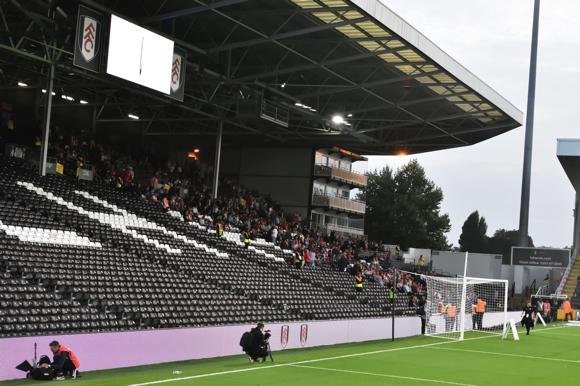
Craven Cottage is one of the most beautiful grounds in the UK, with the Thames on one side, a lovely old red-brick stand on the other, and a walk through Bishops Park beforehand. The stadium is oriented north-south along the riverbank. The Johnny Haynes Stand on the eastern side of the pitch, along Stevenage Road, was built in 1905 by Archibald Leitch.
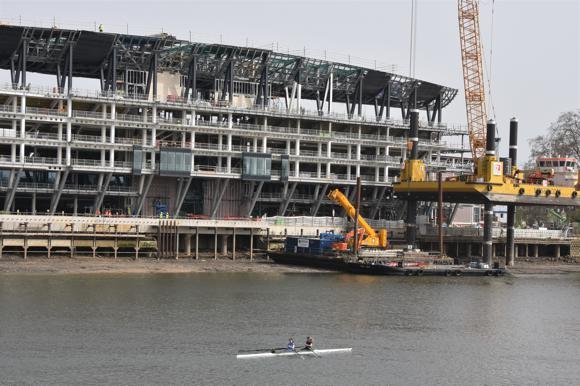
Opposite, the Riverside Stand backs onto the Thames, with views of the rowing clubs from the walkway, open to the river. This is currently being rebuilt to raise overall capacity to just under 30,000, completion now due in 2022. This involves far more than adding extra seats – Fulham Pier will feature a rooftop pool, cinema and family-friendly leisure attractions. For the time being, stadium capacity is limited to 19,000.
Between the southerly Putney End and the Haynes Stand, a house with ‘The Fulham Football Club’ written on its gable-end stands has balconies viewing the action: this is the Cottage, so-called after an 18th-century hunting lodge that once stood where the centre circle now is.
The riverbank side of the Putney End is reserved for away fans, but interestingly Fulham is the only Premier League club to offer a ‘neutrals’ zone, between the away fans and the Cottage, a special dispensation granted by the authorities.
getting there
Going to the ground – tips and timings


Most take the District line (Wimbledon branch) to Putney Bridge, then it’s a 15-min walk, most of which is through lovely parkland. Turn left out of the station, then right along Ranelagh Gardens. Turn right past the Eight Bells pub, then left on Gonville Street for the Putney Bridge approach road. At the foot of the bridge, it’s a Thameside stroll through the gardens of Fulham Palace and Bishops Park to arrive at the stadium.
The sat nav code for Craven Cottage is SW6 6HH. There is no parking at the ground and street parking on match days is a no-no. Pay & Display bays are limited to 1hr time slots and traffic wardens are draconian. The only nearby alternative is the car park at Fulham Broadway Centre (SW6 1BW), which closes 2.5hrs before kick-off and only reopens 1hr after the final whistle, meaning that drivers must pay at least £17 for a 6hr stay. It’s right behind Stamford Bridge, two Tube stops from Putney Bridge.
getting in
Buying tickets – when, where, how and how much


Tickets are available from the office (Mon-Fri 9am-5pm, match-day Sat from 9.30am) on the Stevenage Road side of the stadium, over the phone (0203 871 0810, Mon-Fri 9am-5pm) with a £1.50 levy per ticket and £2.50 per transaction and online, which carries a £1.25 fee per ticket. Now Fulham are back in the Premier League, online sales are usually restricted to members, and those with a purchase history. Membership costs £40, £20 for under-17s and allows a £5/£3 discount on tickets for certain home games.
For those overseas looking to buy tickets in the neutral zone, email enquiries@fulhamfc.com.
Tickets are priced in two categories, A and B. The most expensive are category A games in the sideline Johnny Haynes/Riverside Stands (£40, £35 for over-65s/under-22s, £25 under-18s), with cheaper seats towards the corner flags at £30/£25/£15. For the Hammersmith End, and for neutral and away fans, it’s £25/£20/£15. For category B games, these prices are £5 cheaper.
The club usually offers six types of hospitality packages per game, prices ranging from £263-£503.
what to buy
Shirts, kits, merchandise and gifts


Facing the back of the Johnny Haynes Stand, the modest club shop (Mon-Sat 10am-5pm, Sun 11am-4pm) has long queues outside on match days. Once you get inside, you should find replica shirts – for 2020-21, the strange choice of all yellow provides the alternative to the traditional white home shirt.
stadium tours
Explore the ground inside and out


As befits this friendly football club, the tour (£15, 5-12s £12, under-5s free) is a personal affair, cheerfully delivered. It starts from the Johnny Haynes statue, pointing out memorabilia, changing rooms and entertainment area, and taking you to sit in the dug-outs, with plenty of facts and context along the way. Tours generally take place three or four times a week, at either 11.15am or 2pm and can be booked online after registration.
Where to Drink
Pre-match beers for fans and casual visitors


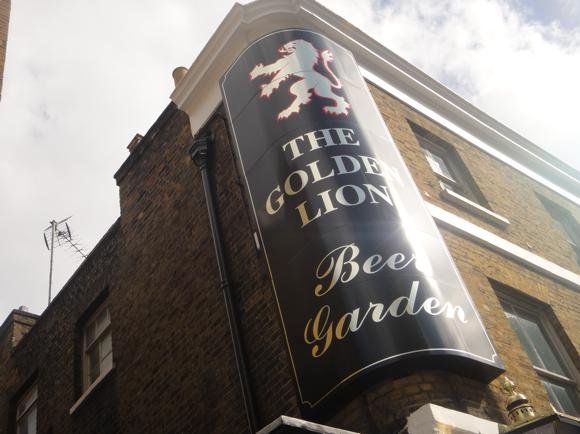
The most popular stop-off, after a cup of tea at the authentically retro River Café opposite Putney Bridge Tube, is the Eight Bells round the corner, mobbed with away fans on match days. Close by, where Fulham High Street meets the New King’s Road, a cluster of pubs should be less busy – The Temperance with TV sport and craft beers, the somewhat chic Kings Arms and the family-friendly Golden Lion.
For a riverside pint, over the bridge the venerable Duke’s Head, where the Boat Race sets off, has been serving beers for 150 years or more. In similar vein, the other side of the bridgehead, The Boathouse has a large terrace overlooking the Thames. Away from the river, just off Putney High Street, the Coat & Badge is tucked away behind a laurel hedges.


On the other side of Stevenage Road from the ground, halfway to Hammersmith Bridge, The Crabtree also welcomes away fans, with a beer garden and river views.
At the ground, The Flag operates behind the Johnny Haynes Stand on match days with a limited number of places available by registration. The fee of £10 goes towards a drink and hot snack.