
Hungary

object(WP_Term)#5902 (16) { ["term_id"]=> int(57) ["name"]=> string(7) "Hungary" ["slug"]=> string(7) "hungary" ["term_group"]=> int(0) ["term_taxonomy_id"]=> int(57) ["taxonomy"]=> string(8) "category" ["description"]=> string(0) "" ["parent"]=> int(4) ["count"]=> int(11) ["filter"]=> string(3) "raw" ["cat_ID"]=> int(57) ["category_count"]=> int(11) ["category_description"]=> string(0) "" ["cat_name"]=> string(7) "Hungary" ["category_nicename"]=> string(7) "hungary" ["category_parent"]=> int(4) } object(WP_Query)#4835 (54) { ["query"]=> array(1) { ["category__and"]=> array(2) { [0]=> int(57) [1]=> int(3) } } ["query_vars"]=> array(65) { ["category__and"]=> array(2) { [0]=> int(3) [1]=> int(57) } ["error"]=> string(0) "" ["m"]=> string(0) "" ["p"]=> int(0) ["post_parent"]=> string(0) "" ["subpost"]=> string(0) "" ["subpost_id"]=> string(0) "" ["attachment"]=> string(0) "" ["attachment_id"]=> int(0) ["name"]=> string(0) "" ["pagename"]=> string(0) "" ["page_id"]=> int(0) ["second"]=> string(0) "" ["minute"]=> string(0) "" ["hour"]=> string(0) "" ["day"]=> int(0) ["monthnum"]=> int(0) ["year"]=> int(0) ["w"]=> int(0) ["category_name"]=> string(4) "city" ["tag"]=> string(0) "" ["cat"]=> int(3) ["tag_id"]=> string(0) "" ["author"]=> string(0) "" ["author_name"]=> string(0) "" ["feed"]=> string(0) "" ["tb"]=> string(0) "" ["paged"]=> int(0) ["meta_key"]=> string(0) "" ["meta_value"]=> string(0) "" ["preview"]=> string(0) "" ["s"]=> string(0) "" ["sentence"]=> string(0) "" ["title"]=> string(0) "" ["fields"]=> string(3) "all" ["menu_order"]=> string(0) "" ["embed"]=> string(0) "" ["category__in"]=> array(0) { } ["category__not_in"]=> array(0) { } ["post__in"]=> array(0) { } ["post__not_in"]=> array(0) { } ["post_name__in"]=> array(0) { } ["tag__in"]=> array(0) { } ["tag__not_in"]=> array(0) { } ["tag__and"]=> array(0) { } ["tag_slug__in"]=> array(0) { } ["tag_slug__and"]=> array(0) { } ["post_parent__in"]=> array(0) { } ["post_parent__not_in"]=> array(0) { } ["author__in"]=> array(0) { } ["author__not_in"]=> array(0) { } ["search_columns"]=> array(0) { } ["ignore_sticky_posts"]=> bool(false) ["suppress_filters"]=> bool(false) ["cache_results"]=> bool(true) ["update_post_term_cache"]=> bool(true) ["update_menu_item_cache"]=> bool(false) ["lazy_load_term_meta"]=> bool(true) ["update_post_meta_cache"]=> bool(true) ["post_type"]=> string(0) "" ["posts_per_page"]=> int(10) ["nopaging"]=> bool(false) ["comments_per_page"]=> string(2) "50" ["no_found_rows"]=> bool(false) ["order"]=> string(4) "DESC" } ["tax_query"]=> object(WP_Tax_Query)#4833 (6) { ["queries"]=> array(1) { [0]=> array(5) { ["taxonomy"]=> string(8) "category" ["terms"]=> array(2) { [0]=> int(3) [1]=> int(57) } ["field"]=> string(7) "term_id" ["operator"]=> string(3) "AND" ["include_children"]=> bool(false) } } ["relation"]=> string(3) "AND" ["table_aliases":protected]=> array(0) { } ["queried_terms"]=> array(1) { ["category"]=> array(2) { ["terms"]=> array(2) { [0]=> int(3) [1]=> int(57) } ["field"]=> string(7) "term_id" } } ["primary_table"]=> string(8) "wp_posts" ["primary_id_column"]=> string(2) "ID" } ["meta_query"]=> object(WP_Meta_Query)#4829 (9) { ["queries"]=> array(0) { } ["relation"]=> NULL ["meta_table"]=> NULL ["meta_id_column"]=> NULL ["primary_table"]=> NULL ["primary_id_column"]=> NULL ["table_aliases":protected]=> array(0) { } ["clauses":protected]=> array(0) { } ["has_or_relation":protected]=> bool(false) } ["date_query"]=> bool(false) ["request"]=> string(378) "SELECT SQL_CALC_FOUND_ROWS wp_posts.ID FROM wp_posts WHERE 1=1 AND ( ( SELECT COUNT(1) FROM wp_term_relationships WHERE term_taxonomy_id IN (3,57) AND object_id = wp_posts.ID ) = 2 ) AND ((wp_posts.post_type = 'post' AND (wp_posts.post_status = 'publish'))) GROUP BY wp_posts.ID ORDER BY wp_posts.post_date DESC LIMIT 0, 10" ["posts"]=> array(3) { [0]=> object(WP_Post)#4816 (24) { ["ID"]=> int(11085) ["post_author"]=> string(1) "3" ["post_date"]=> string(19) "2015-07-20 15:43:39" ["post_date_gmt"]=> string(19) "2015-07-20 15:43:39" ["post_content"]=> string(8748) "

Teams, tales and tips – a guide to the local game

The town that sounds like a sneeze, Székesfehérvár was the coronation and burial place for generations of Hungarian royals. Today the outside world best knows it more as the home of Videoton, the electronic manufacturing company and its football team, the current national champions and last Hungarian club to reach a European final. The main railway junction between the capital, Budapest, and Hungary’s leading leisure destination of Lake Balaton, Székesfehérvár didn’t witness top-flight football until the 1960s, two decades after Videoton were formed as war-time Vadásztölténygár SK (‘SK Hunting Rifle Cartridge Factory’). As Vasas, the club gained promotion to the top division in 1967, a year before a sponsorship agreement with Videoton.
Atlético Madrid tour/Ruth Jarvis
Gaining traction in the 1970s, Videoton enjoyed a purple patch in the mid-1980s. Under Ferenc Kovács, Videoton famously beat Manchester United on penalties in the UEFA Cup quarter-final of 1985, then beat Real Madrid 1-0 in the away leg of the final – after losing the home one 3-0. Videoton’s recent good fortune – winning a first domestic title in 2011 then a second in 2015 – owes much to the financial and political backing of their most famous fan, football-mad Hungarian Prime Minister Viktor Orbán. Successive foreign managers have steered Videoton through regular European competition, including a run to the group stage of the Europa League in 2012-13.
Atlético Madrid tour/Ruth Jarvis
More significantly, in 2007, on the 80th anniversary of the birthdate of Ferenc Puskás, the Videoton-Puskás Akadémia was created, a nursery feeder team for Videoton. Based in the village of Felcsút, childhood haunt and country home of Viktor Orbán, they have recently been developed into a top-flight club with a brand new stadium, the Pancho Aréna, named after Puskás. Costing HUF3.8 billion, it opened to much controversy in 2014, its capacity of 3,800 being more than twice the population of Orbán’s village an hour’s drive from Székesfehérvár. Equally controversially, a narrow-gauge rail link was announced in March 2015, to be built at a cost of HUF600 million of EU funds. On the pitch, the now named Puskás Akadémia FC have been top flight since 2013. The under-17 team compete in the Puskás Cup in the spring, usually against their counterparts from the youth academies of Budapest Honvéd, Real Madrid and Panathinaikos. [mapsmarker map="34"]

Getting Around

Arriving in town, local transport and timings
FC Barcelona transport/Peterjon Cresswell
FC Barcelona tickets/Peterjon Cresswell
Expo Hotel Barcelona/Peterjon Cresswell
Previous Next The nearest international airport is Budapest, 100km (62 miles away). There is no direct transport to Székesfehérvár. A Fötaxi  (+36 1 222 2222), ordered from the kiosk outside Arrivals, would cost upwards of HUF30,000 – just under €100. Otherwise you have to head into Budapest – see Budapest transport – then take the train from either Déli (red metro line 2) or Kelenföld (green metro line 4) from town, journey time around 50min, tickets around HUF1,500 (about €5). In town, city transport consists of local buses. The stadium is a 10-15min walk from the main rail station, in the opposite direction to the city. For a cab, call Fehérvár Taxi (+36 22 222 222 or +36 22 343 343).

Where to Drink

The best pubs and bars for football fans
FC Barcelona transport/Peterjon Cresswell
FC Barcelona tickets/Peterjon Cresswell
Expo Hotel Barcelona/Peterjon Cresswell
Previous Next You should find enough bars in the town centre to catch football on TV and avoid having to suffer Hungarian beer – there’s nearly always a Czech, German or Belgian alternative. The Sörpatika Sörözö down the little sidestreet of Várkapu utca keeps late hours and shows matches. In the same street, the Várkocs Old Pub is somewhat more bohemian, with outdoor seating. Also central, the Salvator Étterem offers great Paulaner beer but little by way of TV sports. The Irish Music Pub & Restaurant (Vörösmarty tér 1) was closed at some point in 2014 but should be bouncing back. For late-night fun, Kinxtown in Bregyó köz is the best DJ spot.

Where to stay

The best hotels for the stadium and city centre
FC Barcelona transport/Peterjon Cresswell
FC Barcelona tickets/Peterjon Cresswell
Expo Hotel Barcelona/Peterjon Cresswell
Previous Next The City’s home page has a modest database of local hotels. The nearest hotel to the stadium is the comfortable, 42-room Szárcsa Csárda és Fogadó, with a pool, sauna and restaurant serving Hungarian specialities. Also close but on the other side of the station, the Hotel Plátán is a 28-room three-star. In the town centre, the Hotel Vadaszkürt jagerhorn.hu punches above its two-star status. The Novotel Székesfehérvár is the main business-friendly lodging in town. Finally, the Hotel Magyar Király is an affordable four-star with spa in a historic building." ["post_title"]=> string(17) "Székesfehérvár" ["post_excerpt"]=> string(0) "" ["post_status"]=> string(7) "publish" ["comment_status"]=> string(6) "closed" ["ping_status"]=> string(4) "open" ["post_password"]=> string(0) "" ["post_name"]=> string(14) "szekesfehervar" ["to_ping"]=> string(0) "" ["pinged"]=> string(0) "" ["post_modified"]=> string(19) "2022-11-05 22:56:24" ["post_modified_gmt"]=> string(19) "2022-11-05 22:56:24" ["post_content_filtered"]=> string(0) "" ["post_parent"]=> int(0) ["guid"]=> string(36) "https://old.liberoguide.com/?p=11085" ["menu_order"]=> int(0) ["post_type"]=> string(4) "post" ["post_mime_type"]=> string(0) "" ["comment_count"]=> string(1) "0" ["filter"]=> string(3) "raw" } [1]=> object(WP_Post)#4815 (24) { ["ID"]=> int(6871) ["post_author"]=> string(1) "2" ["post_date"]=> string(19) "2014-07-21 11:02:02" ["post_date_gmt"]=> string(19) "2014-07-21 11:02:02" ["post_content"]=> string(11355) "

Teams, tales and tips – a guide to the local game

May 1 2014 saw the opening ceremony of the most significant new football stadium to be built in Hungary for decades. It didn’t take place in Budapest, but in Hungary’s second city, nearly ten times smaller than the capital. Debrecen is home to the country’s most successful club of the last decade, 2014 champions DVSC (‘Debreceni Vasutas Sport Club’). Powerbase of ruling political party Fidesz, Debrecen is the provincial showcase of football-mad prime minister Viktor Orbán’s project to build new stadiums across Hungary. Also part of the Hungary’s failed bid to co-host Euro 2012, Debrecen’s new arena remained an idea to be acted upon until the Fidesz government approved funding in 2010, with a view to completion for DVSC’s 110th anniversary in 2012.
Atlético Madrid tour/Ruth Jarvis
A HUF12.5 billion (€40 million) investment in a Hungarian game characterised by poor attendances and little European progress, the Nagyerdei (‘Big Forest’) Stadion replaces the former ground of the same name in a wooded sports and leisure complex near Debrecen’s famous university just north of the town centre. Virulently anti-Communist Fidesz chose May Day to show off the achievement of creating Hungary’s finest football stadium outside of Budapest. The original Nagyerdei had been opened in 1934 for Debrecen’s then main club Bocskai FC, before their Mitropa Cup game with Bologna. Local rivals Debreceni Vasutas remained at their long-term home of Vágóhíd utca, formerly shared with Bocskai, near the town’s main train station. Formed as a sports club for railway workers in 1902, Vasutas (‘Railwaymen’) were left in the Bocskai’s shadow after Debrecen’s first professional club were founded in 1926.
Atlético Madrid tour/Ruth Jarvis
Taking the best players from Vasutas and other Debrecen clubs DKASE and DTE, Bocskai (originally Bocskay) became the first provincial club to win the Hungarian Cup in 1930. The blue-and-yellows also took third place in the Hungarian league in 1934, the same year as the club provided five players for the Hungarian squad that reached the quarter-finals of the World Cup. One of them, prolific forward Jenö Vincze, a former Vasutas man, also played in the 1938 World Cup Final. Two years later, Bocskai’s outgoings were such that the club was forced to fold. Debrecen, national capital for the second time in 1944, was left with one main club, Vasutas. Undergoing a number of name changes under Communism – even Lokomotiv in 1949 – Vasutas gained the nickname ‘Loki’ for easy reference. Only making occasional and inconsistent appearances in the top flight after the war, the Loki team which gained promotion in 1993 featured players who would become emblematic over the next 20 years.
Atlético Madrid tour/Ruth Jarvis
Locally born forwards Tamás Sándor and Tibor Dombi both would later have spells abroad but return to become part of the club’s set-up. Dombi featured in the Hungarian Cup win of 1999, but both would feature in the first title win of 2004-05. With long-term top-flight status seemingly assured, Loki had moved in 1993 to a modest ground in the Nagyerdei sports complex. Referred to as Oláh Gábor utcai stadion, its street name, the ground was expanded to 9,000 capacity after the title win of 2005. It would witness seven title-winning campaigns in all over the next decade, but few of the leading Champions League fixtures afterwards. Games with Manchester United and the group stage home matches of 2009-10 were moved to the national stadium in Budapest. A 2-2 draw with Denmark in May saw a full house of 20,000 – the trick is now to keep it filled. [mapsmarker map="34"]

Getting Around

Arriving in town, local transport and timings
FC Barcelona transport/Peterjon Cresswell
FC Barcelona tickets/Peterjon Cresswell
Expo Hotel Barcelona/Peterjon Cresswell
Previous Next Debrecen’s modest airport is 5km (three miles) south-west of town. A DKV bus (Ft500) connects with the daily incoming and outgoing flight, stopping at the train and bus stations, the city centre and two hotels by the stadium. A Fönixtaxi (+36 52 444 444) charges Ft2,500-3,000 into town. Civis Transzfer (+36 20 566 6555) charges Ft10,500/Ft17,000 return for a shuttle bus from and to Liszt Ferenc international airport 20km outside Budapest, 240km/2hr 30min from Debrecen. A direct train (Ft4,195, 2hr25min) runs hourly from Ferihegy station opposite disused Terminal 1, five stops/12min from Terminal 2 by regular bus 200E www.bkk.hu. In Debrecen, city transport consists of two tramlines, buses and trolleybuses. A ticket is Ft300 from a newsstand, Ft400 on board. A day ticket is Ft1,200 but the town centre is pedestrian-friendly and walkable.

Where to Drink

The best pubs and bars for football fans
FC Barcelona transport/Peterjon Cresswell
FC Barcelona tickets/Peterjon Cresswell
Expo Hotel Barcelona/Peterjon Cresswell
Previous Next Debrecen is very much a student town and lively in term-time. In summer, you’ll find busy terrace bars open either side of focal Piac utca near the main square. One such is the Pince, with a big screen set up outdoors for match transmission. Nearby No.1 Bisztró provides a touch of class though without the kind of big-game focus that ensures below-street-level Stars music and sports pub its popularity. The Belga Pub & Restaurant opposite is one of several such establishments in the Hungarian-speaking world. Slightly off the beaten track, Adam’s Pub on the ring road is bound to show matches, while pirate-themed Calico Jack, halfway between town and the stadium is a decent choice, a screen set up on the terrace for matches. Finally, alongside Petöfi tér opposite the train station, the upper-floor Petöfi Presszó is a classic spit-and-sawdust local with plenty of football talk, a DVSC souvenir machine and a terrace for that arrival/departure beer in celebration.

Where to stay

The best hotels for the stadium and city centre
FC Barcelona transport/Peterjon Cresswell
FC Barcelona tickets/Peterjon Cresswell
Expo Hotel Barcelona/Peterjon Cresswell
Previous Next The Debrecen tourist information office has no details of hotels. Hotels surround the new stadium. Beside the Viktória restaurant, alongside the former ground on Oláh Gábor utca, the Sport Hotel is a three-star, recently upgraded from a classic, Socialist-style communal lodging, where doubles are Ft14,500-17,500 a night depending on time of year. Near each other on the junction by the main tramstop, the Hunguest Hotel Nagyerdö is a standard, three-star domestic chain while the Divinus is the best hotel in town, a five-star spa and conference job with a cosmopolitan restaurant. On the other side of the main road, four-star Aquaticum makes best use of its surrounding pools and thermal waters. The nearby Villa Hotel has more modest sauna facilities. There are also several student-oriented hostels in the vicinity. In town, the most famous hotel is the Aranybika, whose rooms have seen better days but whose history dates back to 1915. Downtown Lycium is its contemporary equivalent." ["post_title"]=> string(8) "Debrecen" ["post_excerpt"]=> string(0) "" ["post_status"]=> string(7) "publish" ["comment_status"]=> string(6) "closed" ["ping_status"]=> string(6) "closed" ["post_password"]=> string(0) "" ["post_name"]=> string(8) "debrecen" ["to_ping"]=> string(0) "" ["pinged"]=> string(0) "" ["post_modified"]=> string(19) "2022-11-05 21:41:38" ["post_modified_gmt"]=> string(19) "2022-11-05 21:41:38" ["post_content_filtered"]=> string(0) "" ["post_parent"]=> int(0) ["guid"]=> string(35) "https://old.liberoguide.com/?p=6871" ["menu_order"]=> int(0) ["post_type"]=> string(4) "post" ["post_mime_type"]=> string(0) "" ["comment_count"]=> string(1) "0" ["filter"]=> string(3) "raw" } [2]=> object(WP_Post)#4871 (24) { ["ID"]=> int(4526) ["post_author"]=> string(1) "2" ["post_date"]=> string(19) "2013-10-30 01:49:30" ["post_date_gmt"]=> string(19) "2013-10-30 01:49:30" ["post_content"]=> string(42143) "

Teams, tales and tips – a guide to the local game

November 25 is the anniversary of 6-3. In a dark bar in Budapest, simply called 6:3, candles, solemn handshakes and a loop-video replay of the match in question mark another year gone since 1953. Back then, Hungary gave England, and the world, a lesson in football, only to lose the World Cup a year later.

The bar theme is no coincidence – it was once owned by Nándor Hidegkuti. His deployment as a deep-lying forward that Wembley afternoon was as crucial, if not as visual, as the instinctive Puskás drag-back. Tactical nous and tradition always characterised Budapest’s great clubs – Ferencváros, Újpest, MTK – founded in the late 1800s.

Ferenc Ray, the Hungarian thought to have introduced football from Switzerland, played for none of them, but Budapest Torna Club (BTC), inaugural winners of the Hungarian league in 1901.

Welcome to Budapest/Peterjon Cresswell
Previous Next

Touring teams (particularly Southampton) and the arrival of influential English coach Jimmy Hogan from a Viennese internment camp in 1916 helped establish Hungary’s superior passing game. MTK’s György Orth and Imre Schlosser of Ferencváros (FTC) were among its key early exponents.

Domestic football, dominated by Budapest, turned professional in the 1920s. Hungary reached the World Cup final in 1938, and emerged from the war with talented duo Ferenc Puskás and ‘Cucu’ Bozsik playing a modern version of Hogan’s game at Kispest, a sleepy suburb of south Budapest.

With the Communist restructuring of sport, Kispest became the army side, Honvéd. Called up were forward Sándor Kocsis, FTC goalkeeper Gyula Grosics, practically Hungary’s finest XI, in fact. Along with MTK’s Hidegkuti, this formed the ‘Aranycsapat’, the Golden Team’: the Magic Magyars.

Welcome to Budapest/Peterjon Cresswell
Previous Next

After 6-3, Hungary repeated the lesson: 7-1 over England at Budapest’s newly opened Népstadion. After the improbable defeat to West Germany at the 1954 World Cup Final, Hungary saw its game cut off in its prime when Honvéd’s senior and junior players stayed on tour abroad during the 1956 Hungarian Uprising. Bozsik and Grosics then came home to a broken nation.

Puskás and Kocsis became stars in Spain. Coaches Béla Guttmann, Pál Csernai, and later  Puskás himself, successfully took the Hungarian game abroad.

During the silver age of the 1960s and 1970s, with packed league double-headers at the Népstadion, MTK, Újpest and Ferencváros all reached European finals. Even little working-class Vasas made in-roads.

As state sponsorship withered, the fur coats came out, bundameccs (‘fur coat match’) local slang for fixed. The game was up. After 1989, poor crowds and poorer football typified any given Saturday. Vác won the title in 1994, and Budapest’s century-long near monopoly on the championship was over. All that was left was the FTC-Újpest derby.

Welcome to Budapest/Peterjon Cresswell
Previous Next

With Ferencváros forcibly demoted for financial irregularities in 2006, political favour fell on dominant provincial side Debrecen.

Subsequent politicians, headed by football-mad Prime Minister Viktor Orbán, then backed a major stadium rebuilding programme across Budapest and Hungary. The former Népstadion, reconfigured as the Puskás Aréna, hosted four games at the Euro 2020 finals, two involving a resurgent national side backed by huge populist support. 

Hungary had ended 30 years of hurt one night in Oslo in 2015, followed by the second leg of the Euro 2016 play-off at the Groupama Aréna, new home of Ferencváros. Two wins over Norway sent the Magyars to their first major finals since 1986. As well as wild celebrations in Budapest, the achievement gave rise to the spontaneous post-match singing of the national anthem between players and fans.

This, along with a fan zone on Budapest's Heroes' Square and march to the nearby Puskás Aréna, became standard rituals for local supporters at Euro 2020 and at international matches thereafter. The national stadium, meanwhile, gained favour with UEFA when it hosted Champions League games at the height of the pandemic. 

Welcome to Budapest/Peterjon Cresswell
Previous Next

It was at an empty Puskás Aréna that November that perhaps the most outstanding and important goal scored in Budapest in the history of Hungarian football – a late, late run and super strike by golden boy Dominik Szoboszlai to put his country through to the Euro 2020 finals it would be co-hosting. Iceland's players were spared the considerable collective din of 69,000 Hungarians going doolally.

Unfortunately, as it turned out, overlooked for the Stade de France when it came to re-awarding hosting of the 2022 Champions League Final, the Puskás Aréna welcomes the Europa League final in 2023. While a certain number of Hungary's fans still need lessons in how to behave, England's players subjected to appalling racist abuse here in 2021, there's no doubt that Budapest has become an otherwise popular and successful stage for major sporting events. 

Easily accessed by air in two or three hours from almost anywhere in Europe, with a superb hotel stock and transport infrastructure – around the city, at least, the airport still needs a swift transfer link – Hungary's capital has staged two world swimming finals in five years and the European handball finals in 2022. 

Welcome to Budapest/Peterjon Cresswell
Previous Next

In 2023, another (!) new stadium hosts the World Athletics Championships. Ferencváros, MTK, Vasas and Honvéd have all received new-build grounds. Many locals, particularly in Budapest, with its green mayor and liberal outlook, begrudge huge sums being spent on sport with hospitals in such poor condition. Most visitors, however, treated to a beautiful, affordable metropolis with a buzzing nightlife, don't need to think too much beyond fun and entertainment.

Lads usually break off from stag-circuit revelry to see domestic football at any one (or two, if they're keen) of four top-tier grounds on any given weekend. There are currently three to choose from in the second-flight NBII and a handful in the three-region NBIII. Few forget their visit to BKV Előre, the main stand and wonderful stadium bar an authentic echo of the 1960s. It's also the shortest groundhop in Europe, MTK exactly 11 paces across the street. 

Away from completely dominant Ferencváros, now very much back in favour with the government, league crowds are still pitifully low, even at Honvéd, where a young side won the club a first title for 24 years in 2017. Up in Angyalföld, Vasas are also enjoying a mini-revival after gaining promotion in 2022. Újpest, under the much-maligned yoke of owner Roland Duchâtelet, remain a basket case, however loyal the fan base. No lilac supporter would have slept soundly after the 6-0 pasting given to their side by eternal rivals Ferencváros in September 2022. At home, no less.

As for MTK, relegation in 2022 will hardly see an increase in spectators – gates were never the club's strong point. Their new ground, impressive outside, underwhelming within, is named the Hidegkuti Arena. The deep-lying striker of the 6-3 game would have appreciated the gesture – and his 6:3 bar being faithfully looked after by a team of expats cognisant of its heritage.

[mapsmarker map="34"]

Getting Around

Arriving in town, local transport and timings
Budapest transport/Peterjon Cresswell
Previous Next

Budapest’s Liszt Ferenc Airport is 16km (ten miles) south-east of town. Terminal 2 is the only one in operation, comprised of adjoining buildings A and B. Most budget flights depart from Terminal 2A. Terminal 1 closer to town is not open to the public, although the rail terminal opposite still functions.

Public transport from Terminal 2 involves buses. The 100E leaves from outside Terminal 2 Arrivals every 8-10mins, then every 30-45mins through the night. Journey time to three central points, Kálvin tér, Astoria and focal Deák Ferenc tér, is around 45mins, depending on traffic. 

From each of these stops in town, airport-bound buses set off with similar frequency day and night. The stop at central Deák Ferenc tér is beside cobbled Városháza park, across the road from a row of late-night bars.

The service requires a special airport shuttle ticket (Ft1,500/€3.60), available from the machine by the airport stop or from metro stations in town. Inspectors will validate your ticket as you board.

Budapest transport/Peterjon Cresswell
Previous Next

Next to the 100E stop at the airport, the 200E bus (every 10mins) runs to south Pest for the price of a regular ticket, (Ft350/€0.85). Long-term work on blue metro line M3 means that replacement buses (potlóbusz) cover the rest of the journey into town. 

The Népliget stop for Ferencváros and the main international bus station is on this route, the stadium now more easily reached from town by tram 1, which also serves MTK and the Puskás Aréna. Each main train terminus has its own metro station, Keleti, Nyugati and Déli.

The BKK public transport network consists of four metro lines, buses, trams, trolleybuses, electric trains and boats. Night buses also run, along with the 24hr tram 6 along the city’s busiest boulevard, the Nagykörút. 

A book of ten tickets is Ft3,000/€8.30, a 24hr pass Ft2,500/€8, available from machines at major stops including the airport, and at metro stations. Foreign credit cards are accepted. Stamp single tickets by putting the grid-patterned end into the orange machine, either on board the vehicle or at the top of metro escalators.

When you come out of airport Arrivals, you’ll see a kiosk – this is for the Főtaxi (+36 1 222 2 222) service into town. Give your destination to the dispatcher and a car will pull up in 2mins. The standard fare into town is around Ft10,000/€24. Be careful of taxis waiting outside major hotels and nightlife hubs, particularly Gozsdu udvar.

To and from the airport, the miniBUD communal minibus is cheaper than a taxi, but charged per head, so is only economical for single passengers. A journey to/from the city centre is around Ft6,700/€16. 

Where to Drink

The best pubs and bars for football fans
Stifler Bar/Peterjon Cresswell
Pointer Pub/Peterjon Cresswell
Puskás Gozsdu/Peterjon Cresswell
Score!/Peterjon Cresswell
Winners/Peterjon Cresswell
Ziccer!/Peterjon Cresswell
Champs Sports Bar/Peterjon Cresswell
Previous Next

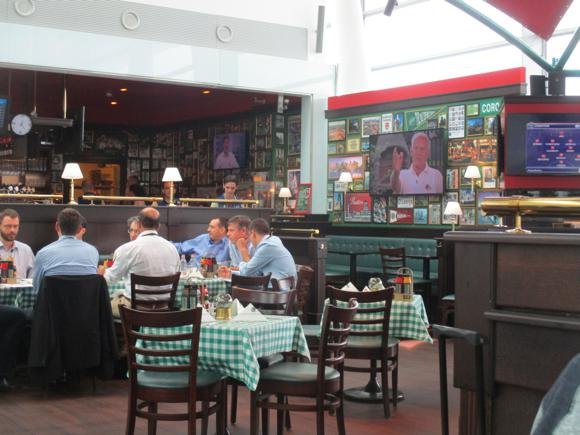
Budapest is a great bar city, the scene extensive enough for the many stag parties not to become too overbearing. District VII, where Kazinczy utca meets Klauzál tér, is the hub. Within it, the Gozsdu udvar passageway is flooded with revellers. There, the themed Puskás Gozsdu opens from 5pm on weekdays, noon at weekends.

The most football-friendly of Budapest's now overly famous ruin bars, UdvarROM and the adjoining Füge Udvar, fill with young foreigners until the early morning.

Districts V, VI, VII and VIII in Pest are full of bars with TV football the focus – the Stifler chain has several burger-and-soccer joints on and off the Nagykörút, the busy tram-lined street dotted with football-friendly drinkeries along its Erzsébet körút section. Others include Ziccer!, the outlet for the TrollFoci platform for Hungarian football discourse, nearby Winners and Score. Pointer pubs can also be found at prominent Pest locations.

For a little more individuality, Champs on Dohány utca is tastefully decorated, with painted likenesses of Hungarian Olympian heroes since 1896. It also runs a summer terrace sports bar on Margaret Island. 

Jack Doyle's/Peterjon Cresswell
Staropramen Söröző/Peterjon Cresswell
6:3 Borozó/Peterjon Cresswell
Becketts/Peterjon Cresswell
Davy Byrne's/Peterjon Cresswell
Jack Doyle's/Peterjon Cresswell
Previous Next

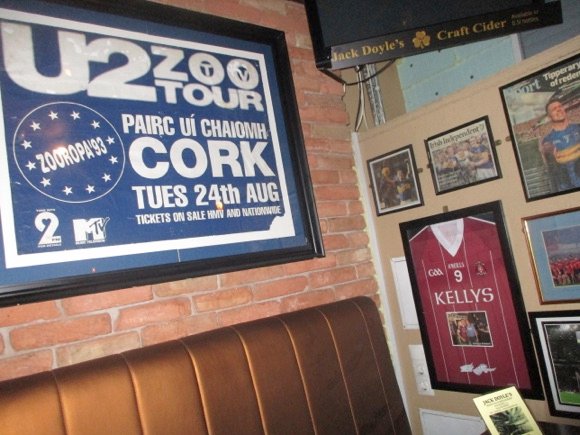
Right in the centre, Irish-run Jack Doyle's is the best of the city's pubs, big on sport, food, live music and atmosphere. It sits beside what was the Pilvax Café, where the 1848 revolutionaries gathered before taking on the Austrians. 

Nearby local bar, the Staropramen Söröző, provides a quiet space to watch the match a minute's walk from the airport bus stop. The other main pubs in town, Davy Byrne's is equally Irish-run and sits in lively District VI, while long-established Becketts is located on tourist-friendly Liszt Ferenc tér.

Where Lonyáy utca meets the Nagykörút, near the Boráros tér stop on main tram lines 2, 4 and 6, the 6:3 takes its name from the famous scoreline when Hungary beat England at Wembley in 1953. Its former owner, Nándor Hidegkuti, scored a hat-trick that day, and the bar remained in local hands until taken over by a quartet of expat football fans in 2018. Augmenting its priceless Puskás-era mementos and keeping its traditional feel, the incoming owners lay on live-match screenings and occasional special events.

Puskás Pancho Sport Pub/Peterjon Cresswell
Lánchíd Söröző/Peterjon Cresswell
Puskás Pancho Sport Pub/Peterjon Cresswell
O'Learys Budapest/Peterjon Cresswell
Budapest mural/Peterjon Cresswell
Previous Next

Up in Óbuda, a short hop on the 17 tram from Margaret Bridge (Buda side), the Puskás Pancho Sport Pub is located just past the statue dedicated to Hungary's greatest player. Menu, décor and on-sale souvenirs relate to ‘the Galloping Major’, Pancho to Madrileños, Öcsi to Hungarians.

On the same side of the river, named after the Chain Bridge it stands near, the Lánchíd Söröző at Fő utca 4 is a homely, retro-themed bar/restaurant comprising two rooms, old Who videos shown in one, TV football in another.

Finally, in the departures terminal of Budapest airport, Scando sports-bar chain O’Learys provides a farewell pint and gawp at football before you board your plane.

Where to stay

The best hotels for the stadiums and city centre
Danubius Hotel Arena/Peterjon Cresswell
Dominik Panzió/Peterjon Cresswell
Danubius Hotel Arena/Peterjon Cresswell
Lion's Garden Hotel/Peterjon Cresswell
Royal Park Hotel/Peterjon Cresswell
Danubius Hotel Arena/Peterjon Cresswell
Baross City Hotel/Peterjon Cresswell
Golden Park Hotel/Peterjon Cresswell
Intercity Hotel Budapest/Peterjon Cresswell
Danubius Hotel Hungaria/Peterjon Cresswell
Previous Next

The official Budapest Tourist Office website is extremely poor, with no hotel information or English page.

Many hotels are convenient for the Puskás Aréna and nearby Keleti station. On the Kerepesi út side of the stadium, the Danubius Hotel Arena Budapest is a four-star with a pool, gym and spa. Slightly further away are the conference-friendly Green Hotel and, opposite each other on Cházár András utca, the spa-equipped Lion’s Garden Hotel and comfortable, budget Dominik Pánzió

The lower mid-range Royal Park Boutique Hotel and Baross City Hotel are next to Keleti, as is the recently opened Intercity, the well-known German chain of station hotels. Alongside, the Golden Park occupies a prominent building long facing Keleti station.

Round the corner onto main Rákóczi út, the Danubius Hungaria is Hungary's largest hotel, dating back to the golden age of rail and thoroughly modernised since.

Danubius Hotel Astoria/Peterjon Cresswell
Crowne Plaza Budapest/Peterjon Cresswell
ACHAT Hotel/Peterjon Cresswell
Anantara New York Palace/Peterjon Cresswell
Radisson Blu Béke/Peterjon Cresswell
Corinthia Budapest/Peterjon Cresswell
Anantara New York Palace/Peterjon Cresswell
Hotel Millennium/Peterjon Cresswell
Anantara New York Palace/Peterjon Cresswell
Previous Next

Of historic interest and at a main transport hub convenient for Keleti and the Puskás Aréna, the Astoria is also right in the city centre. Slap opposite MTK, the ACHAT is an upscale German chain four-star.

Near Ferencváros, the three-star Hotel Millennium is particularly convenient as it’s also on the main road to the airport.

For the stadiums on the northern section of blue metro line 3, Újpest and Vasas, Nyugati station is a handy crossing point. Built into the adjoining mall, the business-friendly Crowne Plaza ambitiously opened during the pandemic, anticipating a new age of rail. Round the corner on the Nagykörút, long-established upscale chains such as the Radisson Blu Béke and Corinthia, original built for the 1896 Olympics and Hungarian millennial celebrations, are steeped in history.

Further along the Nagykörút, the New York was recently taken over by Thailand's Anantara group, keen to play up its golden heritage. 

Kempinski Hotel Corvinus/Peterjon Cresswell
The Ritz-Carlton/Peterjon Cresswell
Párisi Udvar Hotel/Peterjon Cresswell
City Hotel Pilvax/Peterjon Cresswell
Aria Hotel Budapest/Peterjon Cresswell
D8 Hotel/Peterjon Cresswell
Soho Boutique Hotel/Peterjon Cresswell
Hotel Clark/Peterjon Cresswell
D8 Hotel/Peterjon Cresswell
Novotel Budapest Danube/Peterjon Cresswell
Hilton Garden Inn Budapest City Centre/Peterjon Cresswell
Previous Next

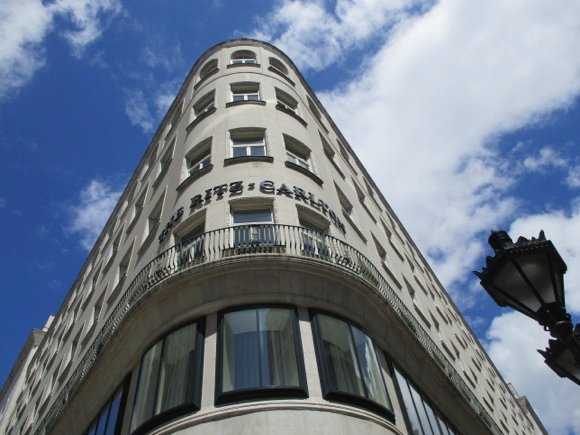
The city's impressive hotel stock in the city centre is a key factor in Budapest hosting so many major sports events. Generations of Grand Prix drivers have stayed at the Kempinski Hotel Corvinus – just ask to look at the guest book while top football teams also sleep at The Ritz-Carlton next door. 

For something a bit more individual, only two minutes from the main square, Vörösmarty tér, the D8 Hotel exudes chic urban style. On the other side of the square, the Párisi Udvar shows what can be done when you convert an elegant arcade from the city's golden age into a luxury hotel. Round, the corner, the mid-range City Hotel Pilvax plays up its location, the coffeehouse where the 1848 Uprising was instigated.

Budapest also specialises in rooftop hotel bars, such as at the music-themed Aria and Hilton Garden Inn behind the Opera House, whose panoramic terrace can be hired out.

Near Pest’s bar vortex, the Soho Boutique adds flair amid many apartment rentals.

Over the river in Buda, with the long-term closure of the illustrious Gellért for a major overhaul, the recently opened Hotel Clark makes best use of its location with a rooftop bar overlooking the Chain Bridge. Nearer Margaret Bridge, the Novotel Budapest Danube provides river views to guests in superior rooms.

Where to shop

Shirts, kits, merchandise and gifts
Hungarian Football-Sport Shop/Peterjon Cresswell
Lion's Sport/Peterjon Cresswell
Hungarian Football-Sport Shop/Peterjon Cresswell
Football Factor/Peterjon Cresswell
Memories of Hungary/Peterjon Cresswell
Previous Next

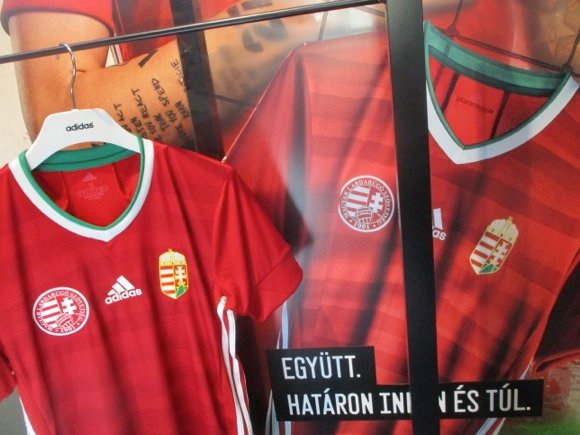
Hungary, Ferencváros and Újpest tops are among the international football merchandise on offer at Lion’s Sport, on Rákóczi út halfway between Blaha Lujza tér and Keleti Station. Football Factor at Andrássy út 81 deals more in kits of top European sides, and the latest multi-coloured boots. Another branch has opened at the Allee shopping mall in Buda.

More niche is a tiny emporium tucked away at the back of a courtyard on Budapest’s main shopping thoroughfare, Váci utca. Hungarian Football-Sport Shop, signposted at No.23, is a treasure trove of Khrushchëv-era badges, scarves, shirts and pennants.

Tourist souvenir chain Memories of Hungary usually stocks a number of Puskás-related items, mugs, T-shirts and replica shirts. You’ll find a branch near the Basilica, one by the Fishermen’s Bastion in the Castle District and one at the airport.

" ["post_title"]=> string(8) "Budapest" ["post_excerpt"]=> string(0) "" ["post_status"]=> string(7) "publish" ["comment_status"]=> string(6) "closed" ["ping_status"]=> string(6) "closed" ["post_password"]=> string(0) "" ["post_name"]=> string(8) "budapest" ["to_ping"]=> string(0) "" ["pinged"]=> string(0) "" ["post_modified"]=> string(19) "2022-10-28 21:46:49" ["post_modified_gmt"]=> string(19) "2022-10-28 21:46:49" ["post_content_filtered"]=> string(0) "" ["post_parent"]=> int(0) ["guid"]=> string(35) "https://old.liberoguide.com/?p=4526" ["menu_order"]=> int(0) ["post_type"]=> string(4) "post" ["post_mime_type"]=> string(0) "" ["comment_count"]=> string(1) "0" ["filter"]=> string(3) "raw" } } ["post_count"]=> int(3) ["current_post"]=> int(-1) ["before_loop"]=> bool(true) ["in_the_loop"]=> bool(false) ["post"]=> object(WP_Post)#4816 (24) { ["ID"]=> int(11085) ["post_author"]=> string(1) "3" ["post_date"]=> string(19) "2015-07-20 15:43:39" ["post_date_gmt"]=> string(19) "2015-07-20 15:43:39" ["post_content"]=> string(8748) "

Teams, tales and tips – a guide to the local game

The town that sounds like a sneeze, Székesfehérvár was the coronation and burial place for generations of Hungarian royals. Today the outside world best knows it more as the home of Videoton, the electronic manufacturing company and its football team, the current national champions and last Hungarian club to reach a European final. The main railway junction between the capital, Budapest, and Hungary’s leading leisure destination of Lake Balaton, Székesfehérvár didn’t witness top-flight football until the 1960s, two decades after Videoton were formed as war-time Vadásztölténygár SK (‘SK Hunting Rifle Cartridge Factory’). As Vasas, the club gained promotion to the top division in 1967, a year before a sponsorship agreement with Videoton.
Atlético Madrid tour/Ruth Jarvis
Gaining traction in the 1970s, Videoton enjoyed a purple patch in the mid-1980s. Under Ferenc Kovács, Videoton famously beat Manchester United on penalties in the UEFA Cup quarter-final of 1985, then beat Real Madrid 1-0 in the away leg of the final – after losing the home one 3-0. Videoton’s recent good fortune – winning a first domestic title in 2011 then a second in 2015 – owes much to the financial and political backing of their most famous fan, football-mad Hungarian Prime Minister Viktor Orbán. Successive foreign managers have steered Videoton through regular European competition, including a run to the group stage of the Europa League in 2012-13.
Atlético Madrid tour/Ruth Jarvis
More significantly, in 2007, on the 80th anniversary of the birthdate of Ferenc Puskás, the Videoton-Puskás Akadémia was created, a nursery feeder team for Videoton. Based in the village of Felcsút, childhood haunt and country home of Viktor Orbán, they have recently been developed into a top-flight club with a brand new stadium, the Pancho Aréna, named after Puskás. Costing HUF3.8 billion, it opened to much controversy in 2014, its capacity of 3,800 being more than twice the population of Orbán’s village an hour’s drive from Székesfehérvár. Equally controversially, a narrow-gauge rail link was announced in March 2015, to be built at a cost of HUF600 million of EU funds. On the pitch, the now named Puskás Akadémia FC have been top flight since 2013. The under-17 team compete in the Puskás Cup in the spring, usually against their counterparts from the youth academies of Budapest Honvéd, Real Madrid and Panathinaikos. [mapsmarker map="34"]

Getting Around

Arriving in town, local transport and timings
FC Barcelona transport/Peterjon Cresswell
FC Barcelona tickets/Peterjon Cresswell
Expo Hotel Barcelona/Peterjon Cresswell
Previous Next The nearest international airport is Budapest, 100km (62 miles away). There is no direct transport to Székesfehérvár. A Fötaxi  (+36 1 222 2222), ordered from the kiosk outside Arrivals, would cost upwards of HUF30,000 – just under €100. Otherwise you have to head into Budapest – see Budapest transport – then take the train from either Déli (red metro line 2) or Kelenföld (green metro line 4) from town, journey time around 50min, tickets around HUF1,500 (about €5). In town, city transport consists of local buses. The stadium is a 10-15min walk from the main rail station, in the opposite direction to the city. For a cab, call Fehérvár Taxi (+36 22 222 222 or +36 22 343 343).

Where to Drink

The best pubs and bars for football fans
FC Barcelona transport/Peterjon Cresswell
FC Barcelona tickets/Peterjon Cresswell
Expo Hotel Barcelona/Peterjon Cresswell
Previous Next You should find enough bars in the town centre to catch football on TV and avoid having to suffer Hungarian beer – there’s nearly always a Czech, German or Belgian alternative. The Sörpatika Sörözö down the little sidestreet of Várkapu utca keeps late hours and shows matches. In the same street, the Várkocs Old Pub is somewhat more bohemian, with outdoor seating. Also central, the Salvator Étterem offers great Paulaner beer but little by way of TV sports. The Irish Music Pub & Restaurant (Vörösmarty tér 1) was closed at some point in 2014 but should be bouncing back. For late-night fun, Kinxtown in Bregyó köz is the best DJ spot.

Where to stay

The best hotels for the stadium and city centre
FC Barcelona transport/Peterjon Cresswell
FC Barcelona tickets/Peterjon Cresswell
Expo Hotel Barcelona/Peterjon Cresswell
Previous Next The City’s home page has a modest database of local hotels. The nearest hotel to the stadium is the comfortable, 42-room Szárcsa Csárda és Fogadó, with a pool, sauna and restaurant serving Hungarian specialities. Also close but on the other side of the station, the Hotel Plátán is a 28-room three-star. In the town centre, the Hotel Vadaszkürt jagerhorn.hu punches above its two-star status. The Novotel Székesfehérvár is the main business-friendly lodging in town. Finally, the Hotel Magyar Király is an affordable four-star with spa in a historic building." ["post_title"]=> string(17) "Székesfehérvár" ["post_excerpt"]=> string(0) "" ["post_status"]=> string(7) "publish" ["comment_status"]=> string(6) "closed" ["ping_status"]=> string(4) "open" ["post_password"]=> string(0) "" ["post_name"]=> string(14) "szekesfehervar" ["to_ping"]=> string(0) "" ["pinged"]=> string(0) "" ["post_modified"]=> string(19) "2022-11-05 22:56:24" ["post_modified_gmt"]=> string(19) "2022-11-05 22:56:24" ["post_content_filtered"]=> string(0) "" ["post_parent"]=> int(0) ["guid"]=> string(36) "https://old.liberoguide.com/?p=11085" ["menu_order"]=> int(0) ["post_type"]=> string(4) "post" ["post_mime_type"]=> string(0) "" ["comment_count"]=> string(1) "0" ["filter"]=> string(3) "raw" } ["comment_count"]=> int(0) ["current_comment"]=> int(-1) ["found_posts"]=> int(3) ["max_num_pages"]=> int(1) ["max_num_comment_pages"]=> int(0) ["is_single"]=> bool(false) ["is_preview"]=> bool(false) ["is_page"]=> bool(false) ["is_archive"]=> bool(true) ["is_date"]=> bool(false) ["is_year"]=> bool(false) ["is_month"]=> bool(false) ["is_day"]=> bool(false) ["is_time"]=> bool(false) ["is_author"]=> bool(false) ["is_category"]=> bool(true) ["is_tag"]=> bool(false) ["is_tax"]=> bool(false) ["is_search"]=> bool(false) ["is_feed"]=> bool(false) ["is_comment_feed"]=> bool(false) ["is_trackback"]=> bool(false) ["is_home"]=> bool(false) ["is_privacy_policy"]=> bool(false) ["is_404"]=> bool(false) ["is_embed"]=> bool(false) ["is_paged"]=> bool(false) ["is_admin"]=> bool(false) ["is_attachment"]=> bool(false) ["is_singular"]=> bool(false) ["is_robots"]=> bool(false) ["is_favicon"]=> bool(false) ["is_posts_page"]=> bool(false) ["is_post_type_archive"]=> bool(false) ["query_vars_hash":"WP_Query":private]=> string(32) "c380125680521f7d5e44f4fa4f8e9608" ["query_vars_changed":"WP_Query":private]=> bool(false) ["thumbnails_cached"]=> bool(false) ["allow_query_attachment_by_filename":protected]=> bool(false) ["stopwords":"WP_Query":private]=> NULL ["compat_fields":"WP_Query":private]=> array(2) { [0]=> string(15) "query_vars_hash" [1]=> string(18) "query_vars_changed" } ["compat_methods":"WP_Query":private]=> array(2) { [0]=> string(16) "init_query_flags" [1]=> string(15) "parse_tax_query" } ["query_cache_key":"WP_Query":private]=> string(41) "wp_query:b8fc4b0268ca3e235b942be321be2394" }